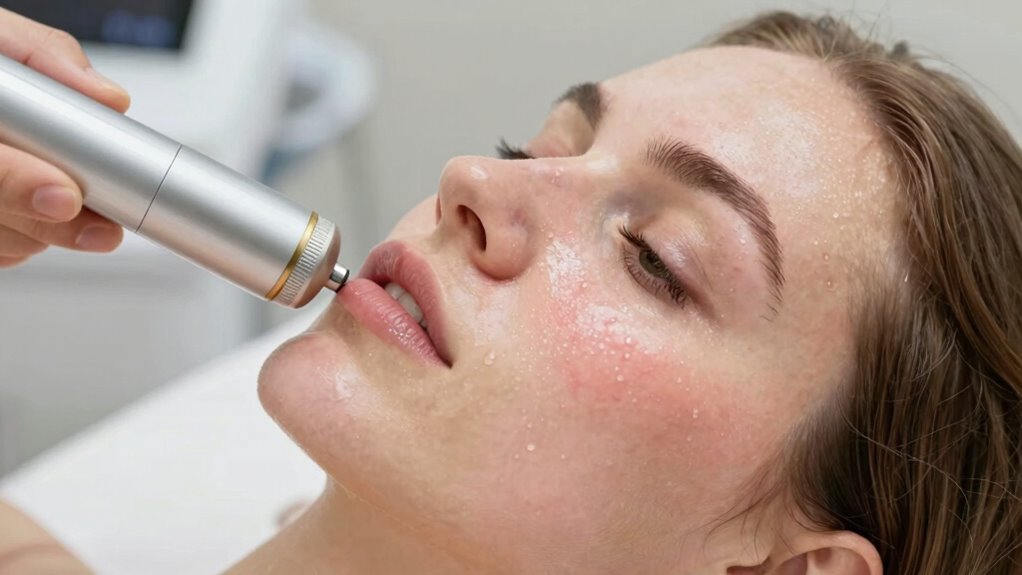

Ultrasound facial devices boost skin absorption by using high-frequency sound waves to gently increase permeability, allowing ingredients to penetrate deeper safely. However, pushing the device too hard or using high energy levels can cause irritation like redness, burning, or inflammation. The key is to find a balance—use appropriate settings, monitor your skin’s response, and follow guidelines. Staying within safe limits helps you enjoy better results without damaging your skin, and there’s more to discover about maintaining that balance.
Key Takeaways
- Proper device calibration and gentle application maximize absorption while minimizing skin irritation.
- Signs of effective absorption include improved skin texture, whereas redness and burning indicate irritation.
- Using appropriate settings and compatible products helps prevent overexposure and skin damage.
- Monitoring skin response during treatments ensures safe absorption levels without causing inflammation.
- Professional guidance optimizes absorption benefits and reduces risks of irritation or adverse reactions.
How Do Ultrasound Facial Devices Boost Skin Absorption?
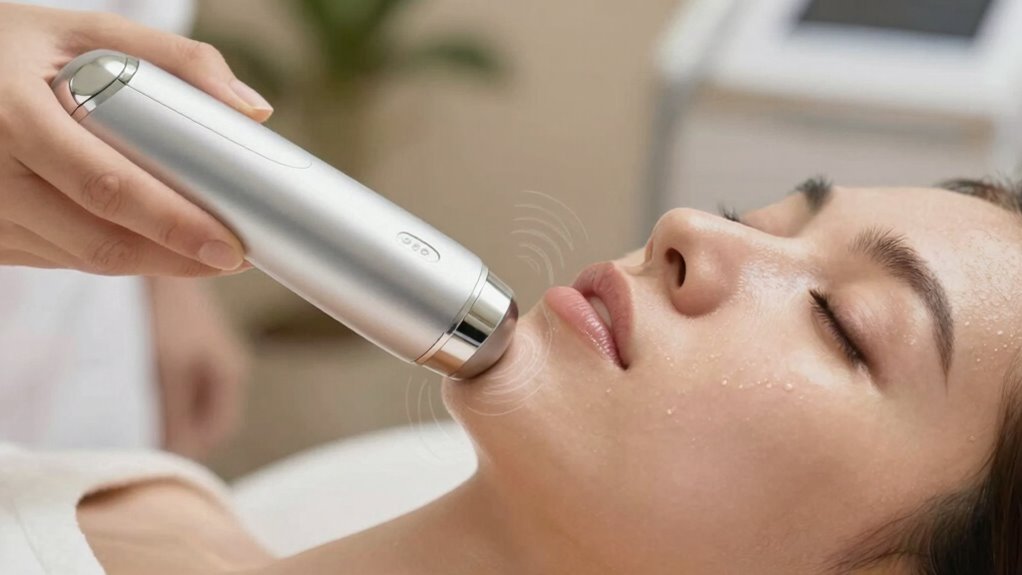
Ultrasound facial devices work by using high-frequency sound waves to temporarily increase the permeability of your skin. This process enhances dermal absorption by stimulating the movement of molecules through your skin barrier. The sound waves create tiny vibrations that gently disrupt the outer layer, allowing active ingredients in skincare products to penetrate deeper. As a result, skin penetration improves, making treatments more effective. The increased permeability isn’t permanent; it opens up pathways just long enough for nutrients, serums, or medications to reach the underlying layers. This targeted boost in absorption helps your skin reap maximum benefits from skincare routines without causing lasting damage. Incorporating ultrasound technology can also promote free floating in the skin, further supporting overall skin health and resilience. Additionally, this process aligns with principles of skin permeability enhancement that are fundamental to effective skincare delivery, ensuring safe and controlled use of ultrasound devices.
What’s the Difference Between Effective Penetration and Skin Irritation?
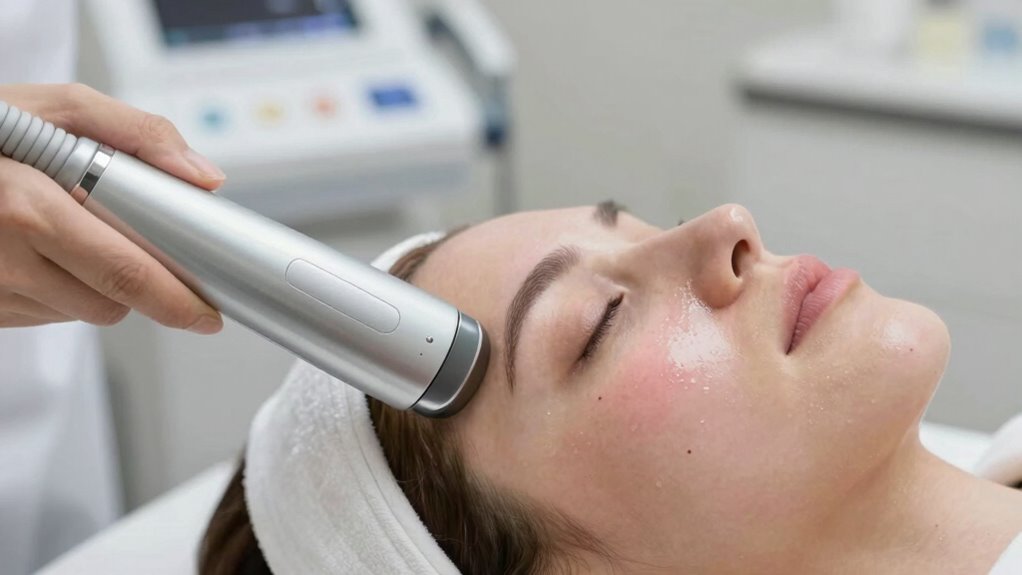
While ultrasound devices can enhance your skin’s ability to absorb active ingredients, it’s important to understand the difference between effective penetration and skin irritation. Effective penetration means your skin allows beneficial ingredients to reach deeper layers without harm, promoting better results. Skin sensitivity, however, can cause redness, discomfort, or inflammation if the device or product isn’t compatible with your skin. To avoid irritation, always check product compatibility and start with lower settings. If your skin shows signs of irritation, reduce usage or discontinue. The goal is to boost absorption without compromising skin health. Recognizing the line between these two outcomes helps you use ultrasound devices safely and effectively, ensuring your skincare routine benefits your skin rather than damaging it. Additionally, understanding skin barrier function can help you maintain skin integrity while using such devices. Proper device settings are crucial to prevent overexposure that may lead to irritation.
What Is the Safe Ultrasound Energy Level for Home Devices?
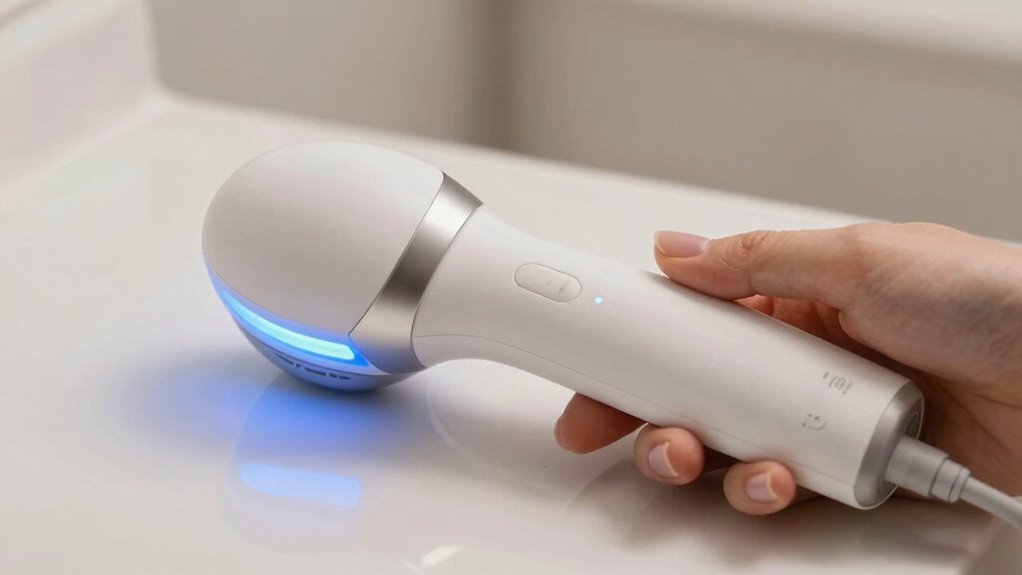
Understanding the ideal energy levels guarantees your safety and device effectiveness. You should be aware of the safe ultrasound thresholds and what signs indicate overexposure. Recognizing these signs helps prevent skin irritation and potential damage during home treatments.
Optimal Energy Thresholds
Have you ever wondered what makes an ultrasound facial device safe to use at home? The key lies in ideal energy thresholds, which depend on proper device calibration and ultrasound frequency. When your device is correctly calibrated, it delivers consistent, controlled energy levels, reducing the risk of irritation or overexposure. The ultrasound frequency, typically between 1 and 3 MHz, is designed to penetrate skin safely and effectively without damaging tissues. Staying within recommended energy thresholds ensures your skin absorbs enough energy for benefits without crossing into irritation territory. Always follow manufacturer guidelines to maintain safe ultrasound levels. Proper calibration and understanding of ultrasound frequency help you maximize results while minimizing potential harm, keeping your at-home treatments both safe and effective.
Recognizing Overexposure Signs
How can you tell if your ultrasound facial device is delivering too much energy? One key sign is increased skin sensitivity or irritation, even after gentle use. If your skin feels burning, stinging, or looks red and inflamed, it’s a clear warning. Overexposure often results from improper device calibration, meaning the device isn’t set correctly for safe home use. Regularly check your device’s calibration settings and follow manufacturer guidelines to prevent overdoing it. Pay attention to how your skin reacts during and after treatment—persistent discomfort indicates you might need to lower the energy level. Recognizing these signs early helps avoid damage and ensures safe, effective ultrasound treatments at home. Additionally, understanding device calibration can help optimize your device’s performance and safety.
What Factors Affect Ultrasound Penetration and Skin Safety?
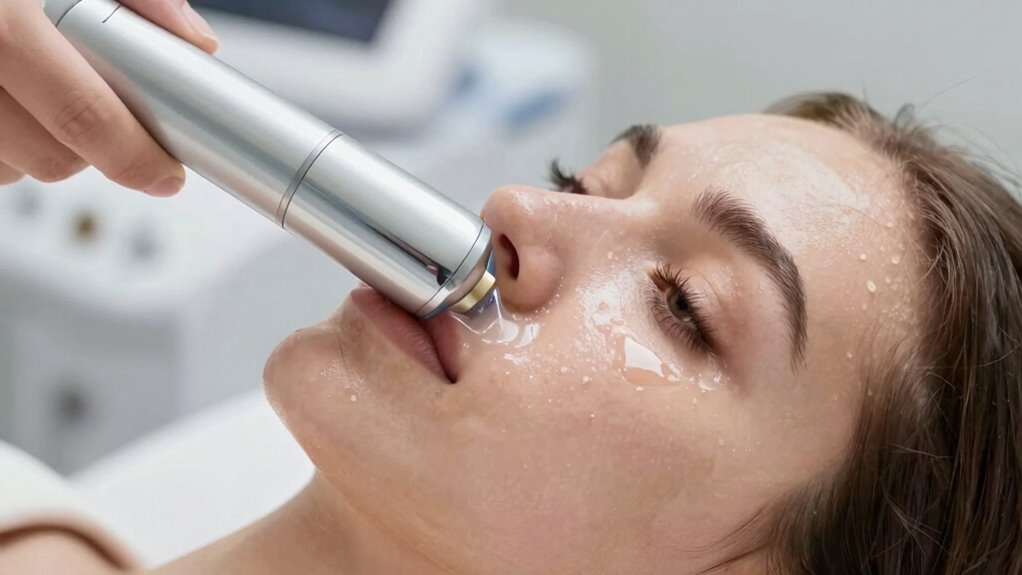
Several factors influence how ultrasound energy penetrates the skin and guarantee safety during use. Proper device maintenance ensures consistent performance and prevents uneven energy distribution. Skin hydration plays a vital role; well-hydrated skin allows better ultrasound absorption, reducing irritation risks. Additionally, skin thickness can vary, affecting depth of penetration. The device’s frequency settings determine how deep the ultrasound travels, while the application technique influences safety and effectiveness. Environmental conditions, like temperature, also matter—warmer skin may absorb ultrasound differently. Keep these in mind:
Ultrasound safety depends on device maintenance, skin hydration, thickness, settings, technique, and environment.
- Regularly clean and calibrate your device
- maintain ideal skin hydration before treatment
- Adjust settings based on skin thickness and sensitivity
- Use gentle, even application techniques
- Avoid excessive heat or cold during sessions
Understanding ultrasound physics can help optimize treatment outcomes and minimize risks. For example, factors like device calibration and proper maintenance are crucial in ensuring safe and effective treatments. Additionally, being aware of energy absorption dynamics can help tailor your approach to different skin types and conditions, especially considering skin hydration levels and environmental factors.
How Can You Tell If Your Skin Is Overexposed or Irritated?

Monitoring your skin’s response during ultrasound treatments is key to avoiding overexposure or irritation. If your skin becomes red, tender, or inflamed, it’s a clear sign of overexposure, especially if you notice increased skin sensitivity. Proper device calibration is essential; if the device isn’t set correctly, you risk damaging your skin. To identify irritation, look for persistent redness, dryness, or a burning sensation that lasts beyond the session. Use the table below to help assess your skin’s reaction:
| Indicator | What It Means |
|---|---|
| Redness persists | Possible overexposure or irritation |
| Increased sensitivity | Your skin is reacting to treatment |
| Burning sensation | Device calibration may be off, or skin too sensitive |
Additionally, understanding the absorption properties of ultrasound energy can help prevent overexposure and ensure safe treatment. Being aware of the energy transfer process allows you to better gauge how your skin interacts with ultrasound waves, minimizing the risk of irritation. Recognizing how ultrasound energy penetrates the skin can help you optimize treatment settings and avoid excessive exposure. Monitoring your skin’s reaction during and after treatment can further help you identify early signs of overexposure and adjust accordingly. Always adjust your approach if you notice these signs.
How Do You Use Ultrasound Devices Safely at Home?
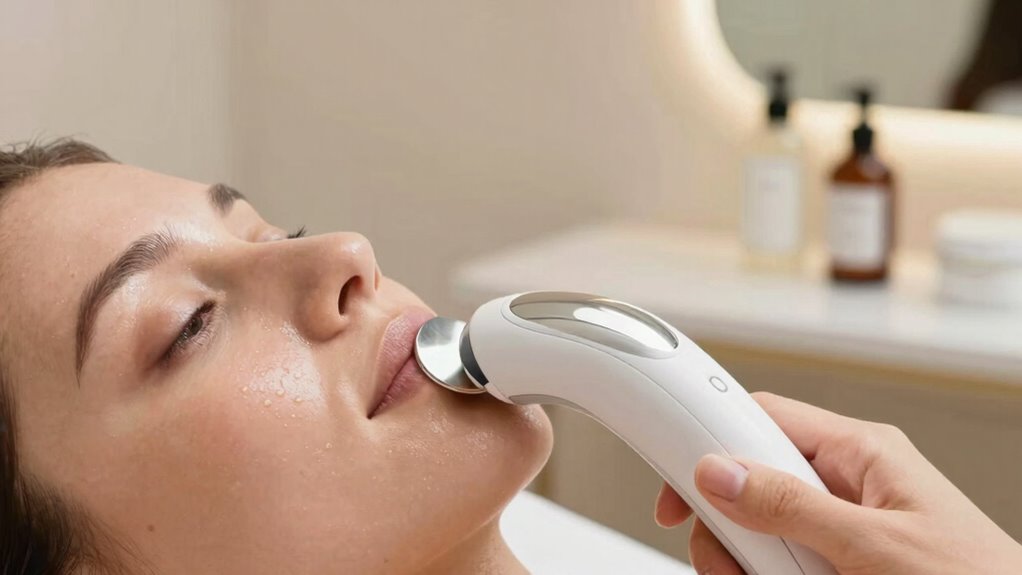
To use ultrasound devices safely at home, you need to start with proper device preparation, ensuring it’s clean and set to the correct settings. Follow safe usage practices by keeping sessions within recommended timeframes and avoiding overuse. Paying attention to these points helps protect your skin and get the best results from your treatments. Additionally, understanding the technology behind ultrasound devices can help you make more informed decisions about their safe and effective use. Being aware of proper maintenance ensures your device remains safe and functions correctly over time. Incorporating safety guidelines from reputable sources can further reduce risks during your treatments. Familiarizing yourself with safe installation practices can also help prevent potential hazards and ensure optimal device performance. Consulting guidelines that emphasize essential oil safety may further enhance your skincare routine when integrating aromatherapy with ultrasound therapy.
Proper Device Preparation
Before using your ultrasound facial device at home, making sure to prepare it properly guarantees safety and effectiveness. Start by checking the device calibration to ensure it’s functioning correctly. Clean the treatment head with a soft cloth to remove dirt and oils. Apply a thin layer of skin-compatible gel or moisturizer to improve ultrasound transmission and maintain skin hydration. Verify that the device settings match your skin type and treatment goals. Confirm that the power source is secure and the device is unplugged before handling. Preparing your device thoughtfully helps prevent irritation and maximizes absorption, giving you a safe, effective experience. Additionally, understanding air quality and safety can help you avoid mishaps during your skincare routine. Regular maintenance and proper device handling are also important for long-term device performance. Being aware of skin sensitivity levels can further help you personalize your treatment to prevent irritation and achieve optimal results.
Safe Usage Practices
Using ultrasound facial devices safely at home requires following clear guidelines to prevent skin irritation or injury. First, ensure proper device maintenance by cleaning the device according to the manufacturer’s instructions after each use. This helps prevent bacteria buildup and maintains device effectiveness. Always apply a suitable conductive gel to enhance absorption and reduce friction, which also supports skin hydration. Limit sessions to the recommended duration and frequency to avoid overexposure that can cause irritation. Pay attention to your skin’s response; if you notice redness or discomfort, pause use and consult a dermatologist. Maintaining good skin hydration before and after treatments helps reinforce the skin’s barrier, reducing the risk of irritation. Additionally, integrating connected home fitness technology can help track your skin’s response over time, ensuring safe and effective ultrasound treatments. Following these practices ensures safe, effective home ultrasound device use.
How Can You Prevent Overexposure During Ultrasound Treatments?

Overexposure to ultrasound treatments can pose risks to your skin and underlying tissues, so it’s essential to take steps to prevent it. Proper device calibration guarantees the ultrasound intensity stays within safe limits, reducing the chance of overexposure. Be mindful of ingredient interactions; some topical products can increase skin sensitivity or react unpredictably with ultrasound waves. To stay safe, consider these precautions:
- Regularly calibrate your device for consistent, safe output
- Avoid using harsh or irritating skincare ingredients beforehand
- Follow recommended treatment durations strictly
- Maintain steady movement of the device to prevent localized overexposure
- Test new products on a small skin patch before full treatment
- Be aware of dark psychology tactics that could manipulate or pressure you into unsafe practices during treatment sessions
What Are Common Mistakes That Can Damage Your Skin?
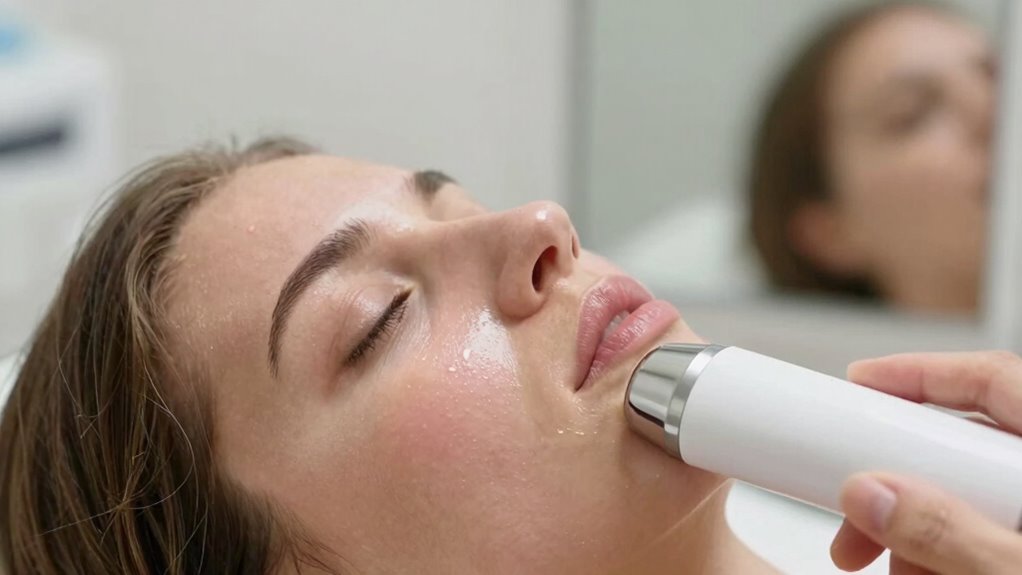
One common mistake that can damage your skin is applying harsh skincare products right before ultrasound treatments, which can cause irritation or sensitivity. These products may disrupt your skin pH balance, making it more vulnerable to damage. Always make certain your skin is clean and free of strong acids or exfoliants before using your device. Additionally, neglecting proper device maintenance can lead to bacterial buildup or malfunctions, increasing the risk of skin issues. Regularly clean your ultrasound device according to the manufacturer’s instructions and check for any signs of wear or damage. Using the device improperly or with unclean equipment can cause irritation, redness, or even micro-tears. Being mindful of skincare products and device upkeep helps protect your skin and maximizes treatment safety.
How to Maximize Benefits Without Crossing the Safety Threshold?
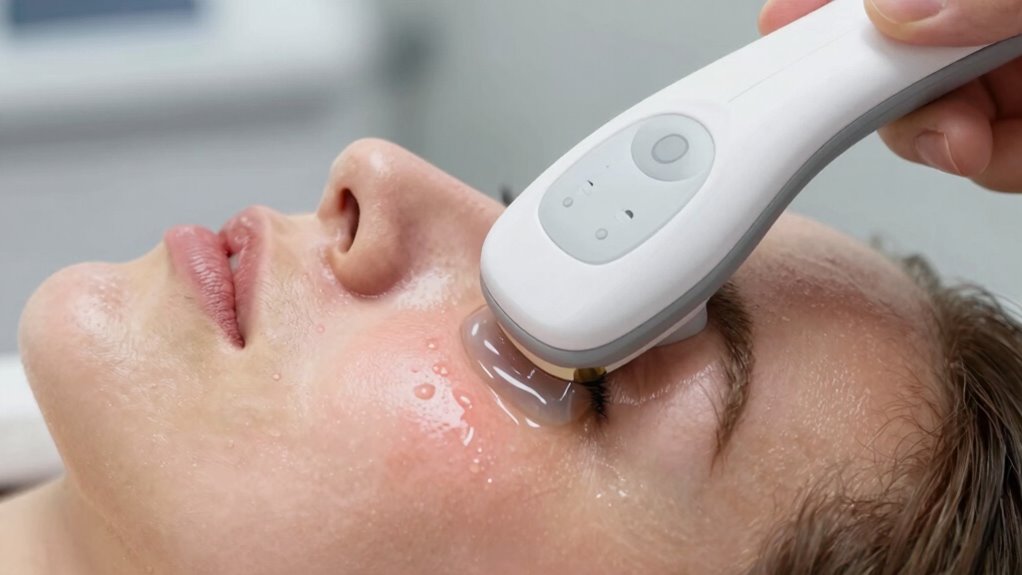
To get the most out of your ultrasound facial device, you need to recognize your personal tolerance levels and adjust accordingly. Always follow the manufacturer’s guidelines to prevent overstimulation or skin irritation. By staying mindful of these points, you can enjoy safe, effective results without crossing the safety threshold.
Recognize Personal Tolerance
Understanding your personal tolerance is essential when using ultrasound facial devices, as individual skin sensitivity varies. Pay close attention to your personal comfort during each session. Start with gentle device calibration, adjusting settings to find a level that feels soothing rather than irritating. Notice how your skin responds: a tingling sensation is normal, but burning or excessive redness signals you’ve pushed too far. To recognize your limits, visualize:
- The subtle warmth spreading across your face
- A slight, comfortable tingling sensation
- The absence of any burning or stinging feelings
- Skin maintaining its natural hue without redness
- A sense of relaxation rather than discomfort
Follow Manufacturer Guidelines
Following the manufacturer’s guidelines guarantees you get the most benefit from your ultrasound facial device while staying safe. Proper device calibration ensures the device delivers the correct intensity, preventing overstimulation or irritation. Always read and follow the recommended treatment times and settings; exceeding these can increase skin sensitivity and cause discomfort or damage. Pay attention to any warnings about specific skin types or conditions, and adjust your use accordingly. Regularly check that your device is calibrated correctly, especially if it’s used frequently or over time. Listening to your skin’s responses is key—if you notice increased redness or sensitivity, reduce the intensity or duration. Sticking to the manufacturer’s instructions helps you maximize benefits without crossing the safety threshold.
When Should You See a Professional About Ultrasound Skin Treatments?
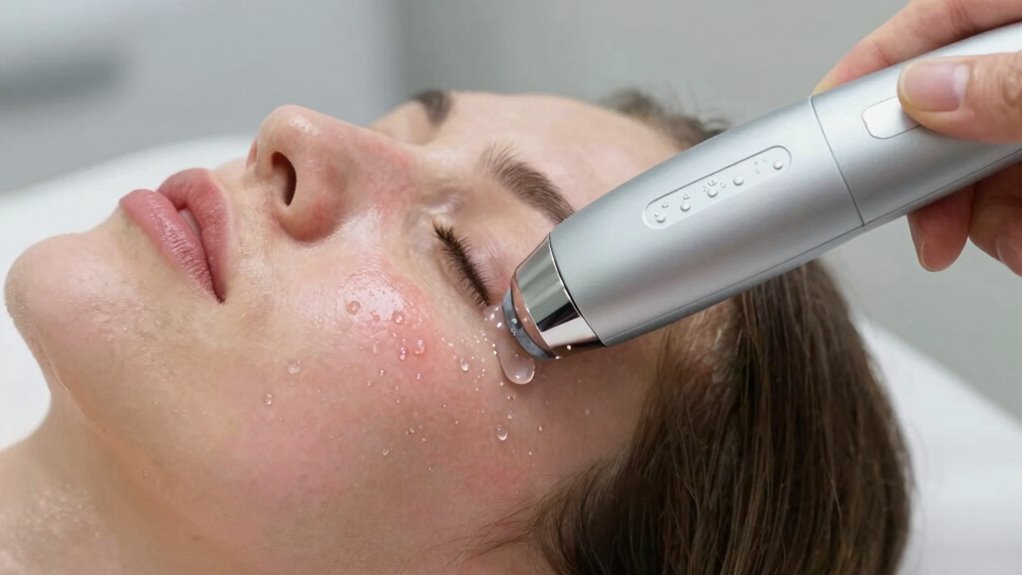
While ultrasound skin treatments can be effective for many, there are times when seeing a professional becomes essential. If you notice persistent redness, swelling, or pain, it’s time to seek a professional consultation. A skin assessment by an expert can determine if your skin is reacting negatively or if underlying issues exist. Consider visiting a specialist if you experience:
- Unusual bumps or lumps under the skin
- Significant irritation or burning sensation
- Prolonged redness beyond normal healing
- Unexpected skin discoloration
- Worsening skin texture or sensitivity
Seeing a professional ensures safe treatment and personalized advice. They can evaluate your skin’s response, recommend appropriate procedures, and prevent complications. Trusting an expert for your ultrasound treatments helps you achieve results without risking irritation or damage.
Frequently Asked Questions
Can Ultrasound Devices Cause Long-Term Skin Damage?
Ultrasound devices, when properly calibrated and used on skin with normal sensitivity, generally don’t cause long-term damage. However, if your device isn’t calibrated correctly or you have increased skin sensitivity, you could risk irritation or minor damage over time. Always follow manufacturer instructions, avoid overuse, and consult a dermatologist if you notice persistent redness or discomfort. Proper care minimizes the chance of long-term skin issues.
Are There Specific Skin Types That React Differently to Ultrasound?
You might notice that skin sensitivity varies, and some skin types react more noticeably to ultrasound treatments. If you have sensitive skin, you may want to opt for device compatibility checks and start with shorter sessions. Delicate skin could experience mild irritation if not used carefully, but with proper precautions, ultrasound devices can be safely incorporated into your skincare routine. Always listen to your skin and adjust accordingly.
How Often Should Ultrasound Facial Treatments Be Performed?
You should perform ultrasound facial treatments every 4 to 6 weeks. Make certain your device is properly calibrated for peak absorption and safety. Keep treatment duration around 10 to 15 minutes per session to prevent irritation and maximize benefits. Regularly check your device settings, and don’t rush the process—proper calibration and consistent scheduling help you achieve clearer, healthier skin without overdoing it.
What Are the Signs of Inadequate Ultrasound Penetration?
If ultrasound penetration is inadequate, you might notice minimal skin absorption of active ingredients and little visible improvement. Your skin may feel less firm, and you might see a lack of glow or tightness that signals effective treatment. You may also experience discomfort or uneven heat during the session. These signs indicate that the ultrasound isn’t penetrating deeply enough, so adjusting device settings or technique could improve absorption and results.
Are There Contraindications for Using Ultrasound Devices at Home?
You’re playing with fire if you ignore contraindications when using ultrasound devices at home. Always prioritize DIY safety and check device compatibility with your skin type and health conditions. People with pacemakers, pregnancy, or skin infections should steer clear. Misusing ultrasound can cause irritation or damage. So, read the instructions carefully and consult a professional if in doubt—your skin’s health is worth the extra caution.
Conclusion
Think of ultrasound skincare like walking a tightrope—you want the right balance to reach the other side safely. Staying within safe energy levels, paying attention to your skin’s signals, and avoiding shortcuts keeps your skin glowing without the risk of irritation. By knowing where to draw the line, you’ll navigate this delicate dance confidently, ensuring your skincare journey is a smooth ascent rather than a stumble. Stay mindful, and your skin will thank you for it.