Many people misunderstand blue light on LED masks, thinking it speeds up acne healing. In reality, overusing blue light can cause irritation and won’t necessarily clear breakouts faster. It’s best to use blue light as directed and avoid excessive exposure. Red light, on the other hand, promotes collagen and skin elasticity but is often underused. By understanding each setting’s purpose, you can get better results. Keep exploring to discover how to optimize your LED treatment.

Get beauty and skincare favorites delivered free with Prime
- Fast, free delivery on millions of items
- Prime Video, Amazon Music and more included
- Member-only deals all year
Key Takeaways
- Many users confuse red and blue light functions, leading to ineffective treatment for anti-aging or acne.
- Overusing blue light can cause skin irritation without accelerating acne clearing.
- Underutilizing red light misses out on collagen stimulation and skin elasticity benefits.
- Incorrect light intensity or duration reduces treatment safety and effectiveness.
- Proper understanding of each light’s purpose ensures targeted, optimal skincare results.
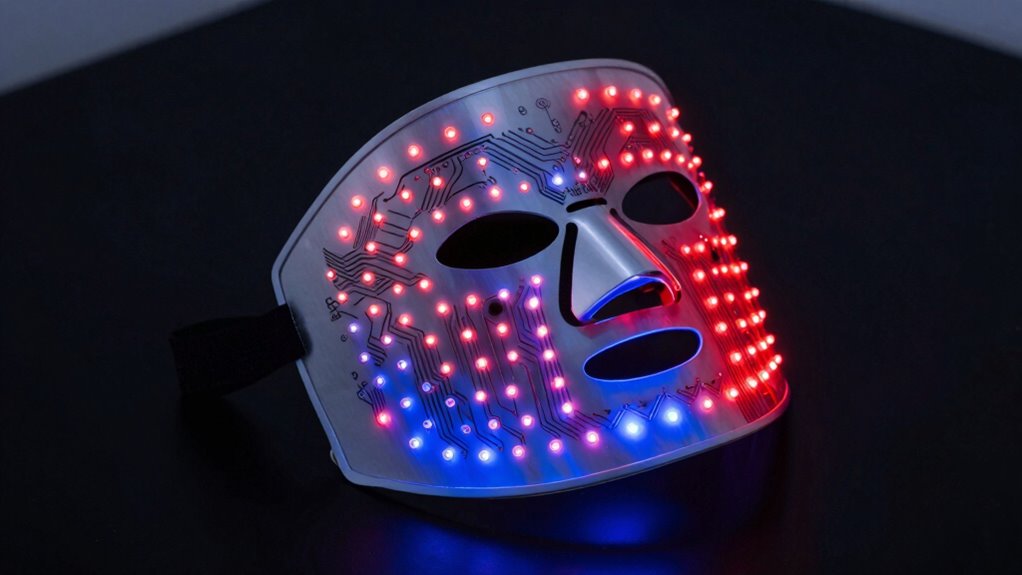
The technological advancements behind LED face masks have made these devices safer, more customizable, and more effective than ever before. Manufacturers now offer multiple light options, typically including red, blue, green, and sometimes yellow or near-infrared lights. Red light, for instance, penetrates deep into the skin to stimulate collagen production and improve elasticity. Many users associate red light with anti-aging benefits, but its full potential is often underestimated because people don’t realize how deeply it can boost skin renewal. Blue light, on the other hand, is primarily used to combat acne-causing bacteria on the surface of your skin. It’s highly effective for those struggling with breakouts, but if you misunderstand its purpose, you might use it when you’re actually looking for anti-aging results, which won’t give you the desired outcome.
One key aspect that many overlook is the light intensity and duration. The most common mistake involves using the wrong setting for your skin concern, or not following the recommended treatment times. For example, some people might assume that increasing the exposure to blue light will speed up acne clearing, but overuse can cause irritation. Conversely, underuse of red light might mean missing out on the collagen boost that could smooth fine lines and wrinkles. The real skincare benefits are achieved when you understand the specific light setting that aligns with your skin goals and follow the manufacturer’s instructions. Understanding light settings is essential for optimizing your treatment.
To truly maximize the benefits of your LED mask, it’s vital to educate yourself about what each light setting does. This way, you’re not just randomly toggling between options, but strategically using the most effective one for your skin’s needs. As technology continues to advance, expect even more precise and personalized options, further improving how these devices help you achieve healthier, more radiant skin. Incorporating knowledge about LED technology can help you make better choices and avoid common pitfalls. For example, understanding the light spectrum ensures you select the most appropriate wavelength for your specific skin concern. Additionally, understanding how light penetration varies across different wavelengths can help you target your skin issues more effectively. A thorough understanding of skin response to different light therapies can also enhance your treatment results. By paying attention to these details, you guarantee your LED face mask works as intended, delivering the skincare benefits you’re after.
As an affiliate, we earn on qualifying purchases.
Frequently Asked Questions
How Often Should I Use My LED Face Mask for Best Results?
You should stick to your skincare routines consistently, using your LED face mask about 3-4 times a week for the best results. Overdoing it can do more harm than good, so don’t chase quick fixes. Regular use enhances your beauty enhancement efforts, promoting healthier skin and a radiant glow. Remember, patience pays off, and consistency is key to seeing long-term benefits from your LED therapy.
Are There Any Side Effects From Prolonged LED Light Exposure?
Prolonged LED light exposure can lead to side effects like skin irritation or UV damage. You might notice redness, dryness, or discomfort if you overuse your mask. To avoid these issues, follow the recommended usage guidelines and limit your sessions. Using the device as directed helps prevent skin irritation and reduces the risk of UV damage, ensuring you get safe, effective results without adverse effects.
Can LED Masks Replace Professional Skincare Treatments?
Can LED masks replace professional skincare treatments? While LED technology is impressive, it’s more like a helpful sidekick than a superhero. Skincare myths often lead you to believe these masks can do everything, but they can’t replace the personalized care from a professional. You need expert advice for complex issues, and LED masks are best used as a supplement, not a substitute, for professional treatments.
Do Different Skin Types Require Different LED Light Settings?
Yes, you do need different LED light settings for various skin types. Your skin tone affects how light penetrates your skin, so adjusting the settings guarantees ideal results. For example, fair skin might benefit from gentler red light, while darker skin tones may need stronger or different wavelengths. Tailoring the light penetration to your skin type helps target specific concerns like acne or aging effectively.
Is It Safe to Use an LED Mask While Wearing Makeup?
Yes, you can use an LED mask while wearing makeup, but makeup compatibility varies. It’s best to choose non-comedogenic products that won’t clog your pores or interfere with LED light safety. Make sure your makeup is fully dry before starting the session to avoid smudging or product transfer. Always follow your device’s instructions and consult skincare professionals if you’re unsure, ensuring both safety and effective results.
Conclusion
You might be surprised to learn that over 70% of users misunderstand the ideal light setting for LED face masks, often choosing ineffective options. This simple mistake can greatly diminish their skincare benefits. Remember, choosing the right light—usually red for anti-aging—can make all the difference. So next time you use your mask, guarantee you’re using the correct setting to activate its full potential and achieve the glowing skin you desire.
Halloween Picks
halloween
As an affiliate, we earn on qualifying purchases.