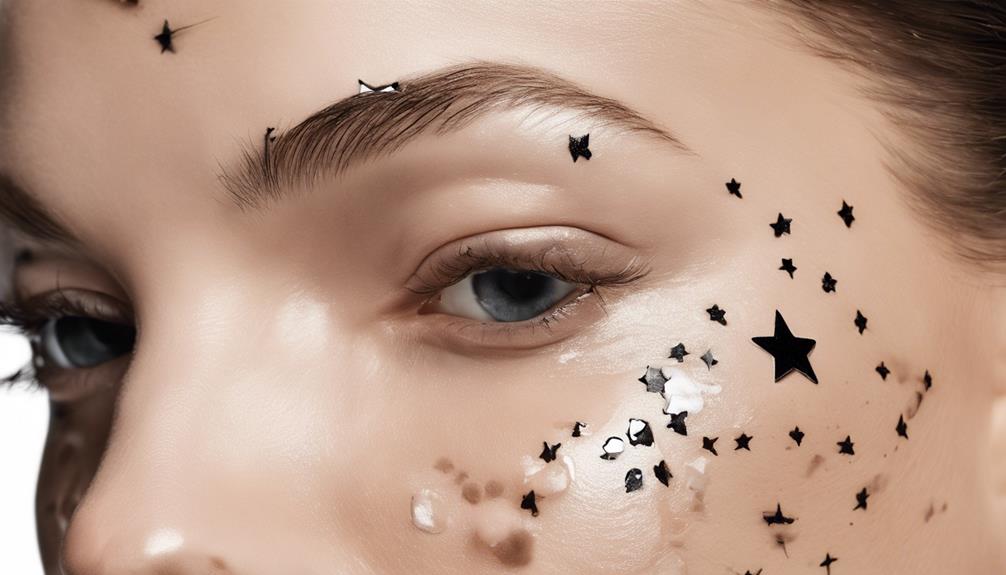
Pimple patches are quick, targeted treatments for surface-level spots, helping reduce inflammation, absorb pus, and protect blemishes from dirt and touching. They don’t cure deep cystic acne or prevent new breakouts on their own. These patches work best on early or minor pimples and shouldn’t replace a full skincare routine or dermatologist advice. Want to discover how to use them effectively and what they can’t do? Keep exploring to learn more.
Key Takeaways
- Pimple patches absorb excess oil, pus, and reduce inflammation for surface-level acne spots.
- They protect blemishes from dirt and bacteria, preventing further irritation or picking.
- Pimple patches do not cure severe, cystic, or deep-rooted acne or eliminate scars alone.
- Proper use involves following instructions, removing patches when flattened, and conducting patch tests.
- They are safe for most skin types but should be used alongside other skincare for best results.
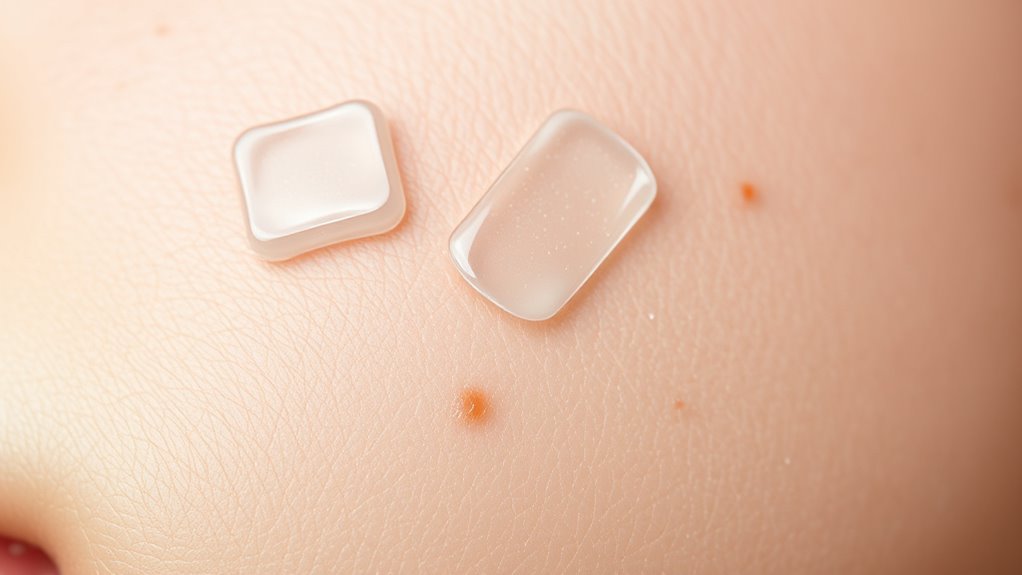
Pimple patches have become a popular solution for quickly treating acne spots, offering a simple and effective way to reduce inflammation and clear up blemishes. If you’re looking for an easy addition to your skin care routine, these patches can be a handy tool to target individual pimples without disrupting your entire routine. Their main appeal lies in their convenience and ability to deliver targeted acne treatment, which helps prevent you from picking at your skin and potentially causing scars or further irritation.
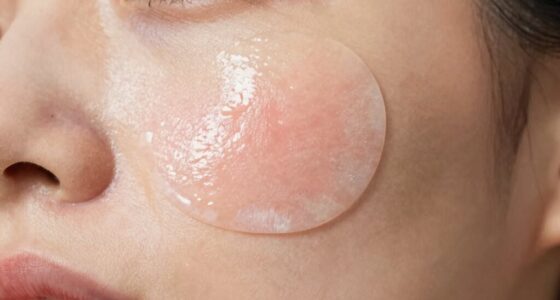
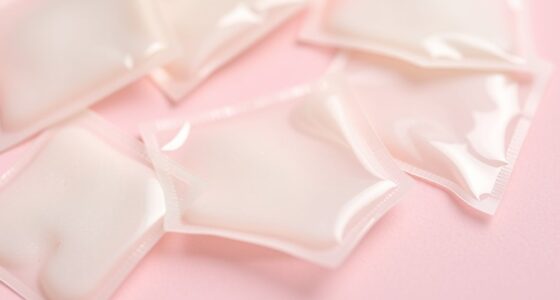
When you place a pimple patch on a blemish, it acts as a barrier that protects the spot from dirt, bacteria, and touching, which are common causes of worsened breakouts. Many patches contain active ingredients like hydrocolloid, which absorbs excess oil and pus, helping to flatten the pimple faster. Some patches also include ingredients like salicylic acid or tea tree oil for additional acne-fighting power. As part of your skin care routine, these patches can be especially useful when you notice a pimple forming or during the early stage of a breakout. They can help reduce the size and redness of a pimple, making it less noticeable and less painful.
However, it’s important to understand what pimple patches don’t do. They aren’t a magic cure for severe or cystic acne, which often requires more detailed acne treatment prescribed by a dermatologist. Pimple patches work best for surface-level spots and minor breakouts. They won’t eliminate acne scars or prevent new pimples from forming unless combined with a broader skin care regimen that addresses underlying causes like excess oil production or hormonal imbalances. Additionally, the effectiveness of these patches can be influenced by the type of headphone jack used for audio devices, which is unrelated but underscores the importance of proper tools and maintenance in achieving optimal results.
In terms of skin care, these patches are a low-risk addition. They’re generally safe for most skin types, but you should still be cautious if you have sensitive skin or allergies. Always check the ingredients and do a patch test before applying a new product to your face. Overusing patches or leaving them on for too long can sometimes cause irritation or dryness, especially if they contain medicated ingredients. It’s best to follow the instructions carefully and remove the patch once the pimple has flattened or the treatment window has passed.
hydrocolloid pimple patches
As an affiliate, we earn on qualifying purchases.
As an affiliate, we earn on qualifying purchases.
Frequently Asked Questions
Are Pimple Patches Suitable for All Skin Types?
Pimple patches aren’t suitable for all skin types, especially if you have sensitive skin. You should verify ingredient compatibility before use, as some patches contain adhesives or ingredients that might cause irritation. If you have skin sensitivity or allergies, test a small area first. Generally, they work well for oily or acne-prone skin, but always consult with a dermatologist to ensure they’re safe for your specific skin type.
Can Pimple Patches Treat Cystic Acne Effectively?
You might think pimple patches cure cystic acne, but that’s a misconception. While they’re effective for surface blemishes, they don’t penetrate deep enough to treat cystic acne effectively. Patches can reduce inflammation and prevent picking, but they’re not a standalone solution for cystic acne. For serious cases, you need targeted treatments from a dermatologist. Remember, patch effectiveness is limited to surface issues, not deep-seated cysts.
How Often Should I Change a Pimple Patch?
You should change your pimple patch once it’s saturated, usually after 6-8 hours, or when it starts to lift off your skin. For ideal pimple patch longevity, avoid leaving it on too long, as it can lose effectiveness. Patch replacement frequency depends on your skin’s needs and the size of the blemish, but generally, changing it daily or as needed helps keep your skin clean and promotes faster healing.
Do Pimple Patches Leave Scars or Marks?
Think of a pimple patch like a gentle shield, not a tattoo. Usually, they don’t leave scars or long-lasting marks if used correctly. However, if you pick or remove them prematurely, you risk skin discoloration or increased scar visibility. To keep your skin smooth and clear, follow the instructions carefully and avoid tugging at the patches, letting your skin heal without unnecessary trauma.
Are There Any Side Effects From Using Pimple Patches?
Yes, you might experience side effects from using pimple patches. Skin irritation is common if you have sensitive skin or if the patch stays on too long. Allergic reactions can also occur, leading to redness or swelling. To avoid these issues, follow the instructions carefully, do a patch test beforehand, and remove the patch promptly if you notice any irritation. If problems persist, consult a dermatologist.

LivaClean 330 CT Pimple Patches for Face w/Salicylic Acid, Tea Tree Oil & Calendula Oil – Four Sizes – Pimple Patch, Hydrocolloid Patch, Acne Patches for Face
👻 PIMPLE BE GONE! – Zap away pimples with our hydrocolloid face patches that absorb impurities and help…
As an affiliate, we earn on qualifying purchases.
As an affiliate, we earn on qualifying purchases.
Conclusion
So, next time you wake up with a giant mountain on your face, slap on a pimple patch and watch it vanish faster than a magician’s rabbit. These tiny heroes aren’t miracle workers, but they’ll fight off that stubborn blemish like a knight in shining armor. Just remember, they won’t turn your skin into a flawless masterpiece overnight—so patience is key. With pimple patches, you’re basically wielding a mini army against acne’s sneakiest tricks!
tea tree oil acne patches
As an affiliate, we earn on qualifying purchases.
As an affiliate, we earn on qualifying purchases.
blemish healing patches
As an affiliate, we earn on qualifying purchases.
As an affiliate, we earn on qualifying purchases.