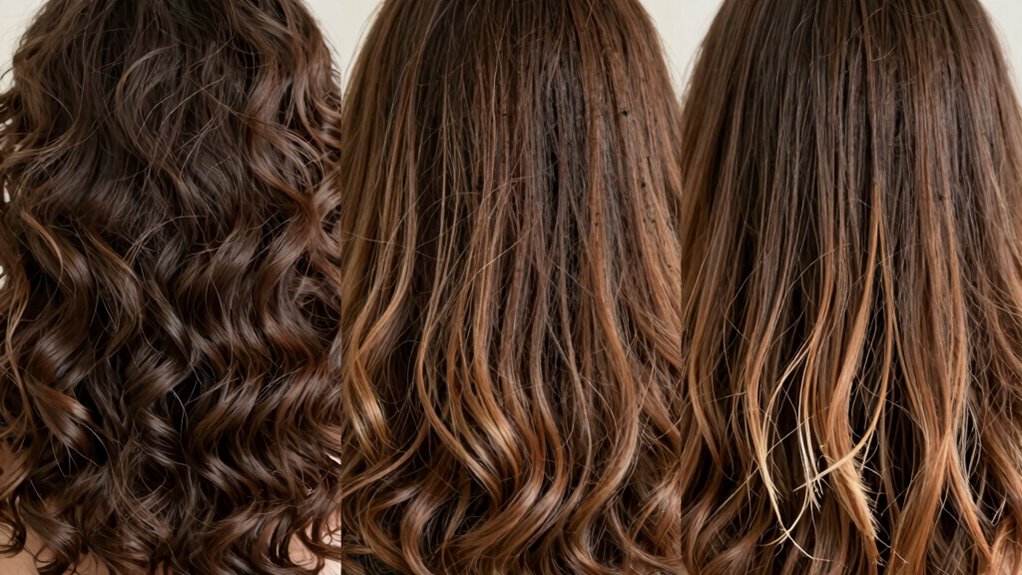

Frizz happens when your hair cuticles lift or get damaged, causing a rough surface and moisture imbalance, often from humidity. Dryness is when your strands lack natural oils and moisture, making hair feel brittle and dull. Damage involves broken, split, or weak strands due to heat, chemicals, or mechanical stress, which can be hard to reverse. Understanding these differences helps you address each issue effectively—stay tuned to discover how to fix them properly.

Get beauty and skincare favorites delivered free with Prime
- Fast, free delivery on millions of items
- Prime Video, Amazon Music and more included
- Member-only deals all year
Key Takeaways
- Frizz results from lifted or damaged cuticles, causing rough hair surfaces and moisture imbalance, often worsened by humidity.
- Dryness occurs due to insufficient moisture or oils reaching hair strands, leading to dull, brittle hair.
- Damage involves broken, split, or weak strands caused by heat, chemicals, or mechanical stress, often irreversible without treatment.
- Frizz is mainly related to cuticle health and humidity, while dryness is about moisture deficiency; damage affects strand integrity.
- Effective management involves tailored routines addressing each condition: hydration for dryness, cuticle care for frizz, and damage prevention.
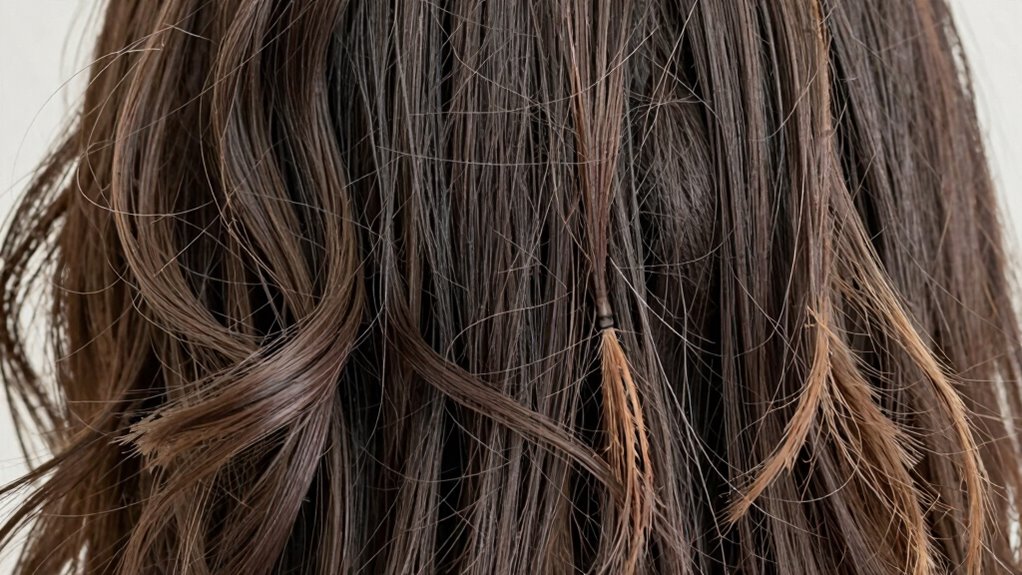
Understanding the difference between frizz, dryness, and damage is essential for properly caring for your hair. When you know what’s really going on with your strands, you can choose the right products and routines to keep your hair healthy and looking its best. These issues often get mixed up because they can look similar, but they each have distinct causes and treatments. To start, understanding hair porosity and scalp health plays a key role in addressing these concerns. Hair porosity, which refers to how well your hair absorbs and retains moisture, influences how your hair reacts to humidity, conditioners, and treatments. If your hair has high porosity, it may absorb moisture quickly but also lose it just as fast, leading to frizz and dryness. Low porosity hair, on the other hand, resists moisture, making it prone to buildup and a dull appearance. Recognizing your hair’s porosity helps you tailor your routine, whether that means using lightweight oils or deep conditioning treatments.
Scalp health is equally important because it directly impacts the quality of your hair. A healthy scalp promotes stronger, shinier hair, while scalp issues like dryness, buildup, or irritation can lead to problems that manifest as frizz, dryness, or damage farther down the strand. If your scalp is irritated or overly oily, it can throw off the balance, causing your hair to look dull or feel brittle. Addressing scalp health with gentle cleansing, scalp treatments, and moisturizing treatments can improve your overall hair condition and reduce the risk of damage. Additionally, understanding hair porosity can help you select the most effective products for your specific hair needs.
Now, understanding what causes each problem helps you fix it. Frizz is often linked to moisture imbalance, where your hair is either too dry or too exposed to humidity. It’s usually a sign that your cuticles are lifted or damaged, making your hair surface rough and prone to frizz. Dryness, on the other hand, is more about a lack of moisture or oils reaching your hair strands, which can be caused by harsh shampoos, over-washing, or environmental factors. Damage is more severe—caused by heat styling, chemical treatments, or mechanical stress—leading to broken, split, or weak strands. Damage is often irreversible without trimming or professional treatments, but you can prevent it by protecting your hair from excessive heat and harsh chemicals.
As an affiliate, we earn on qualifying purchases.
Frequently Asked Questions
Can You Have All Three Issues at Once on One Hair Strand?
Yes, you can have all three issues—frizz, dryness, and damage—on one hair strand. Many hair care myths suggest otherwise, but in reality, hair damage from heat or chemicals can cause dryness and frizz simultaneously. To improve your hair’s health, focus on product effectiveness by choosing nourishing shampoos and conditioners. Proper care can help restore your hair’s strength and smoothness, addressing all these concerns at once.
Do Different Hair Types Experience These Problems Differently?
Just like different fabrics react uniquely to moisture, your hair texture influences how you experience frizz, dryness, and damage. Curly hair may be more prone to frizz due to its structure, while fine hair might be more sensitive to product buildup. If you have sensitive scalp or hair, certain products can worsen dryness or cause damage. Knowing your hair type helps you choose gentle products, reducing these issues effectively.
How Do Environmental Factors Specifically Worsen Each Condition?
Environmental factors worsen each condition uniquely. Humidity effects cause frizz by making hair cuticles swell and lift, leading to a fuzzy appearance. Pollution impact damages hair’s outer layer, accelerating dryness and brittleness. Excessive sun exposure dries out hair strands, worsening dryness and damage. You can protect your hair by using anti-humidity products, wearing hats, and washing away pollutants regularly to minimize these environmental effects.
Are There Natural Remedies Effective for All Three Issues?
Yes, natural remedies can help improve all three issues. You might enjoy herbal treatments like aloe vera or coconut oil, which soothe and hydrate. DIY masks with ingredients such as honey, avocado, or yogurt deeply nourish your hair, reducing frizz, dryness, and damage. These gentle options work harmoniously with your hair’s natural balance, providing a pleasant, effective way to restore health and shine without harsh chemicals.
How Often Should You Trim Damaged or Frizzy Hair?
You should trim damaged or frizzy hair every 6 to 8 weeks to maintain healthy ends and prevent breakage. Incorporate regular trims into your hair care routines and use product recommendations like nourishing oils or moisturizing masks to combat frizz and dryness. Consistent trimming helps keep your hair looking fresh, while targeted products restore moisture and reduce damage, ensuring your hair stays strong, shiny, and manageable.
Conclusion
Understanding the difference between frizz, dryness, and damage is like knowing the key to a secret garden—you’ll discover the true potential of your hair. When you identify what your hair truly needs, you can give it the right care and attention. Think of your hair as a delicate dance partner; treat it with gentle love, and it’ll respond with shine, health, and energy. Take charge and turn your hair’s story into a beautiful masterpiece.
Halloween Picks
halloween
As an affiliate, we earn on qualifying purchases.