
Yes, you can combine benzoyl peroxide and acne patches, but it’s important to use them carefully. Apply benzoyl peroxide as a spot treatment or cleanser, then wait for it to fully absorb before placing acne patches over the area. Alternating applications—like using benzoyl peroxide at night and patches during the day—helps avoid irritation. Maintaining a gentle routine can boost your results; if you want to know more, keep exploring effective ways to use these treatments together.
Key Takeaways
- Combining benzoyl peroxide and acne patches can be effective but requires careful timing to prevent irritation.
- Apply benzoyl peroxide as a spot treatment or cleanser first, then wait for full absorption before using patches.
- Using both can enhance pimple treatment but may cause dryness; adjust frequency based on skin sensitivity.
- Always patch-test new combinations to avoid adverse reactions and monitor skin response closely.
- Incorporate gentle skincare routines alongside these treatments to support skin health and minimize irritation.

If you’re battling acne, you’ve probably heard of both benzoyl peroxide and acne patches as effective treatment options. These are popular choices for pimple treatment because they target breakouts directly and can deliver quick results. But you might wonder if you can safely combine them in your skincare routine to maximize their benefits without causing irritation. The good news is, under the right circumstances, you can use benzoyl peroxide and acne patches together, but it requires some careful planning.
Combining benzoyl peroxide and acne patches can be effective with careful planning and gentle application.
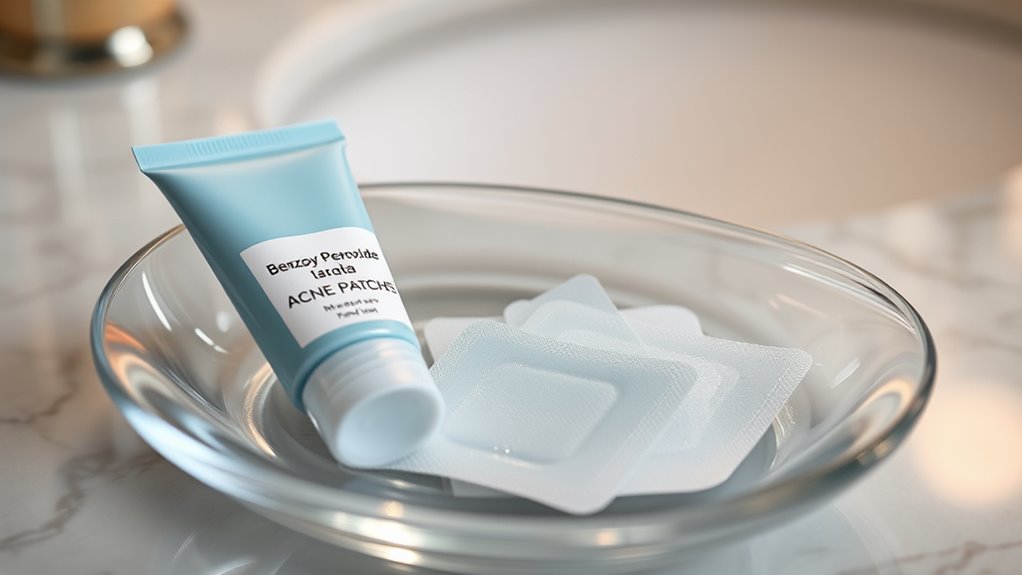
Benzoyl peroxide is a powerful ingredient that works by killing bacteria and reducing inflammation, which is essential for clearing up pimples. It’s often incorporated into a skincare routine as a spot treatment or a gentle cleanser. Acne patches, on the other hand, are designed to cover individual pimples, creating a barrier that absorbs excess oil and pus while protecting the blemish from picking or further infection. When used together, they can complement each other – the patch acts as a barrier and absorber, while benzoyl peroxide works underneath to treat the root cause.
However, combining these treatments can sometimes lead to dryness or irritation, especially if your skin is sensitive. To avoid this, you want to be strategic. First, apply benzoyl peroxide as part of your pimple treatment routine, but do so sparingly and avoid overuse. Wait a few minutes for it to absorb fully before applying an acne patch over the targeted pimple. This way, the patch can work effectively without disrupting the medication. Alternatively, you might apply benzoyl peroxide at night and use acne patches during the day, giving your skin a break from potential dryness or irritation.
It’s also important to pay attention to your overall skincare routine. Use a gentle cleanser and moisturizer suited for acne-prone skin to help prevent excessive dryness or peeling. If your skin becomes irritated, reduce the frequency of benzoyl peroxide application or opt for a lower concentration. Always patch-test new products or combinations to ensure your skin can handle the mixture without adverse reactions. Additionally, understanding different types of planters can help in optimizing your overall skincare setup, much like selecting the right tools for healthy plant growth.
In essence, combining benzoyl peroxide and acne patches can be a smart move for targeting pimples effectively. Just remember to be gentle, monitor how your skin responds, and adjust your routine accordingly. Doing so helps you get the most out of these treatments while keeping your skin healthy and avoiding unnecessary discomfort. With a thoughtful approach, you can incorporate both into your skincare routine for clearer, calmer skin.
Frequently Asked Questions
Can Using Both Cause Skin Irritation or Dryness?
Yes, using both can cause skin irritation or dryness, especially if you have sensitive skin. Mixing benzoyl peroxide with acne patches may lead to ingredient interactions that worsen skin sensitivity. To avoid this, start with a lower concentration and monitor how your skin reacts. Always patch test new products and consult a dermatologist if you notice excessive dryness or irritation, so you can adjust your skincare routine accordingly.
How Should I Space Out Their Application?
You should space out their application to avoid turning your skin into a battlefield. Timing considerations are key—apply benzoyl peroxide in the morning, letting it absorb fully, then wait a few hours before applying an acne patch at night. Application scheduling helps prevent irritation and dryness, giving your skin a break. Think of it as a strategic dance—step one, wait; step two, act.
Are There Specific Skin Types That Shouldn’t Combine These?
If you have sensitive skin, you should avoid combining benzoyl peroxide and acne patches, as this can increase irritation and cause unwanted product interactions. Your skin might become overly dry or inflamed, making it harder to treat breakouts effectively. Always test new combinations on a small area first, and consult a dermatologist if you’re unsure, to prevent adverse reactions and protect your skin’s health.
What Are the Signs of Overuse or Adverse Reactions?
Imagine your skin as a delicate garden, and overuse as a storm that damages it. Signs of overuse or adverse reactions include increased skin sensitivity, redness, peeling, and burning sensations—like plants wilting. You might also notice irritation from product interactions, leading to breakouts or dryness. If these symptoms appear, cut back on use immediately, and consult a dermatologist to restore balance before further damage occurs.
Can Combining Them Improve Acne Treatment Results?
Combining benzoyl peroxide and acne patches as part of your treatment can enhance effectiveness by targeting acne from different angles. This combination therapy helps clear pores faster and reduces inflammation. However, you should be cautious about overuse, which can cause irritation. Always consult your dermatologist before combining these treatments to guarantee safety and optimize your acne management plan. Proper use can lead to better, quicker results.
Conclusion
While benzoyl peroxide fights acne from within, acne patches target surface breakouts directly. Combining them might seem efficient, but it’s like trying to put out a fire with gasoline — risky and potentially irritating. You want your skincare to work in harmony, not conflict. So, think of benzoyl peroxide as your internal warrior and patches as your surface shield. Used wisely, they can complement each other; used recklessly, they might do more harm than good.