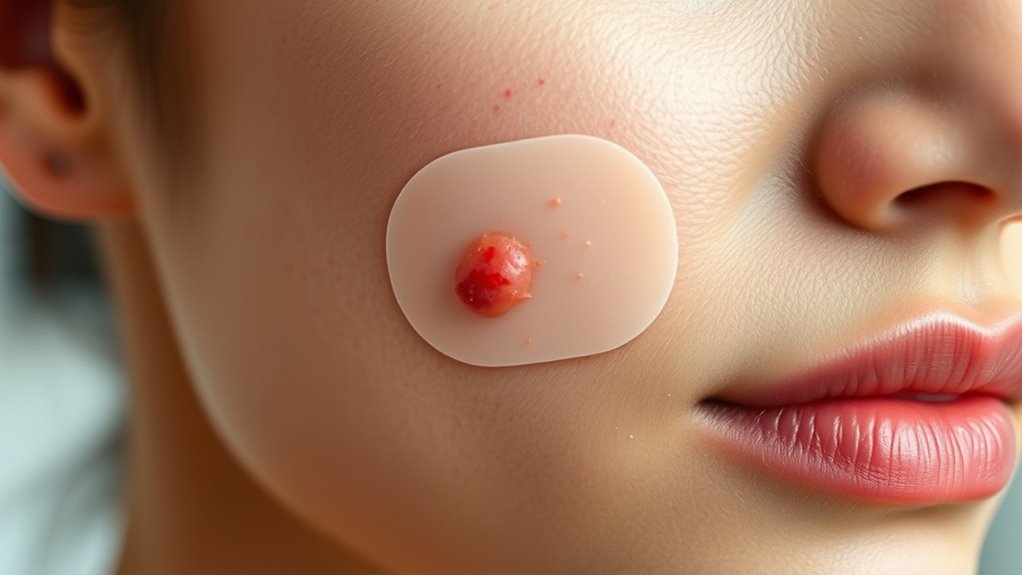

After popping a pimple, clean the area gently with a mild, non-comedogenic cleanser and dry it thoroughly. Apply a medicated patch directly over the open wound, making sure it’s in place for 6 to 8 hours or until saturated. Avoid touching or adjusting the patch unnecessarily. Always keep your hands clean before handling the patch, and replace it as recommended. For more tips on proper patch use and skincare, you’ll find helpful advice below.
Key Takeaways
- Gently clean and dry the area before applying the patch to prevent infection.
- Place the patch directly over the popped pimple, ensuring full coverage.
- Keep the patch on for 6 to 8 hours or until saturated to maximize healing benefits.
- Avoid touching or adjusting the patch unnecessarily to prevent contamination.
- Replace the patch as needed and maintain good skincare practices for optimal recovery.

Popped pimples can be tempting to ignore, but applying a patch can help protect the area and promote healing. When you pop a pimple, you risk pushing bacteria and debris deeper into your skin, which can lead to more inflammation or even scarring. Using a dedicated acne patch immediately after popping can serve as a barrier, preventing dirt, oil, and bacteria from entering the open pore. This simple step is a smart addition to your skincare routine, especially if you want to avoid further breakouts or irritation.
Applying a patch after popping a pimple helps protect and heal your skin.
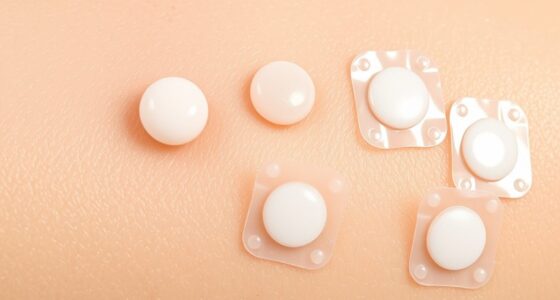
To maximize the benefits, start by gently cleaning the affected area with a mild, non-comedogenic cleanser. Pat your skin dry and make sure no residual oil or makeup remains. Applying a patch over the popped pimple helps keep the area clean and creates a controlled environment for healing. Many patches contain ingredients like hydrocolloid, which absorbs excess fluid and reduces swelling, or salicylic acid, which helps unclog pores. These active ingredients work together to speed up recovery and decrease the chance of infection. Using patches that are formulated with UV filters can also help protect the healing skin from sun damage.
Incorporating patches into your skincare routine doesn’t mean you should neglect your overall pimple prevention strategy. Consistent skincare habits—like cleansing twice daily, exfoliating regularly, and moisturizing—are essential for maintaining clear skin. Avoid picking or squeezing pimples, as this can cause more harm than good. Instead, focus on using targeted treatments and protective patches at the first sign of a pimple to prevent it from worsening.
After applying the patch, try to keep your hands away from your face. Touching or picking at the patch can introduce bacteria and interrupt the healing process. Make sure your hands are clean if you need to adjust or remove the patch. Replace it as recommended, usually after 6 to 8 hours or when it becomes saturated. This consistent approach helps ensure the area remains protected and speeds up healing.
Frequently Asked Questions
Can I Reuse a Pimple Patch After Removing It?
You shouldn’t reuse a pimple patch after removing it. Pimple patch reuse isn’t recommended because it can harbor bacteria, dirt, and oil, which might cause breakouts or infections. Follow the patch longevity guidelines—most patches are designed for single use only. To keep your skin healthy, use a new patch each time you treat a pimple, especially after popping, to guarantee maximum effectiveness and hygiene.
How Long Should I Leave the Patch On?
Imagine waking up with a tiny pimple, and after applying a patch, you wonder how long to keep it on. Generally, you should leave the patch on for the duration guidelines provided—usually 6 to 8 hours or overnight. For removal tips, gently peel it off once the patch turns white or feels saturated. This guarantees maximum absorption and prevents irritation for clear, healthy skin.
Is It Safe to Apply Makeup Over a Pimple Patch?
Yes, you can apply makeup over a pimple patch, but it’s best to choose lightweight, non-comedogenic products to avoid clogging your pores. Keep in mind that the patch may be visible under thicker makeup, so use minimal coverage if you want it to stay discreet. Gently pat the makeup around the patch, and avoid rubbing, to prevent disturbing the patch’s adhesion and effectiveness.
Can I Use a Patch on All Skin Types?
You can use a pimple patch on most skin types, but it’s important to take into account skin compatibility and allergy concerns. If you have sensitive skin or allergies, choose patches with gentle ingredients and do a patch test first. Some skin types may react differently, so monitor for redness or irritation. Always read product labels and consult a dermatologist if you’re unsure about how your skin will react to a specific patch.
What Ingredients Should I Look for in Effective Patches?
Think of effective patches like a trusted sidekick, with ingredients that matter. Look for hydrocolloid benefits, as they absorb excess oil and reduce inflammation, speeding healing. Avoid ingredients that might cause sensitivities, especially if you have sensitive skin. Opt for patches with soothing ingredients like tea tree oil or salicylic acid, which help prevent infection and calm irritation. Choosing the right ingredients guarantees your skin stays healthy while treating pimples effectively.
Conclusion
Stick to these tips and you’ll turn your pimple patch routine into a superhero shield against breakouts. Imagine your skin as a fortress, and each patch as an invincible barrier that keeps bacteria out and healing in. Skip the steps, and your skin might as well invite chaos—think of it as leaving the gates wide open for disaster. So, be diligent, follow the best practices, and watch your skin transform from battleground to beauty in no time!