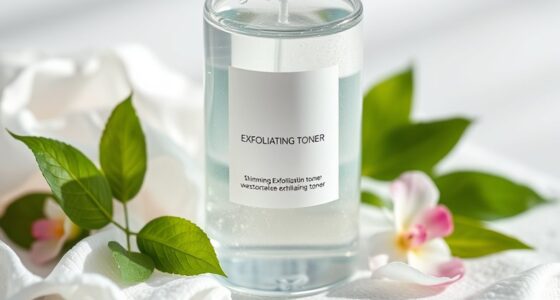

If your skin feels tight, irritated, or starts to redden and inflame, your toner might be doing too much. Persistent discomfort, burning sensations, or a rough, flaky texture are signs your skin’s barrier is being damaged. You may also notice increased sensitivity, dullness, or excess oil and dryness. If these issues persist, it’s time to stop and reassess. Stay tuned for more tips on recognizing and preventing overuse, so your skin stays healthy.

Get beauty and skincare favorites delivered free with Prime
- Fast, free delivery on millions of items
- Prime Video, Amazon Music and more included
- Member-only deals all year
Key Takeaways
- Experience persistent redness, irritation, or burning after using the toner.
- Notice increased skin sensitivity or signs of chemical burns like blistering or swelling.
- Observe rough, flaky, or inflamed skin that worsens over time.
- Detect excessive dryness, oiliness, or dullness indicating disrupted skin balance.
- Develop new or worsening reactions to other skincare products.

Toners can be a game-changer in your skincare routine, but using one that’s too harsh or too potent can do more harm than good. If your skin starts feeling tight, irritated,, or shows signs of redness, it might be a sign that your toner is doing too much. One of the most serious issues you could face is a chemical burn, which occurs when the ingredients in your toner are too strong for your skin’s tolerance. Chemical burns are painful, can cause blistering, and often leave lasting damage if not addressed promptly. To avoid this, it’s essential to pay close attention to how your skin reacts after applying toner, especially if you notice persistent discomfort or burning sensations.
Using harsh toners can cause serious damage like chemical burns, so always monitor your skin’s reaction carefully.
Skin sensitivity varies from person to person, and some formulations are more likely to cause adverse reactions. If you notice your skin becoming more sensitive over time or reacting negatively to your usual products, your toner might be the culprit. This sensitivity can manifest as redness, stinging, or a burning feeling that doesn’t go away quickly. When your skin becomes more reactive, it’s a sign that your toner could be stripping away too much of your skin’s natural oils or disrupting your skin’s barrier. This over-exfoliation or irritation can lead to increased vulnerability to environmental aggressors and even breakouts. Recognizing the importance of skincare formulations that are suitable for your skin type can help prevent these adverse effects. Additionally, understanding how your skin’s barrier function is affected by different ingredients can help you choose products that support your skin’s health rather than compromise it.
Another way to tell if your toner is doing too much is by observing changes in your skin’s texture and appearance. If you notice that your skin feels rougher, flaky, or more inflamed than usual, it could be a sign that your toner is overly aggressive. Overuse or overly potent formulas can cause your skin to lose its balance, leading to dryness or excess oil production as your skin tries to compensate. If your skin looks dull or dullness increases, it might be because your toner is disrupting your skin’s natural glow. Paying attention to ingredient concentrations and how they interact with your skin is essential to prevent overuse and adverse reactions. Additionally, knowing your skin type and choosing the right toner can make a significant difference in avoiding these issues. Being aware of how your skin responds over time can also help you adjust your skincare routine accordingly, ensuring your skin remains healthy and balanced.
Finally, if your skin reacts with persistent redness, peeling, or swelling after using your toner, it’s a clear indication that your product may be too strong. Discontinue use immediately and consult a dermatologist if symptoms persist. Remember, the goal of a toner is to refine and balance your skin, not to cause harm. Choosing products suited for your skin type, starting with lower concentrations, and patch testing before regular use can help prevent these issues. Paying close attention to how your skin responds is the best way to ensure your toner benefits rather than harms your skin. An understanding of skin barrier health and its importance can further assist in selecting the most suitable products for your individual needs.
gentle alcohol-free toner for sensitive skin
As an affiliate, we earn on qualifying purchases.
As an affiliate, we earn on qualifying purchases.
Frequently Asked Questions
Can Over-Toning Cause Skin Sensitivity or Allergic Reactions?
Yes, over-toning can cause skin sensitivity and allergic reactions. When you use too much toner or apply it too frequently, your skin might become irritated, leading to redness, burning, or itching. This overuse can also trigger allergic reactions, especially if your skin is sensitive or if the toner contains harsh ingredients. Always follow product instructions, and if you notice reactions, cut back or stop use and consult a dermatologist.
How Long Should Toner Effects Last Before Reapplication?
Your toner’s effects typically last about 4 to 6 hours, but this depends on your skin type and environment. To maintain fresh, balanced skin, you should consider reapplication every 4 to 6 hours, especially if you’re exposed to sweat or pollution. Monitoring your skin’s response will help you determine the ideal reapplication frequency. Over-reapplying can cause irritation, so balance toner longevity with your skin’s needs.
Are There Specific Ingredients to Avoid in Toners?
Did you know over 60% of skincare products contain potentially harmful chemicals? You should avoid ingredients to avoid like alcohol, parabens, and synthetic fragrances, as they can irritate your skin or disrupt your natural balance. Harmful chemicals may cause dryness or breakouts, so always read labels carefully. Opt for toners with soothing, natural ingredients like witch hazel or aloe vera, and steer clear of harsh chemicals for healthier skin.
Can Using Too Much Toner Lead to Breakouts?
Yes, using too much toner can lead to breakouts. Overapplication may cause pore clogging, trapping dirt and oil, which can trigger acne. If you have ingredient sensitivity, excessive toner might irritate your skin, increasing breakouts. To avoid this, apply toner sparingly and choose formulas suited for your skin type. Pay attention to how your skin reacts, and reduce usage if you notice increased breakouts or irritation.
Is It Safe to Use Toner Daily or Only Occasionally?
Did you know that over 60% of skincare users experience irritation from daily toner use? It’s generally safe to use toner daily if your toner has a balanced pH and suits your skin type. Be mindful of ingredient sensitivity; if you notice redness or dryness, cut back. Always check your toner’s pH—ideally around 5.5—to maintain skin’s natural barrier and prevent over-exfoliation, ensuring daily use stays safe and effective.
Conclusion
Remember, sometimes less is more. If your toner leaves your skin feeling tight, irritated, or overly dry, it’s a sign you’re overdoing it. Pay attention to your skin’s response and adjust accordingly. Skipping or reducing toner use might be just what your skin needs to rebalance. After all, as the saying goes, “Too much of a good thing can turn bad.” Listen to your skin, and find your perfect balance.
Fall Picks
fall essentials
As an affiliate, we earn on qualifying purchases.