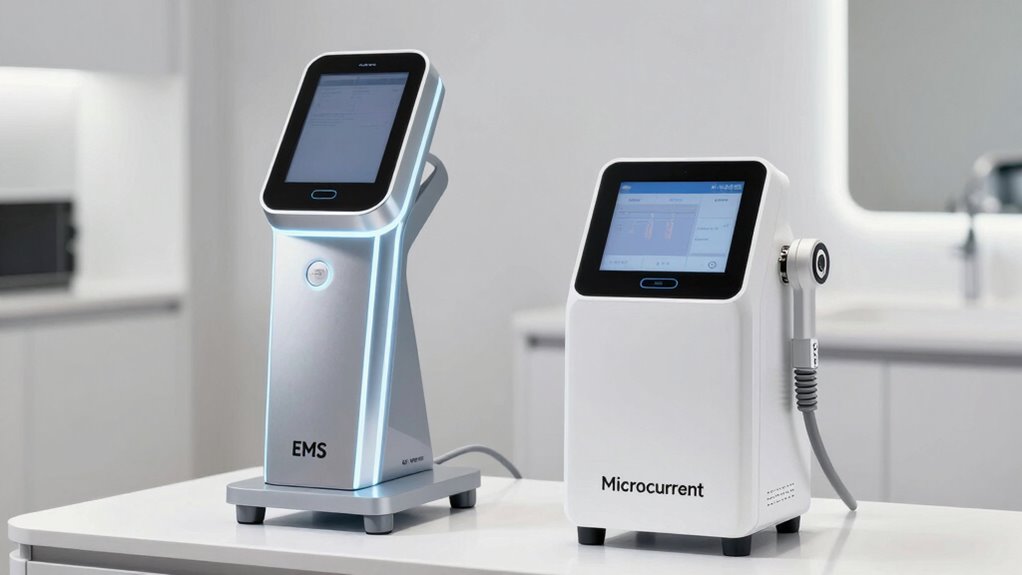

EMS and microcurrent may sound similar, but they serve very different purposes and deliver distinct results. EMS targets muscle stimulation, helping you build strength and recover faster. Microcurrent focuses on skin rejuvenation, reducing fine lines and tightening skin. Confusing the two can lead to wasted money and ineffective treatments. To get the results you want, you need to understand these differences. Keep exploring to discover how each technology can work best for you.

Get beauty and skincare favorites delivered free — and shop member deals
- Fast, free delivery on millions of items
- Access to Prime Big Deal Days deals on October 6–7
- Prime Video, Amazon Music and more included
Key Takeaways
- EMS stimulates muscles with higher electrical impulses, aiming for toning and strength, unlike microcurrent’s cellular skin rejuvenation.
- Microcurrent works at a cellular level to boost collagen and elastin, not muscle contraction like EMS.
- The terms are often used interchangeably, but they serve different purposes—misunderstanding can lead to ineffective treatments.
- Choosing the right device depends on your goals: muscle building (EMS) or skin tightening (microcurrent).
- Proper knowledge prevents wasting money on devices that don’t deliver the intended results for your specific needs.

Electromuscular stimulation (EMS) and microcurrent therapy are both popular methods used to enhance muscle recovery and skin appearance, but they work in different ways. When you hear about muscle stimulation and skin rejuvenation, it’s easy to get confused because these terms are sometimes used interchangeably, even though they target distinct outcomes and employ different technologies. This confusion can lead you to spend money on treatments that aren’t right for your goals or expectations.
EMS primarily focuses on muscle stimulation. It delivers electrical impulses to muscles, causing them to contract just as they would during physical activity. If you’re looking to improve muscle tone, strength, or recovery, EMS devices can help by activating muscle fibers directly. You might see benefits in athletic performance, post-injury recovery, or even muscle toning at home. However, EMS isn’t designed for skin rejuvenation; its main goal is strengthening or rehabilitating muscles through electrical stimulation. When you use EMS, you’re fundamentally tricking your muscles into working without actual exercise, which can be effective but only if your aim is muscle-related.
EMS stimulates muscles by causing contractions, enhancing tone and strength, but isn’t suitable for skin rejuvenation.
Microcurrent therapy, on the other hand, is primarily used for skin rejuvenation. It employs very low-level electrical currents to stimulate the skin’s cells, encouraging increased production of collagen and elastin. If your goal is to reduce the appearance of fine lines, wrinkles, or sagging skin, microcurrent devices can help improve skin elasticity and give you a more youthful look. Microcurrent treatments are often called “non-invasive facelifts” because they tighten and tone the skin without surgery. Unlike EMS, microcurrent doesn’t cause significant muscle contractions; instead, it works on a cellular level to promote healthier, more resilient skin. Understanding electrical currents is crucial for choosing the right device and maximizing your results. Additionally, knowing the specific technology involved can help you differentiate between the two and select the most effective option. Recognizing these differences can also prevent you from investing in ineffective treatments.
The key to avoiding wasting money is understanding these differences. Many products and clinics label their offerings as “microcurrent” or “EMS,” but not all deliver the same results. If you’re after muscle building or recovery, EMS is your go-to. If skin rejuvenation and a more youthful appearance are your goals, microcurrent therapy is more suitable. Mistaking one for the other can lead to ineffective treatments, wasting your time and money. Always check what the device or treatment claims to do, and match that with your specific goals.
In the end, knowing the distinction helps you make smarter choices, ensuring you invest in the right technology for your needs. Whether it’s muscle stimulation for strength or skin rejuvenation for a fresh look, understanding these differences prevents confusion and saves you from unnecessary expenses.
As an affiliate, we earn on qualifying purchases.
Frequently Asked Questions
Can EMS and Microcurrent Treatments Be Used Together Safely?
Yes, EMS and microcurrent treatments can be used together safely if you follow proper electrode placement and treatment frequency. You should space out sessions to prevent overstimulation and guarantee your skin responds well. Consult with a professional to customize your plan, as they’ll advise on safe electrode placement and appropriate treatment frequency. Combining these treatments can enhance results, but doing so responsibly is key to avoiding adverse effects.
What Are the Long-Term Effects of Microcurrent Therapy?
Microcurrent therapy is generally safe long-term when you consider electrode placement and treatment duration. You might experience minimal side effects, like slight redness or tingling, which typically fade quickly. Proper electrode placement is essential to avoid discomfort and guarantee effectiveness. As long as you follow recommended treatment durations and consult with a professional, the long-term effects are positive, promoting skin rejuvenation and muscle tone without lasting risks.
Are There Specific Conditions Better Suited for EMS?
Think of EMS as your muscle’s personal trainer, best suited for muscle rehabilitation and easing chronic pain. When you need targeted muscle strengthening or recovery, EMS acts like a guiding hand, activating deep muscles that often go unnoticed. If your goal is to rebuild strength or recover from injury, EMS is your go-to. It’s like having a skilled coach working behind the scenes to get your muscles back in shape.
How Quickly Can I Expect Visible Results From EMS?
You can usually expect visible results from EMS within a few weeks, depending on your treatment duration and muscle activation level. Consistent sessions, typically 2-3 times a week, help strengthen muscles and improve tone. Keep in mind, individual results vary, but regular EMS use accelerates muscle activation and enhances your overall fitness. Stick with your routine, and you’ll start seeing noticeable improvements sooner.
Do Professional Clinics Guarantee Better Outcomes Than Home Devices?
Think of professional clinics like expert chefs preparing a gourmet meal—you’re more likely to get ideal results. While they often guarantee better outcomes, focus on treatment safety and cost effectiveness. A trained specialist ensures proper technique, reducing risks, and maximizing benefits. Home devices can be effective, but they might not match the precision and intensity of professional treatments. Ultimately, investing in expert care can save you money and ensure safer, more reliable results.
Conclusion
So, now you see, EMS and microcurrent are like two siblings with different talents—one boosts your muscles, the other gently refreshes your skin. Don’t let the confusing names drain your wallet chasing the wrong treatment. Knowing the difference is your secret weapon, turning what seems like a maze into a clear path. Remember, choosing the right technology is the key to accessing real results—don’t let the name game be the thief of your hard-earned money.
Fall Picks
fall essentials
As an affiliate, we earn on qualifying purchases.