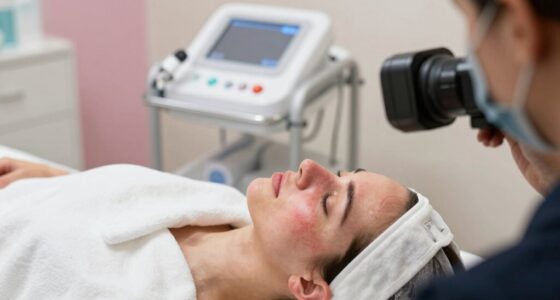

Your skin’s barrier is essential because it protects you from environmental damage, bacteria, and moisture loss. When it’s healthy, your skin feels resilient, smooth, and hydrated. But if your barrier becomes compromised, it can cause dryness, redness, and irritation. Taking care of it through natural remedies, gentle skincare, and hydrotherapy can strengthen and repair your skin. Keep going to discover more ways to keep your barrier healthy and resilient.
Key Takeaways
- The skin barrier protects against environmental damage, bacteria, and moisture loss, maintaining overall skin health.
- A healthy barrier keeps skin resilient, smooth, and well-hydrated, preventing dryness, redness, and irritation.
- Damage to the barrier leads to increased sensitivity, breakouts, and skin issues requiring proper care and restoration.
- Hydrotherapy and natural remedies can strengthen and repair the skin barrier by improving circulation and providing soothing nutrients.
- Maintaining a strong skin barrier supports long-term skin resilience, reduces signs of aging, and promotes a healthy, radiant complexion.
Your skin barrier is your body’s first line of defense, protecting you from environmental damage, bacteria, and moisture loss. When it’s healthy, your skin feels resilient, smooth, and well-hydrated. But when it’s compromised, you might notice dryness, redness, irritation, or breakouts. That’s why understanding how to support and maintain this essential shield is crucial. One effective way to do so involves exploring natural remedies and hydrotherapy benefits, both of which can strengthen your skin’s protective layer.
Your skin barrier protects against damage and moisture loss, keeping your skin resilient and healthy.
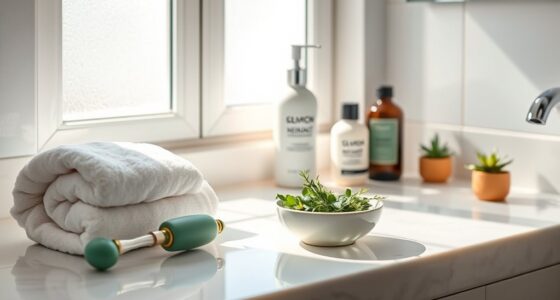
Hydrotherapy benefits are often overlooked, but they can play a significant role in skin health. Gentle water treatments, like warm compresses or soothing baths, help improve circulation and promote healing. This increases nutrient flow to your skin, aiding repair and fortification of the barrier. Additionally, hydrotherapy can reduce inflammation and calm irritation, especially when combined with natural remedies like herbal infusions or essential oils. These treatments are gentle and free from harsh chemicals, making them suitable for sensitive skin. Using natural remedies in conjunction with hydrotherapy can amplify these benefits, providing a holistic approach to skin barrier restoration.
Supporting your skin barrier with natural remedies is a smart choice. Ingredients like aloe vera, chamomile, and coconut oil are known for their soothing, healing properties. They nourish the skin without clogging pores or causing further damage. Incorporating these into your skincare routine helps reinforce the barrier, making it more resilient against environmental stressors. You might also consider using products with ceramides or fatty acids, which mimic your skin’s natural lipids, to restore barrier function. When combined with calming hydrotherapy sessions, these remedies can accelerate recovery and improve overall skin health.
Maintaining your skin barrier isn’t just about topical treatments; lifestyle habits matter too. Staying well-hydrated, eating a balanced diet rich in antioxidants, and avoiding overexposure to harsh elements protect your skin from damage. Using gentle cleansers and avoiding overly hot showers prevent stripping away essential oils that keep your barrier intact. Regularly integrating hydrotherapy benefits, like relaxing baths, can also provide a soothing environment that promotes skin repair. Being mindful of your skincare routine and understanding skin barrier health can help prevent common issues like dryness and irritation. When these practices are combined with natural remedies, you’re creating a supportive environment for your skin to heal and thrive.
In essence, caring for your skin barrier involves a combination of gentle, natural approaches and mindful habits. Hydrotherapy benefits and natural remedies work hand in hand to strengthen your skin’s defenses, helping you maintain a healthy, resilient barrier. By nurturing your skin with these practices, you ensure it remains protected against daily stressors and environmental damage, keeping your skin looking and feeling its best.
Frequently Asked Questions
How Can I Tell if My Skin Barrier Is Damaged?
You can tell your skin barrier is damaged if your skin becomes more sensitive, shows increased redness, or feels rough and uneven. Pay attention to changes in skin texture, like rough patches or flakiness, and notice if redness persists or worsens. These signs indicate your skin struggles to protect and heal itself, so it’s important to give it gentle care, avoid harsh products, and focus on restoring your skin’s barrier.
Are There Specific Ingredients That Help Repair the Skin Barrier?
Think of your skin barrier as a fortress. To repair it, you need the right tools—look for ingredients like ceramides, which act as the mortar holding the bricks together. Ceramide therapy strengthens and restores your barrier, preventing damage and lock in moisture. Incorporate barrier repair products with these key ingredients into your routine, and you’ll rebuild your fortress, keeping your skin resilient and healthy.
Can Skincare Routines Worsen a Compromised Skin Barrier?
Yes, your skincare routine can worsen a compromised skin barrier if you use harsh ingredients or over-exfoliate. Avoid products with alcohol, fragrances, or strong acids that strip your skin’s natural defenses. Instead, focus on gentle, hydrating steps to restore petal softness and protect against environmental damage. Don’t forget sun protection, as UV rays can further weaken your barrier. Consistency and gentle care help your skin recover and stay resilient.
How Long Does It Take to Restore a Damaged Skin Barrier?
It usually takes about 4 to 6 weeks to restore a damaged skin barrier if you’re consistent with your skincare. Think of it as a marathon, not a sprint—skin renewal and barrier recovery require patience. During this time, focus on gentle cleansing, moisturizing, and avoiding harsh products. Keep at it, and you’ll see your skin gradually bounce back, proving that good things come to those who wait.
Is a Damaged Skin Barrier Linked to Skin Conditions Like Eczema?
Yes, a damaged skin barrier is linked to skin conditions like eczema. When your skin barrier is compromised, it becomes more sensitive, leading to increased skin sensitivity and difficulty retaining moisture. This can trigger flare-ups and worsen eczema symptoms. Protecting your barrier helps improve moisture retention and reduces sensitivity, making your skin less prone to irritation and inflammation. Proper skincare and barrier repair are essential for managing these conditions effectively.
Conclusion
Your skin barrier is your first line of defense, protecting you from pollutants and irritants. When it’s healthy, your skin stays smooth, hydrated, and resilient. Did you know that up to 80% of skin issues stem from a compromised barrier? By taking simple steps like gentle cleansing and moisturizing, you can keep it strong. So, prioritize your skin’s health—your glow depends on it!