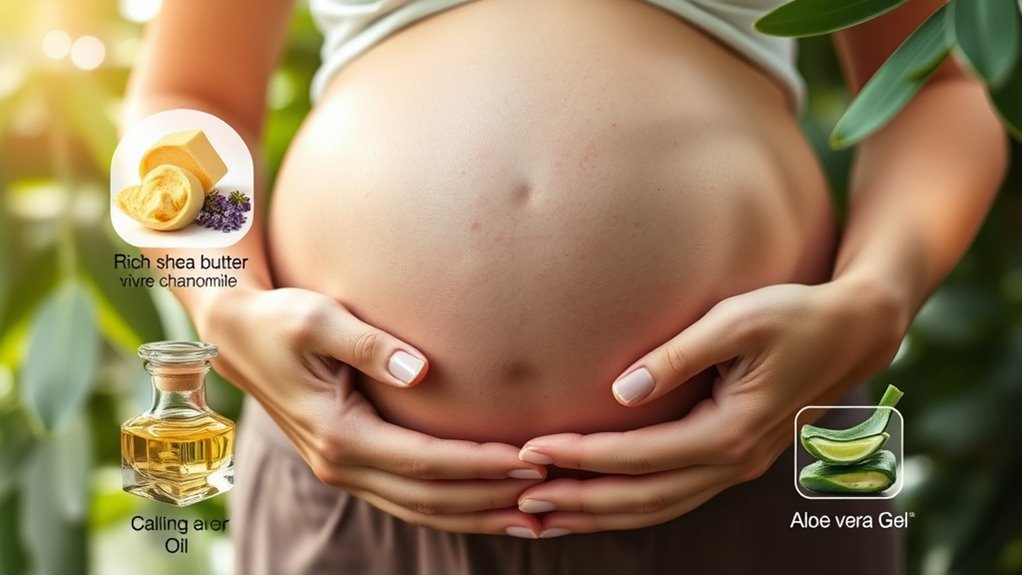

During pregnancy, it’s important to choose gentle, natural skincare ingredients like shea butter, coconut oil, aloe vera, and vitamin E, which help keep your skin hydrated and elastic. Avoid harsh chemicals such as retinoids, salicylic acid, and hydroquinone. Use pregnancy-safe sunscreens with mineral filters like zinc oxide. Supporting your skin from inside with proper hydration and a balanced diet also makes a big difference. Keep these tips in mind to protect your skin and stay safe throughout pregnancy.
Key Takeaways
- Prioritize natural, pregnancy-safe ingredients like shea butter, aloe vera, and coconut oil for gentle skin nourishment.
- Avoid harmful chemicals such as retinoids, salicylic acid, and hydroquinone in skincare products during pregnancy.
- Use mineral-based sunscreens with zinc oxide or titanium dioxide to protect skin from UV damage safely.
- Incorporate hydrating foods rich in vitamins A, C, and E to support internal skin health.
- Choose gentle cleansers and moisturizers free from fragrances and harsh chemicals for daily skincare routines.

Pregnancy brings many changes to your body, and your skin is no exception. As your hormones fluctuate, you might notice new or intensified skin issues like dryness, acne, or stretch marks. Navigating these changes can be overwhelming, especially when you want to keep your skin healthy and safe. Fortunately, there are natural remedies and skincare routines that can help you manage these concerns without risking your baby’s health. The key is to choose ingredients that are gentle, effective, and pregnancy-safe.
Pregnancy changes your skin; opt for gentle, natural remedies to stay safe and healthy.
When building your skincare routine during pregnancy, focus on products with natural ingredients known for their soothing and nourishing properties. Look for gentle cleansers that avoid harsh chemicals and fragrances, helping to prevent irritation. Incorporate moisturizers with ingredients like shea butter, coconut oil, or aloe vera, which hydrate your skin naturally and reduce the appearance of stretch marks. These ingredients not only nourish your skin but also promote elasticity, which can be beneficial as your body changes. For targeted treatments, consider natural options like vitamin E oil or cocoa butter, which are often used to improve skin elasticity and diminish scars or stretch marks over time.
It’s crucial to be cautious about what you apply to your skin. Many over-the-counter skincare products contain retinoids, salicylic acid, or hydroquinone, which are generally not recommended during pregnancy. Instead, opt for natural remedies, such as oatmeal masks or honey-based treatments, that soothe irritation and calm inflammation. Regularly following a consistent skincare routine helps keep your skin balanced and resilient against pregnancy-related changes. Remember, simplicity is often best—overloading your skin with too many products can lead to breakouts or irritation.
Additionally, protecting your skin from the sun is essential. Use a pregnancy-safe sunscreen with mineral ingredients like zinc oxide or titanium dioxide to shield your skin from harmful UV rays. Sun protection is essential for preventing dark spots and hyperpigmentation, which pregnancy can exacerbate. Staying well-hydrated and maintaining a balanced diet rich in vitamins A, C, and E supports your skin from the inside out, complementing your natural remedies and skincare routines. Incorporating gentle, natural ingredients is especially important as many skincare formulations contain unnatural chemicals that may not be safe during pregnancy.
Frequently Asked Questions
Are Natural Ingredients Safer During Pregnancy?
Natural ingredients can be safer during pregnancy, but you should be cautious. Hormonal changes and increased skin sensitivity make some natural products irritating or harmful. Always check with your healthcare provider before trying new ingredients, especially if you experience redness or discomfort. While many natural options are gentle, some can still cause reactions. Stick to well-known, pregnancy-safe ingredients and perform patch tests to confirm your skin tolerates them.
Can I Use Exfoliants While Pregnant?
Think of your skin as a delicate garden needing gentle care. You can use pregnancy-safe exfoliants, but avoid harsh scrubs and strong chemical peels. Opt for gentle options like enzyme or lactic acid exfoliants, which serve as chemical peel alternatives. Always consult your healthcare provider before starting any new skincare routine during pregnancy. This way, you protect your skin without risking harm to your baby.
What Skincare Ingredients Should I Avoid Entirely?
You should avoid ingredients like chemical sunscreens and retinoid-based products during pregnancy. Chemical sunscreens contain ingredients that may harm your baby, so opt for mineral sunscreens instead. Retinoids, found in many anti-aging products, can cause birth defects and should be completely avoided. Always check labels and consult your healthcare provider before trying new skincare products to guarantee they’re safe for both you and your baby.
How Can I Treat Pregnancy-Related Skin Pigmentation?
To treat pregnancy-related skin pigmentation, you should focus on gentle, safe options due to hormonal changes. Use broad-spectrum sunscreen daily to prevent further darkening. Incorporate mild, pregnancy-safe hyperpigmentation treatments like vitamin C serums, which can brighten your skin. Avoid harsh chemicals, and consult your dermatologist before trying other treatments. Staying consistent with sun protection and gentle skincare can help improve pigmentation gradually.
Are Essential Oils Safe for Pregnant Skincare?
Think of essential oils as delicate whispers from nature; while they can enhance your pregnancy skincare, their safety isn’t guaranteed. Essential oil safety varies, and not all oils are suitable during pregnancy. You should consult your healthcare provider before incorporating any essential oils into your routine. Always choose high-quality, pregnancy-safe options, and use them sparingly. When in doubt, it’s better to err on the side of caution to protect both you and your baby.
Conclusion
Think of your skincare journey during pregnancy as tending a delicate garden. Just as you’d choose gentle, nourishing plants to protect precious blooms, you should select safe ingredients to nurture your skin without harm. With careful choices, you create a vibrant, healthy landscape that blossoms beautifully—both inside and out. Trust your instincts, stay informed, and tend your garden with love. Your radiant glow is the blossoming reward of a mindful, caring approach.