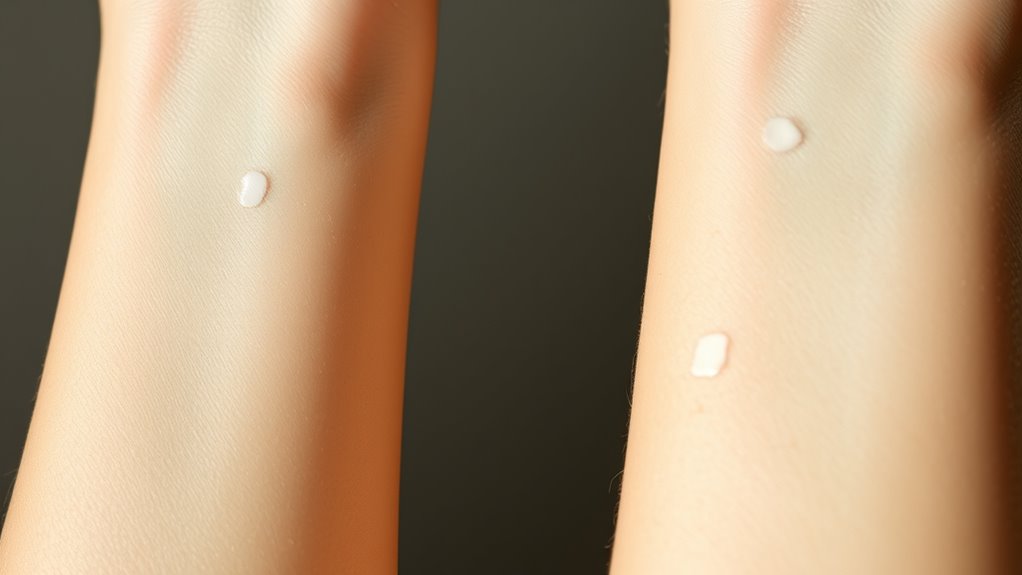

Before trying new skincare products, do a patch test by applying a small amount on discreet skin, like behind the ear or inner forearm, and cover it with a bandage. Observe for 24 to 48 hours for signs of redness, swelling, or itching. Pay attention to both immediate and delayed reactions, and avoid full use if irritation occurs. Keep learning about safe testing methods to protect your skin and enjoy your skincare routine confidently.
Key Takeaways
- Choose discreet skin areas like behind the ear or inner forearm for testing.
- Apply a small amount of the product on clean, dry skin and cover with a bandage.
- Leave the patch in place for 24 to 48 hours, then monitor for redness, swelling, or itching.
- Watch for delayed reactions in the days following removal before full product use.
- Check ingredient lists for common allergens and start with a patch test to minimize allergy risks.

Have you ever wondered if a new skincare product might cause an allergic reaction? It’s a common concern, especially when you’re eager to try the latest serum or moisturizer. Before slathering it all over your face, it’s smart to do a patch test. This simple step helps you identify potential allergy symptoms and assess ingredient safety without risking a full-blown reaction. By understanding how to properly patch test, you can enjoy skincare products confidently, knowing you’re safeguarding your skin’s health.
The first step is to choose a small, discreet area of skin—usually behind your ear or on your inner forearm. These spots are sensitive enough to detect reactions but less visible if irritation occurs. When you pick a spot, make sure it’s clean and dry. Apply a thin layer of the product, and then cover it with a bandage or tape. Leave it in place for at least 24 hours, but ideally up to 48 hours if possible. During this time, keep an eye out for any signs of allergy symptoms, such as redness, swelling, itching, blistering, or rash. These symptoms indicate that your skin may be reacting to one or more ingredients.
Understanding ingredient safety is essential when selecting products to patch test. Some ingredients are more likely to cause allergic reactions, especially if you have sensitive skin or a history of allergies. Common culprits include fragrances, preservatives, and certain dyes. Checking the ingredient list beforehand can help you identify if a product contains known irritants or allergens. If you notice any allergy symptoms during the patch test, it’s best to avoid using the product altogether. Even if no immediate reaction occurs, it’s wise to wait a few days before applying the product to your entire face or body. Sometimes, allergic responses can be delayed, and a patch test helps catch these subtler symptoms early.
Check ingredient lists for known irritants before patch testing your skincare.
Additionally, considering the cost of products before testing can help you make informed choices about how often to perform patch tests, especially when trying higher-end or more expensive formulations. If your skin shows no signs of irritation after the patch test, you can proceed cautiously with regular use. However, always remember that even ingredients deemed safe for most might still trigger a reaction in sensitive individuals. It’s wise to start with small amounts and monitor your skin’s response over the next few days. Patch testing isn’t foolproof, but it’s a valuable step in protecting yourself from unwanted allergy symptoms. Taking this precaution ensures you enjoy your skincare routine without surprises, giving you peace of mind as you explore new products.
Frequently Asked Questions
How Often Should I Perform Patch Tests for New Products?
You should perform patch tests whenever you try a new product, especially if it has different ingredients or uncertain product durability. Doing it once isn’t enough—repeat after a few weeks or if you notice any skin changes. This helps safeguard your skin from potential reactions and guarantees ingredient transparency. Regular testing keeps you aware of how your skin responds, minimizing irritation and helping you enjoy your skincare routine safely.
Can Patch Testing Predict All Allergic Reactions?
Patch testing can help identify some allergenic reactions, but it doesn’t predict all allergic responses. Testing accuracy varies depending on the product and individual skin sensitivity. You should understand that even if a patch test shows no reaction, you might still develop an allergic reaction later. Always monitor your skin’s response after trying new products, and consult a dermatologist if you notice any irritation or symptoms.
What Should I Do if I Experience a Reaction?
Imagine applying a new skincare product and suddenly noticing allergic symptoms like redness or swelling. If this happens, you should immediately rinse the area with cool water and avoid using the product again. To prevent irritation, keep your skin moisturized and avoid harsh ingredients. If symptoms persist or worsen, consult a dermatologist promptly. Always listen to your skin and prioritize irritation prevention to maintain healthy, happy skin.
Are Patch Tests Suitable for Sensitive Skin Types?
If you have sensitive skin, patch tests are usually suitable because they help you check ingredient safety before full application. They allow you to identify potential reactions related to your skin sensitivity, avoiding irritation or allergic responses. By testing a small amount of the product on your skin first, you can confidently determine if it’s safe to use, reducing the risk of adverse reactions and ensuring your skincare routine stays gentle.
How Long Does a Patch Test Typically Take?
Did you know that most patch tests take about 48 hours? You should plan for this duration to accurately assess product durability and any potential reactions. During this time, you’ll need to follow specific patch test techniques, like applying a small amount of the product on your skin and monitoring for irritation. This process helps make certain your skin’s safety before fully incorporating new products into your routine.
Conclusion
Think of patch testing as your personal compass through a sea of new products. It guides you safely past hidden storms and treacherous waters, helping you chart a course that keeps your skin’s journey smooth and calm. By taking this small step, you become the captain of your skin’s voyage, steering with confidence and awareness. Embrace patch testing as your lighthouse—illuminating safe paths and steering clear of unseen hazards on your skincare adventure.