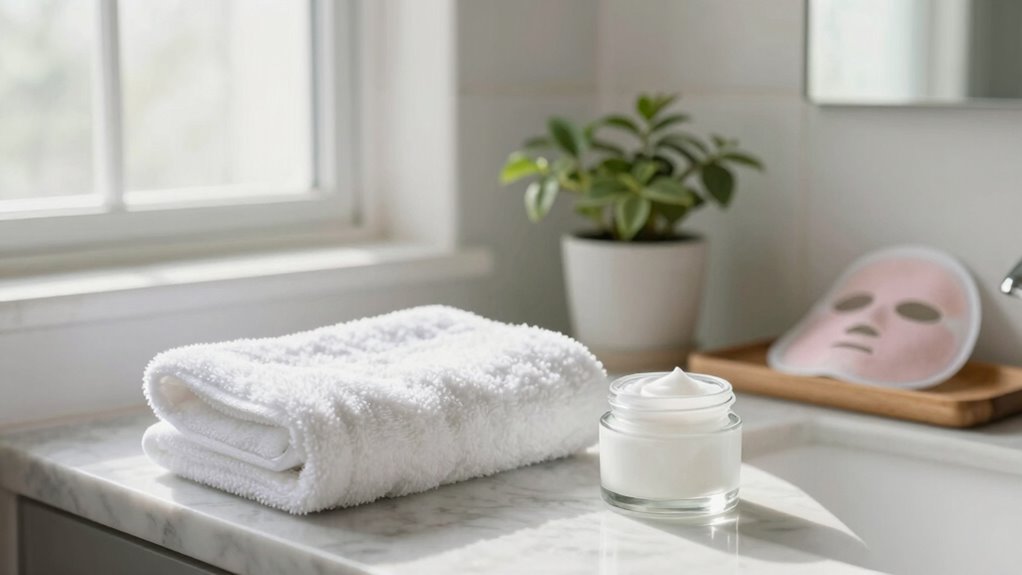

On skin recovery days, you should focus on gentle care, hydration, and natural remedies. Avoid makeup and harsh products, giving your skin space to breathe and repair itself. Use soothing treatments like aloe vera, honey, or chamomile to calm irritation, and keep your skin hydrated with plenty of fluids and nourishing moisturizers. Prioritize restful sleep and a healthy diet to support healing. For more tips on making your recovery days truly effective, keep exploring what works best.

Get beauty and skincare favorites delivered free with Prime
- Fast, free delivery on millions of items
- Prime Video, Amazon Music and more included
- Member-only deals all year
Key Takeaways
- Prioritize gentle cleansing, hydration, and natural remedies to promote skin healing and renewal.
- Avoid makeup and heavy products to allow skin to breathe and recover effectively.
- Incorporate soothing treatments like aloe vera, honey, and chamomile to reduce irritation and redness.
- Maintain consistent hydration and nourishing routines to support skin resilience and repair.
- Practice patience, listen to your skin’s signals, and focus on calming rituals for optimal recovery.

Have you ever wondered how long it takes for your skin to bounce back after a tough day or a skincare mishap? Recovery times vary depending on the severity of the issue, but understanding what your skin needs during this period is essential. Skin recovery days aren’t just about avoiding makeup or heavy products—they’re about giving your skin the care it craves to repair itself effectively. A significant part of this process involves embracing natural remedies that soothe and heal, and establishing solid hydration routines that support skin renewal.
Skin recovery days focus on gentle care, natural remedies, and hydration to help your skin heal and renew effectively.
When your skin is showing signs of stress—redness, irritation, dullness—turn to natural remedies like aloe vera, honey, or chamomile. These ingredients have calming properties that reduce inflammation and promote healing. Applying a gentle aloe vera gel can instantly soothe irritated skin, while honey acts as a natural humectant, drawing moisture back into your cells. Chamomile tea bags, cooled and placed on your eyes or face, can help reduce puffiness and redness. These remedies are simple, accessible, and free from harsh chemicals, making them ideal for recovery days. Incorporating natural remedies into your routine can significantly enhance the healing process by supporting your skin’s natural defenses and resilience.
Hydration routines play an indispensable role in skin recovery. Your skin needs water to repair and regenerate, so prioritize drinking plenty of fluids—water, herbal teas, or infused waters rich in antioxidants. Moisturizing frequently with a gentle, nourishing cream helps lock in hydration, especially if your skin feels dry or tight. Consider incorporating hydrating serums with hyaluronic acid, which attracts moisture to the skin’s surface. Avoid using harsh cleansers or exfoliants during recovery; instead, opt for a mild, hydrating cleanser that doesn’t strip your skin’s natural oils. This approach preserves your skin’s barrier and keeps it resilient against environmental stressors. Additionally, skincare routines that are gentle and consistent can make a significant difference in the healing process. Recognizing how skincare ingredients support skin recovery can help you choose the most effective products for your needs.
During skin recovery days, it’s also essential to give your skin a break from makeup and aggressive skincare routines. Let your skin breathe, and focus on gentle cleansing, hydration, and nourishment. Sleeping well and maintaining a balanced diet rich in vitamins and antioxidants further supports your skin’s healing process. Regularly monitoring your skin’s condition and adjusting your routine accordingly can help you identify what products or practices work best for your individual needs. Remember, patience is crucial—your skin needs time to recover, and rushing things can prolong discomfort or damage.
In essence, what skin recovery days should look like is a calming ritual centered on nurturing your skin naturally and keeping it well-hydrated. Incorporate natural remedies whenever possible, stay consistent with hydration routines, and listen to your skin’s signals. With gentle care and patience, you’ll help your skin bounce back stronger and healthier, ready to face whatever comes next.
As an affiliate, we earn on qualifying purchases.
Frequently Asked Questions
Can I Wear Makeup on Skin Recovery Days?
Yes, you can wear makeup on skin recovery days, but it’s best to be cautious. Opt for lightweight, non-comedogenic products that won’t clog pores. Avoid heavy makeup application, as it can cause skin irritation or worsen any existing irritation. Make sure your skin is clean before applying makeup, and remove it gently at the end of the day. Listening to your skin’s response helps prevent irritation and supports proper healing.
How Long Should Recovery Days Last?
Recovery days should last at least 24 to 48 hours, giving your skin a much-needed break from active ingredients and stress. During this time, stick to gentle skincare routines and prioritize hydration habits to soothe and repair your skin. Think of it as hitting the reset button—your skin needs time to recover fully. Listen to your skin’s signals, and don’t rush the process; patience is your best ally.
Is It Okay to Exercise During Recovery Days?
Yes, you can exercise during recovery days, but keep it light and gentle to support your fitness routines without overtaxing your skin. Opt for activities like walking or stretching, which promote circulation without strain. Remember to stay well-hydrated by following hydration tips, as proper hydration helps your skin recover faster and keeps your body energized. Listening to your body is key—if you feel exhausted, take a complete rest.
Should I Avoid Sun Exposure on Recovery Days?
On recovery days, you should definitely avoid sun exposure to safeguard your skin’s healing process. Picture yourself in a cozy shade, shielding your skin from harsh rays. Prioritize sun protection by applying broad-spectrum sunscreen and wearing protective clothing. Incorporate hydrating routines like gentle moisturizers and plenty of water, helping your skin recover and stay supple. This mindful approach guarantees your skin gets the rest it needs while staying protected.
Can I Use Exfoliants During Recovery Days?
You should generally avoid using chemical exfoliants and physical scrubs during recovery days, as your skin needs gentle care. These products can cause irritation, redness, and delay healing. Instead, opt for soothing, hydrating products that support your skin’s recovery process. If you’re unsure, consult your dermatologist, but in most cases, giving your skin a break from exfoliants helps restore its natural barrier and promotes faster healing.
Conclusion
Don’t rush your skin’s healing process. Recovery days are essential for your skin to repair and stay healthy, so give yourself permission to rest without guilt. If you think taking it easy means neglecting your skincare goals, think again—proper recovery actually boosts your results. Remember, patience pays off. Embrace your recovery days as an investment in your skin’s future glow, and you’ll see better, lasting results without risking irritation or setbacks.
Halloween Picks
halloween
As an affiliate, we earn on qualifying purchases.