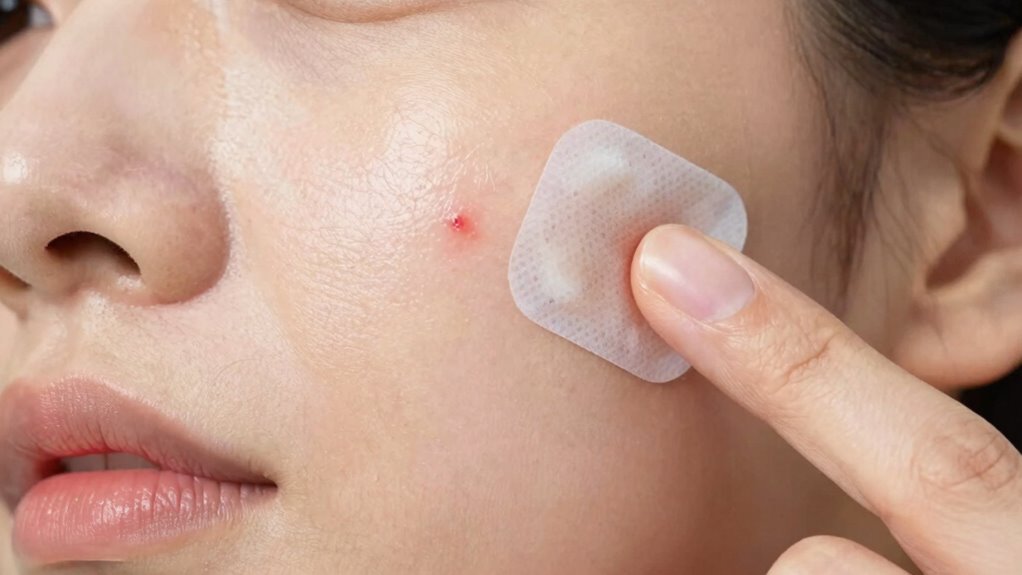
To avoid making your pimple look bigger later, make sure to clean your skin thoroughly with an oil-free cleanser before applying the patch. Pat your skin dry and carefully place the patch directly over the blemish, smoothing out any air bubbles. Leave it on for the recommended time and gently remove it without tugging. Using patches correctly and patiently will help your skin heal without extra swelling, and you’ll find more helpful tips ahead.

Get beauty and skincare favorites delivered free with Prime
- Fast, free delivery on millions of items
- Prime Video, Amazon Music and more included
- Member-only deals all year
Key Takeaways
- Cleanse and dry your skin thoroughly before applying the patch to ensure proper adhesion and prevent irritation.
- Carefully place the patch over the pimple, smoothing out air bubbles for a flat, secure fit.
- Leave the patch in place for the recommended time without touching or removing it prematurely.
- Remove the patch gently from the edges, avoiding tugging to prevent skin trauma or swelling.
- Use patches consistently overnight and follow proper removal techniques to promote healing without enlarging the spot.
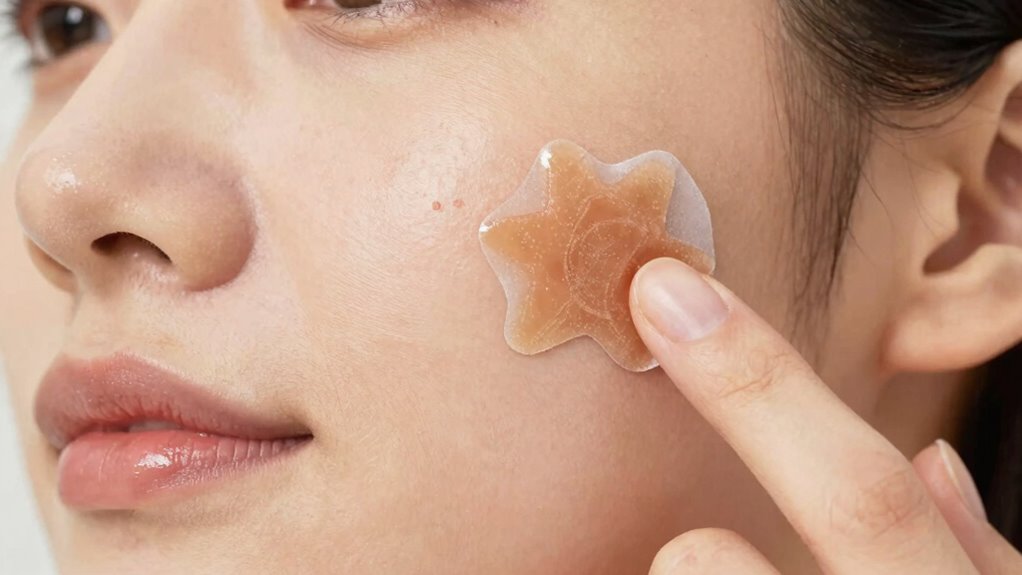
If you’re dealing with a stubborn pimple, using a patch can be an effective way to target it directly. But if you want to avoid making the spot look bigger later, it’s essential to get the application right. The first step is understanding the pimple patch ingredients. Look for patches containing hydrocolloid, which absorbs excess oil and pus, reducing inflammation and promoting healing. Some patches also include ingredients like salicylic acid or tea tree oil, which help fight bacteria and calm the skin. Knowing what’s in your patch helps you select the right one for your skin type and pimple severity. Additionally, choosing patches with appropriate ingredients can enhance healing and prevent irritation.
Next, focus on the patch application technique. Before applying the patch, cleanse your skin thoroughly. Use a gentle, oil-free cleanser to remove dirt, oil, and makeup that could interfere with adhesion. Pat your skin dry; a dry surface ensures the patch sticks properly without slipping or causing irritation. When you’re ready to apply, peel the patch carefully from its backing, avoiding touching the adhesive side to prevent contamination. Place the patch directly over the pimple, making sure it covers the entire blemish and adheres smoothly without air bubbles or wrinkles. Proper application ensures the patch stays in place and functions effectively. Preparing the skin properly can also help the patch adhere better and work more efficiently.
Cleanse thoroughly, dry skin, then carefully apply patch without bubbles for best healing results.
Applying the patch with precision reduces the risk of it lifting prematurely and minimizes the chance of the spot appearing larger later. If the patch isn’t sticking well, gently press down around the edges to secure it. Avoid touching or removing the patch too often—once it’s in place, let it sit for the recommended period, usually several hours or overnight. Removing it too soon can disrupt the healing process or cause the skin to look inflamed. When you do take it off, do so gently, pulling from the edges without tugging on the skin. Ensuring correct removal helps prevent irritation and unnecessary trauma to the skin.
Another tip is not to reuse patches, as this can introduce bacteria and decrease their effectiveness. If you notice redness, irritation, or worsening of the spot, remove the patch immediately and give your skin time to breathe. For best results, incorporate patch use into your skincare routine consistently, especially overnight, when your skin repairs itself most actively. Staying consistent with application helps you achieve a clearer complexion over time.
Frequently Asked Questions
Can Pimple Patches Cause Skin Irritation or Allergies?
Pimple patches can cause skin irritation or allergies, especially if you have sensitive skin. Some patches contain adhesives or ingredients that might trigger allergy risks, leading to redness or discomfort. To prevent this, choose hypoallergenic options and do a patch test first. If your skin reacts negatively, remove the patch immediately and consult a dermatologist. Being cautious helps protect your skin while effectively treating pimples.
How Long Should I Leave a Pimple Patch On?
Many believe pimple patches should stay on overnight, but the truth is, leaving them on for about 6-8 hours usually works best. This aligns with the skin healing process, allowing the patch to absorb impurities without causing irritation. Pimple patch myths suggest longer is better, but removing it too late can trap bacteria. Check the product instructions, and don’t keep it on longer than recommended to prevent skin issues.
Are Pimple Patches Effective on Cystic Acne?
Pimple patches are generally less effective on cystic acne because they target surface-level blemishes. However, certain pimple patch types, like hydrocolloid ones, can help absorb excess fluid and reduce inflammation. For cystic acne, consider using targeted acne treatment options like topical retinoids or benzoyl peroxide in addition to patches. Keep in mind that patches are best suited for smaller, surface-level pimples, not deep cysts.
Can I Use a Pimple Patch Overnight?
Yes, you can use a pimple patch overnight. Imagine a quiet night, the patch gently sealing your blemish like a protective shield. Avoid the common pimple patch myths that they’re only for daytime. For best application techniques, clean your skin thoroughly, dry completely, and press the patch firmly over the spot. Leaving it on overnight allows it to work while you sleep, reducing inflammation and helping your skin heal.
Do Pimple Patches Work on Blackheads?
Yes, pimple patches can help with blackheads, especially when they contain ingredients like hydrocolloid that draw out impurities. While some believe pimple patches only work on surface pimples, they can also be used as an alternative for blackheads. However, remember that many pimple patch myths exist, and they’re not a cure-all. Use them as part of your skincare routine, and don’t expect instant results.
Conclusion
Now that you know how to properly use a pimple patch, you’re all set to keep your skin clear and smooth. Remember, applying the patch correctly and avoiding picking can prevent the spot from looking bigger later. Isn’t it worth taking a few extra seconds to make sure your pimple heals beautifully? With these simple steps, you can confidently tackle breakouts without the worry of making them worse. Ready to give it a try and see the difference?
Halloween Picks
halloween
As an affiliate, we earn on qualifying purchases.