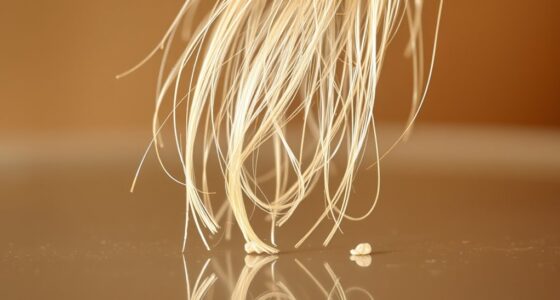
Balancing protein and moisture is key to healthy hair. Too much protein can make your hair stiff and brittle, while excess moisture can leave it limp and prone to breakage. To find the right mix, you need to assess how your hair responds and adjust your routine accordingly. Incorporate hydrating treatments after protein treatments and use the right ingredients to keep your hair resilient, flexible, and shiny. Keep exploring to discover how to fine-tune this essential balance.
Key Takeaways
- Balance protein and moisture to maintain hair strength, elasticity, and shine, avoiding stiffness or limpness.
- Use hydrating treatments like deep conditioners and water-based sprays to complement protein applications.
- Overuse of protein can cause stiffness; ensure proper hydration to keep hair flexible and soft.
- Adjust routines based on hair response, adding more protein or moisture as needed for optimal health.
- Personalized hair care routines tailored to climate, styling habits, and hair condition ensure long-term balance.

When it comes to maintaining healthy hair, understanding the balance between protein and moisture is essential. Your hair needs both to stay strong, elastic, and shiny. Too much protein can make your hair feel stiff and brittle, while excessive moisture can leave it limp and prone to breakage. The key is to find that sweet spot where your hair is nourished without becoming over- or under-proteinized. To do this, you should pay attention to hydration techniques that help keep moisture levels ideal, such as using deep conditioners, leave-in treatments, and regularly incorporating water-based products. These techniques guarantee your hair remains flexible and smooth, preventing dryness that can lead to breakage over time.
Maintaining the right moisture-protein balance keeps hair healthy, resilient, and shiny.
In addition to hydration techniques, understanding ingredient interactions plays a critical role. Some ingredients work synergistically to enhance moisture retention, while others can counteract each other, disrupting your hair’s balance. For example, humectants like glycerin or aloe draw water into your strands, boosting hydration and complementing moisture-based products. However, pairing these with harsh sulfates can strip away natural oils, disrupting the delicate moisture-protein equilibrium. Conversely, protein treatments often contain ingredients like keratin, collagen, or silk amino acids that strengthen your hair’s internal structure. But if you overuse these, especially alongside heavy moisturizing products lacking balance, your hair can become stiff or overly rigid.
Finding the right balance requires paying close attention to how your hair reacts to different ingredient interactions. You might notice that after a protein treatment, your hair feels more resilient but loses softness. In that case, following up with a hydrating masque or leave-in conditioner can restore moisture and prevent brittleness. Conversely, if your hair feels too soft or limp, it may need a protein boost to reinforce its structure. Incorporate hydration techniques that deliver moisture without diluting the effectiveness of your protein treatments, like using water-based sprays or lightweight oils that penetrate without weighing your hair down.
Ultimately, balancing protein and moisture is a dynamic process. Your hair’s needs can change based on factors like climate, styling habits, and hair health. Regularly evaluating how your hair responds to different products and adjusting your routine accordingly will help you maintain ideal ingredient interactions. By combining effective hydration techniques with a keen understanding of ingredient interactions, you craft a personalized routine that keeps your hair resilient, shiny, and healthy. Remember, the goal isn’t just to add more protein or moisture but to create harmony between them—your hair’s foundation for long-term vitality.

Aphogee Hair Care Double Bundle – Two-Step Protein Treatment (4 fl oz) & Balancing Moisturizer (8 fl oz)
Strength & Conditioning: Protein treatment improves the look of dry, over-processed hair.
As an affiliate, we earn on qualifying purchases.
As an affiliate, we earn on qualifying purchases.
Frequently Asked Questions
How Does Climate Affect Protein and Moisture Needs?
Climate impacts your protein and moisture needs markedly. In dry, cold weather, you might need more moisture to prevent dehydration and maintain hair health. Hot, humid climates increase moisture loss, so seasonal adjustments are essential to keep your hair nourished. Conversely, protein requirements may rise in harsher climates to strengthen hair against environmental stressors. Always listen to your hair’s signals and adapt your routine to the seasonal changes for ideal balance.
Can Over-Conditioning Damage Hair’s Protein and Moisture Balance?
Like a knight’s armor, over-conditioning can weaken your hair’s defenses, causing damage. If you overdo deep conditioning, especially with protein-rich treatments, you risk protein overload, which makes hair stiff and brittle. Too much moisture can also weaken the balance. Always monitor your hair’s response, and balance deep conditioning with treatments that restore both moisture and protein, maintaining healthy, resilient hair.
Are There Specific Ingredients That Optimize Both Protein and Moisture?
Yes, certain ingredients in product formulation create ingredient synergy that optimizes both protein and moisture. Look for products containing hydrolyzed proteins like keratin or silk, which strengthen hair while maintaining hydration. Pair these with humectants like glycerin or aloe vera that draw moisture in. Together, these ingredients balance protein and moisture, reducing over-conditioning risks and promoting healthy, resilient hair. Always verify product labels to guarantee the right formulation for your hair needs.
How Often Should I Adjust My Routine for Seasonal Changes?
You should adjust your routine seasonally, about every three to four months, to make certain your hair gets the right protein and moisture levels. For seasonal hair adjustments, use lighter products in summer and richer ones in winter. Routine modification tips include adding deep conditioning treatments in dry months and reducing protein treatments when humidity is high. Stay attentive to how your hair responds and tweak your routine accordingly.
What Are Signs of an Imbalance Between Protein and Moisture?
You notice your hair feels brittle or limp, which signals an imbalance. These signs often coincide with protein overload, making your strands stiff and prone to breakage, or moisture deficiency, leaving hair dry and dull. When your hair reacts this way, it’s a clear sign you need to adjust your routine. Keep an eye on these cues, and balance your protein and moisture intake to restore healthy, resilient hair.

Arvazallia Hydrating Argan Oil Hair Mask and Deep Conditioner for Dry or Damaged Hair (8.45 oz Jar)
Deeply hydrates and moisturizes dry, damaged hair leaving it soft, silky, and easier to manage
As an affiliate, we earn on qualifying purchases.
As an affiliate, we earn on qualifying purchases.
Conclusion
Remember, striking the right balance between protein and moisture keeps your hair healthy and vibrant. If you think focusing only on protein might make your hair feel stiff, picture it like a sturdy brick wall—without enough moisture, it can crack and break. By adding just enough moisture, your hair stays resilient, soft, and shiny. So, don’t neglect either; instead, treat your hair like a garden—nurture it with both nourishment and hydration for the best results.

BioSilk Hydrating Therapy Pure Moisture, Leave-In Hair Spray for Frizz Control & Hydration, Adds Shine, Replenishes Hair Moisture, Sulfate-Free, Paraben-Free, Cruelty-Free, 7 Oz
HYDRATING & MOISTURIZING SPRAY: BioSilk Hydrating Therapy protects from frizz, adds shine & replenishes hair moisture by providing…
As an affiliate, we earn on qualifying purchases.
As an affiliate, we earn on qualifying purchases.

Keratin Hair Mask,Keratin Hair Treatment 250g Hair Mask for Dry Damaged Hair,Deep Conditioning Hair Treatment Mask Repair Treatment Damage Hair Root,Natural Deep Conditioner Hydrating Hair Care Gifts
Deep Conditioning Repairs for Dry Damage Hair:Our Repairing hair mask is a perfect treatment for dry and damaged…
As an affiliate, we earn on qualifying purchases.
As an affiliate, we earn on qualifying purchases.