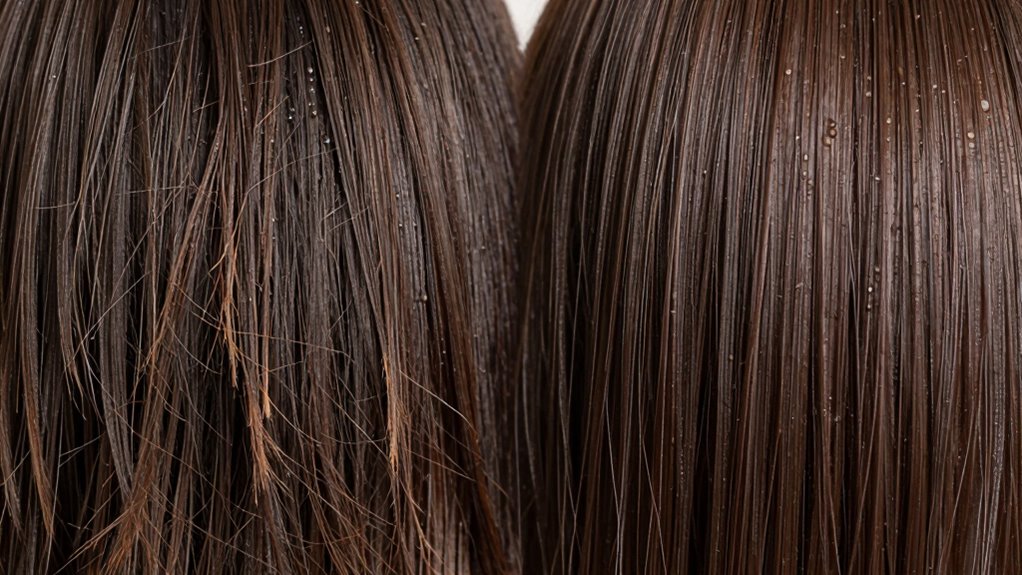
Hard water can make your hair feel rough, stiff, and coarse due to mineral buildup, especially calcium and magnesium, that clings to each strand. These deposits create a barrier on your hair’s surface, making it less flexible and more prone to dryness and breakage. You might notice a change in how your hair feels more than how it looks. To discover how to protect your hair and restore softness, keep exploring the details behind these effects.

Get beauty and skincare favorites delivered free with Prime
- Fast, free delivery on millions of items
- Prime Video, Amazon Music and more included
- Member-only deals all year
Key Takeaways
- Hard water minerals form a barrier on hair, making it feel stiff and rough, even if it still appears shiny.
- Mineral buildup damages the hair cuticle, increasing porosity and causing a coarse, straw-like texture.
- Deposits reduce moisture penetration, making hair feel dry, brittle, and less flexible over time.
- Mineral accumulation affects hair’s softness and manageability more than its external appearance.
- Regular clarifying treatments help remove buildup, restoring the hair’s natural smoothness and feel.
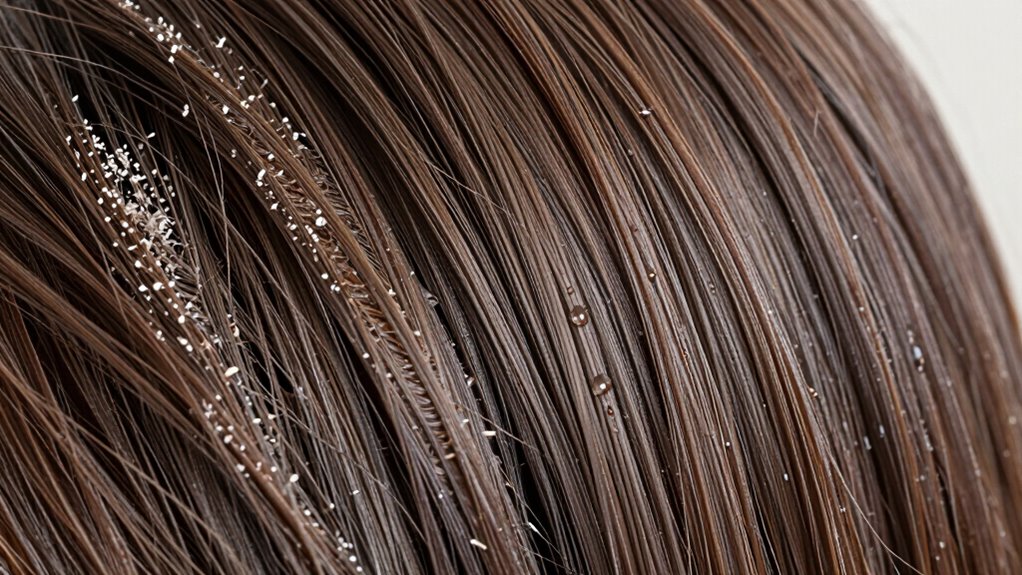
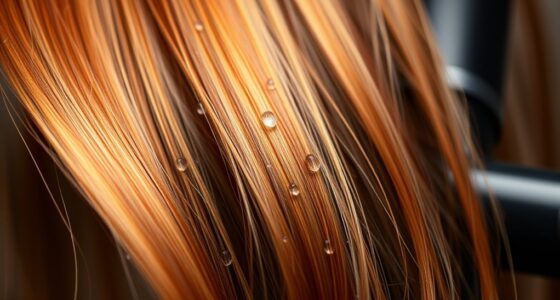
Hard water can profoundly affect how your hair feels, often more than how it looks. When you wash your hair with hard water, the minerals—mainly calcium and magnesium—don’t just rinse away easily. Instead, they cling to your strands, causing mineral buildup that can make your hair feel coarse, stiff, or even waxy. This buildup creates a barrier on your hair’s surface, preventing moisture from penetrating the strands properly. As a result, your hair loses its softness and becomes difficult to manage, even if it still appears shiny or healthy from a distance.
You might notice that your hair feels more brittle or less flexible over time. This change is often due to an increase in hair porosity caused by mineral deposits. When minerals accumulate, they damage the outer layer of your hair, called the cuticle. The cuticle is responsible for protecting the inner cortex and maintaining moisture balance. Once it becomes compromised, your hair’s porosity increases, meaning it absorbs and releases moisture more easily. High porosity hair is more prone to dryness, tangling, and breakage, making it feel rough or straw-like despite looking relatively okay.
This mineral buildup doesn’t just affect how your hair feels; it also impacts how it responds to styling and treatments. For example, your usual shampoos or conditioners might lose effectiveness because they can’t fully penetrate the coated hair shaft. You might find yourself using more product just to achieve the same results or feeling frustrated because your hair refuses to cooperate. Over time, the damage caused by mineral buildup can lead to increased fragility, making your hair more prone to split ends and breakage. Regularly detoxing your hair with clarifying treatments can help remove mineral deposits and restore its natural health. Additionally, using products designed to protect against hard water can further help maintain your hair’s integrity.
Understanding your hair’s porosity is essential when dealing with hard water. If your hair feels stiff or rough, it’s likely that mineral deposits have altered its structure. To combat this, you may need clarifying shampoos or chelating treatments that remove mineral buildup and restore your hair’s natural balance. Regularly using these products helps reduce porosity and keeps mineral deposits at bay, allowing your hair to regain softness and flexibility. Additionally, proper hair care practices can help minimize the effects of hard water. Remember, the feeling of your hair is a good indicator of what’s happening beneath the surface. If your hair feels different after washing, hard water might be the culprit, and addressing mineral buildup can make a significant difference in how your hair feels day to day.
clarifying shampoo for hard water buildup
As an affiliate, we earn on qualifying purchases.
As an affiliate, we earn on qualifying purchases.
Frequently Asked Questions
Can Hard Water Cause Permanent Damage to Hair?
Hard water can cause permanent damage to your hair if mineral buildup persists, especially if you have high hair porosity. The minerals can weaken your hair cuticles over time, making your hair more prone to breakage and dullness. While occasional exposure might not cause lasting harm, frequent contact can lead to lasting damage that’s difficult to reverse. Using clarifying shampoos and water softeners can help protect your hair.
How Can I Test if My Water Is Hard?
Imagine uncovering a hidden secret about your water—testing reveals if it’s hard. You can use a water test kit or a home test strip, easily available online or at stores. These kits detect mineral buildup, giving you clear results. Water filtration systems can also help reduce hardness. By testing your water, you discover the mystery behind mineral buildup, protecting your hair and ensuring healthier, softer strands every day.
Are Certain Hair Types More Affected by Hard Water?
Yes, certain hair types are more affected by hard water. Those with high porosity hair tend to absorb minerals more, leading to increased mineral buildup and dryness. Low porosity hair often resists mineral deposits but can still feel stiff or weighed down. If you notice your hair feeling rough or losing its natural bounce, your hair porosity and exposure to mineral buildup from hard water might be the cause.
Does Hard Water Impact Scalp Health?
Hard water can secretly impact your scalp health, leading to dryness and potential bacterial imbalance. You might notice itchiness or flakes that seem out of nowhere. The minerals in hard water strip away natural oils, disrupting your scalp’s balance and making it more vulnerable to irritation. Stay alert—these subtle signs can signal that your scalp’s health is at risk, prompting you to explore solutions before the problem worsens.
Can Water Softeners Completely Eliminate Hair Issues?
Water softeners considerably reduce mineral buildup caused by hard water, but they may not completely eliminate all hair issues. Water filtration systems help remove minerals and impurities, improving hair feel and health. However, depending on your water hardness level and maintenance, some mineral residue might persist. To achieve the best results, consider combining water softeners with proper hair care routines and regular filtration to minimize hard water’s impact on your hair.
Conclusion
So, next time you notice your hair feeling rougher or less manageable, remember, hard water isn’t just changing how your hair looks—it’s like a stubborn coat, making your hair feel more resistant and less shiny. By understanding this, you can take steps like using a gentle clarifying shampoo or installing a water softener. Think of it as giving your hair a fresh start, just like a garden thriving after a good rain.
Halloween Picks
halloween
As an affiliate, we earn on qualifying purchases.