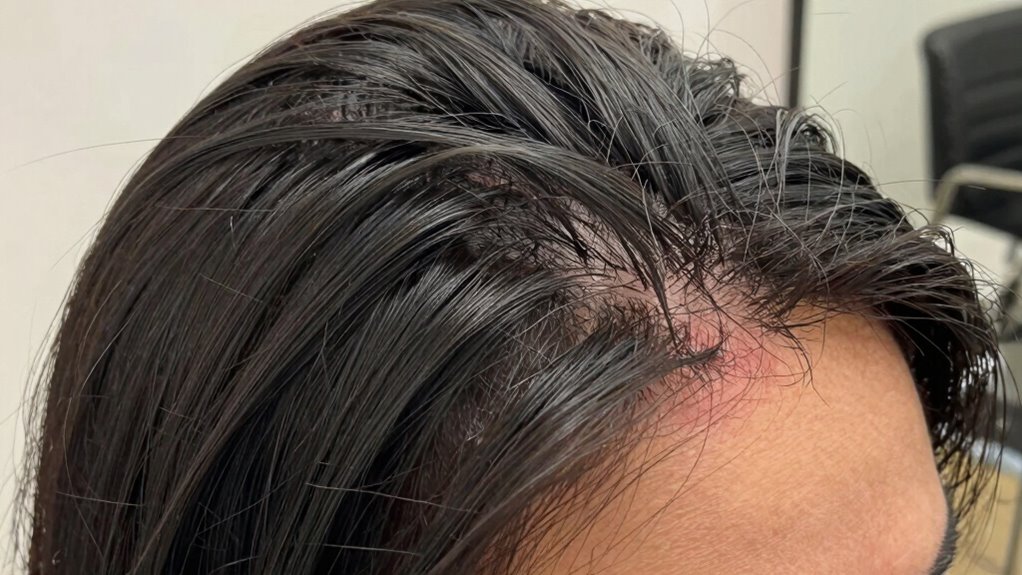

Hair breakage at the crown needs a different fix because this area faces more tension, environmental stress, and scalp issues that can weaken the hair. Your scalp’s health affects how resilient your hair is, especially at the crown. Porosity levels also play a role, influencing moisture retention and fragility. Using targeted products and scalp care routines tailored to this area can strengthen your hair. Keep exploring to discover how you can best protect and repair your crown.
Key Takeaways
- The crown area is more exposed to tension and environmental stressors, making it more prone to breakage.
- Scalp health directly impacts hair strength; poor scalp conditions weaken hair at the crown.
- High or low hair porosity affects moisture retention, increasing vulnerability to breakage at the crown.
- The crown often experiences tension from hairstyles, requiring gentler, tailored styling approaches.
- Specialized scalp and hair care routines can address underlying issues and prevent further crown breakage.
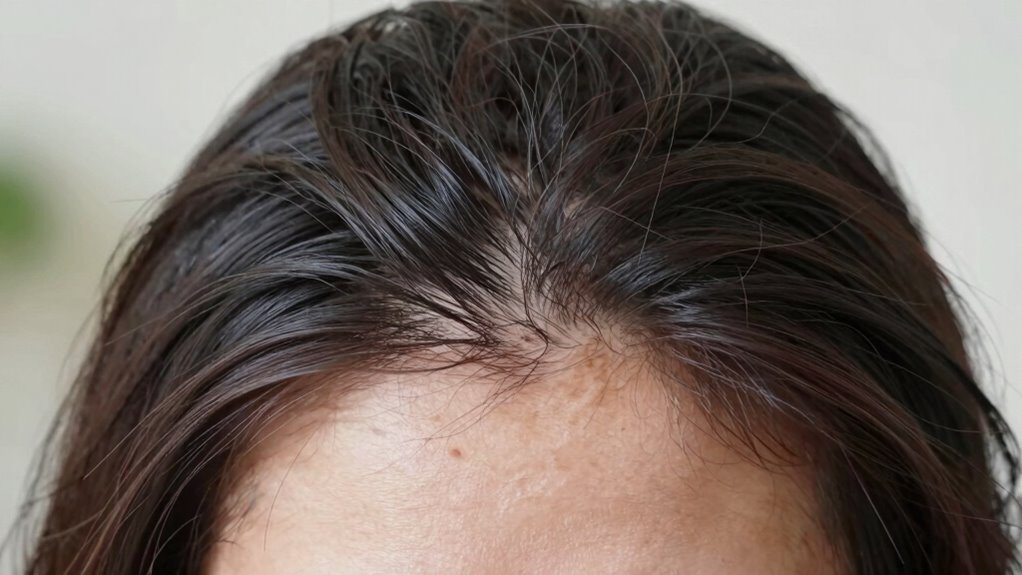
Have you noticed more hair breakage at the crown of your head? If so, you’re not alone. Many people experience this issue, and it often points to underlying factors like scalp health and hair porosity. The crown is a common area for breakage because it’s more exposed to tension, styling, and environmental stressors. But understanding what’s happening beneath the surface is key to fixing the problem effectively. Your scalp health plays a vital role here. When your scalp isn’t in good condition—perhaps due to dryness, buildup, or inflammation—it can weaken hair strands from the root. A healthy scalp promotes stronger, more resilient hair, but if it’s compromised, breakage becomes more likely at the crown. Taking care of your scalp by keeping it clean, moisturized, and free of irritants can make a noticeable difference. Additionally, reducing mechanical stress from hairstyles that pull on the hair can help prevent further damage.
Another essential factor is hair porosity, which refers to how well your hair can absorb and retain moisture. If your hair has high porosity, it tends to absorb moisture quickly but also loses it just as fast, making the strands more fragile and prone to breakage. Conversely, low porosity hair can be resistant to moisture, leading to dryness and brittleness. Both scenarios require tailored approaches. For high porosity hair, using products that seal in moisture—like leave-in conditioners and oils—helps strengthen the strands and reduce breakage. For low porosity hair, lighter, hydrating products that penetrate the cuticle work better. Recognizing your hair’s porosity allows you to customize your routine, which is especially important at the crown, where hair tends to be more vulnerable. Additionally, understanding your hair’s porosity level can help you select appropriate hair care products that prevent further damage. Being aware of hair porosity also enables you to adjust your routine to optimize moisture retention and minimize breakage at the crown.
Furthermore, incorporating scalp health practices such as gentle exfoliation and regular scalp massages can improve circulation and promote healthier hair growth in this sensitive area.
As an affiliate, we earn on qualifying purchases.
Frequently Asked Questions
Can Diet Impact Hair Breakage at the Crown?
Yes, your diet can impact hair breakage at the crown. Nutritional deficiencies, like lacking iron, biotin, or protein, weaken hair strands and lead to breakage. Your dietary choices play an essential role in strengthening your hair; eating nutrient-rich foods supports healthy growth and reduces damage. By improving your diet with balanced nutrients, you can help prevent breakage at the crown and promote overall hair health.
Do Hair Accessories Cause Crown Breakage?
Yes, hair accessories can cause crown breakage if they’re too tight or poorly designed. To protect your crown, prioritize hair accessory safety by choosing gentle, non-damaging options such as soft scrunchies and hairpins. Follow crown protection tips by avoiding constant tension and switching up styles regularly. This reduces stress on your hair, minimizes breakage, and keeps your crown healthy and strong.
How Does Scalp Health Influence Crown Hair Breakage?
Your scalp health plays a vital role in crown hair breakage. When your scalp lacks moisture, it becomes dry and flaky, compromising follicle health and weakening hair strands. This vulnerability makes your hair more prone to breakage, especially at the crown. Prioritizing scalp hydration and nourishing your follicles can strengthen your hair, reduce breakage, and restore your crown’s resilience, giving you healthier, more durable hair from root to tip.
Is Hair Thinning Related to Crown Breakage?
Yes, hair thinning can be related to crown breakage. When your hair density decreases, the strands become weaker and more prone to breakage, especially at the crown. Reduced scalp elasticity also plays a role, making it harder for hair to withstand tension and stress. To address this, focus on improving scalp health, using gentle hair care practices, and potentially incorporating treatments that boost hair density and elasticity.
Can Styling Tools Worsen Crown Hair Damage?
Yes, styling tools can worsen crown hair damage. Think of your hair like a fragile sculpture; excessive heat damage from curling irons or straighteners weakens the structure, especially at the crown. Using high heat and neglecting to remove product buildup can strip moisture, causing breakage. To protect your hair, always use heat protectants and avoid overusing styling tools, especially when your crown is already fragile.
Conclusion
Understanding that hair breakage at the crown requires a unique approach helps you target the problem more effectively. Remember, the crown area is often more fragile due to stress from styling and hair loss patterns. Did you know that about 40% of women experience hair thinning at the crown by age 50? By adjusting your routine with gentle products and proper care, you can strengthen this vulnerable area and promote healthier growth. Stay consistent, and your crown will thank you.