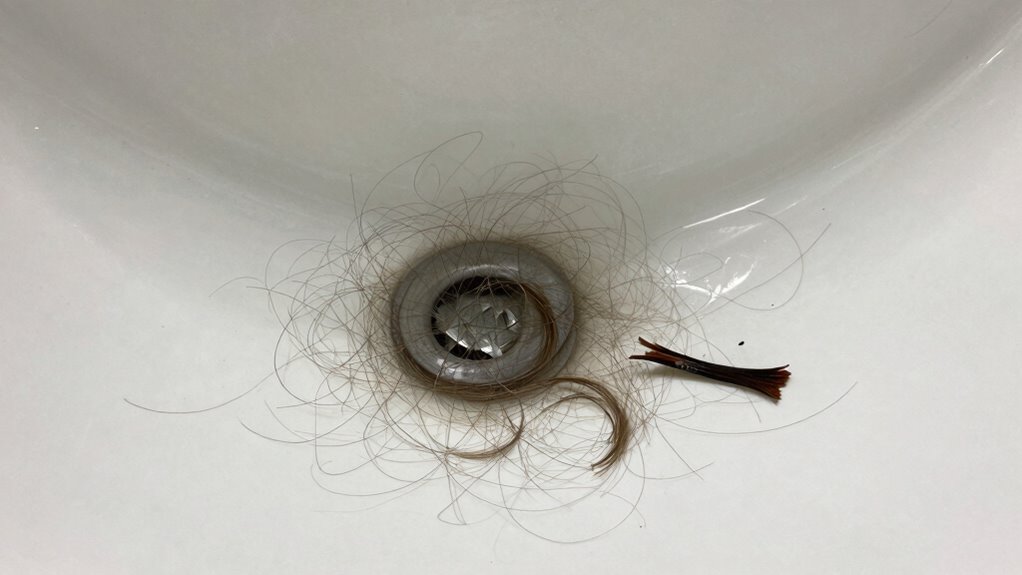

If you notice hair in your sink, the difference is that shedding happens as part of your natural hair cycle, with a few strands falling out easily and evenly, usually without damage. Breakage, on the other hand, results from damage to the hair strands, often near the ends or mid-length, and appears as shorter, uneven pieces. Recognizing these signs can help you understand whether your hair is healthy or needs extra care—more details can help you figure out what’s going on.

Get beauty and skincare favorites delivered free with Prime
- Fast, free delivery on millions of items
- Prime Video, Amazon Music and more included
- Member-only deals all year
Key Takeaways
- Hair shedding involves natural fall-out of hair in the telogen phase, usually with strands pulling out easily.
- Hair breakage occurs when strands fracture higher up, resulting in shorter, uneven, or frayed ends.
- Shedding presents as a gradual decrease in hair volume, while breakage causes visible shorter or split strands.
- Shedding strands are typically smooth and come out with little resistance; broken strands are frayed and brittle.
- Proper scalp health and hair care practices help reduce breakage and support normal shedding.

Understanding the difference between hair shedding and hair breakage is essential for maintaining healthy hair. When hair falls into your sink, it’s natural to wonder whether it’s shedding or breaking. Recognizing the signs helps you identify underlying issues and adjust your hair care routine accordingly. Hair shedding typically occurs as part of your hair growth cycles, which include three phases: anagen (growth), catagen (transitional), and telogen (resting). During the telogen phase, hair naturally falls out to make room for new growth. On average, losing about 50 to 100 hairs daily is normal, especially if you notice a gradual, even reduction. Hair shedding often appears as a few strands coming loose at a time, and the hair usually pulls out easily without much resistance.
Hair shedding is a natural part of growth, with about 50-100 hairs lost daily during the telogen phase.
In contrast, hair breakage results from the physical or chemical damage to hair strands, causing them to snap or split. Breakage usually happens higher up on the hair shaft, and you might notice shorter, uneven strands in your sink or brush. Unlike shedding, breakage is often linked to weakened hair due to factors like excessive heat styling, harsh chemical treatments, or poor moisture retention. When hair breaks, it can give the illusion of increased hair loss, but in reality, the strands are just fracturing mid-length or near the ends, leaving behind frayed or split tips. Maintaining scalp health is crucial because a healthy scalp supports the hair growth cycles and overall hair integrity. Additionally, scalp conditions such as dryness or inflammation can further contribute to hair fragility and breakage. Regular scalp care, including gentle cleansing, can help prevent buildup that may weaken hair strands over time. Proper hydration and nourishment of the scalp also play a vital role in preventing hair damage, ensuring the strands remain resilient and less prone to breakage.
To keep hair healthy and minimize breakage, you need to pay attention to scalp health considerations. A healthy scalp supports the hair growth cycles by providing a clean, balanced environment free from buildup or irritation. Proper scalp health encourages steady hair growth and reduces the likelihood of breakage. Ensuring your hair is well-nourished with essential nutrients like vitamins A, C, E, and biotin helps strengthen strands from within. Using heat protectants and avoiding excessive chemical treatments can further safeguard your hair’s integrity. Ultimately, understanding your hair’s natural hair growth cycles and maintaining good scalp health considerations will help you distinguish between shedding and breakage, guiding you toward targeted solutions for healthier hair.
As an affiliate, we earn on qualifying purchases.
Frequently Asked Questions
How Can I Tell if My Hair Loss Is Normal?
If you notice a gradual change in your hair thickness and aren’t losing a large amount of hair daily, your hair loss might be normal. Pay attention to how your hair reacts to shampoo effects—mild shedding is typical, but sudden or excessive loss isn’t. Keep track of whether your hair feels thinner or if your scalp becomes more visible. If you’re worried, consult a dermatologist to determine if your hair loss is within normal limits.
Are Certain Hair Types More Prone to Breakage?
Yes, certain hair types are more prone to breakage. If you have curly or coarse hair, you might notice more breakage because these textures are often more fragile. Hair porosity also plays a role—high porosity hair absorbs moisture easily but can become brittle, increasing breakage risk. Fine or thin hair can break more easily too, especially if you don’t handle it gently or use harsh products.
Does Diet Influence Hair Shedding or Breakage?
Ever wonder if your diet’s secretly sabotaging your hair? Yes, it can. Nutritional deficiencies like iron or biotin can cause increased shedding, while poor diet weakens hair strands, leading to breakage. Don’t fall for hair supplement myths—balanced nutrition is key. Eating a variety of nutrient-rich foods supports healthy growth and reduces unnecessary loss. So, yes, what you eat directly impacts whether your hair stays strong or sheds excessively.
Can Stress Cause Hair Breakage or Shedding?
Yes, stress can cause both hair fall patterns and hair breakage. When you’re stressed, your body releases hormones that disrupt your hair growth cycle, leading to increased shedding or fragile strands. To combat this, practice stress management techniques like meditation, regular exercise, or deep breathing. Managing stress helps maintain healthy hair, reducing breakage and abnormal shedding, and promotes overall well-being.
When Should I See a Dermatologist for Hair Concerns?
You should see a dermatologist if your hair changes color or texture suddenly or if shedding persists beyond a few months. Unexpected shifts in hair color or texture could signal underlying health issues, and a professional can help diagnose the cause. Don’t wait until your hair feels weaker or more brittle—timely expert advice guarantees you get the right treatment and maintain healthy, vibrant hair.
Conclusion
Think of your hair like a garden. Hair shedding is like the natural falling of leaves—part of its cycle, easy to accept. Hair breakage, however, is like fragile stems snapping under pressure—indicating damage or stress. Recognizing the difference helps you nurture your scalp and strands accordingly. When you understand what’s truly going on, you can tend to your hair’s growth with patience and care, letting your beauty flourish like a garden in full bloom.
Halloween Picks
halloween
As an affiliate, we earn on qualifying purchases.