Dandruff shows up as greasy, yellowish flakes that stick to your scalp and hair, often accompanied by irritation and redness, caused by yeast overgrowth. A dry scalp presents smaller, powdery flakes with less oil and usually feels tight or itchy, resulting from lack of moisture or environmental factors. Your hair type also influences this—curly or coarse hair tends to be drier. Understanding these differences helps you find the right care—explore more to discover effective solutions.
Key Takeaways
- Dandruff involves greasy, yellowish flakes with scalp redness, caused by yeast overgrowth, while dry scalp produces smaller, powdery flakes with tightness.
- Dandruff flakes are oily and larger, whereas dry scalp flakes are dry, powdery, and less oily.
- Oily hair and scalp suggest dandruff, while dry, coarse, or curly hair increases dryness risk.
- Natural remedies like tea tree oil target dandruff’s fungus, while oils like coconut or aloe vera help hydrate dry scalp.
- Differentiating flakes and scalp sensations guides effective treatment: greasy flakes with irritation indicate dandruff; dry, powdery flakes suggest dry scalp.
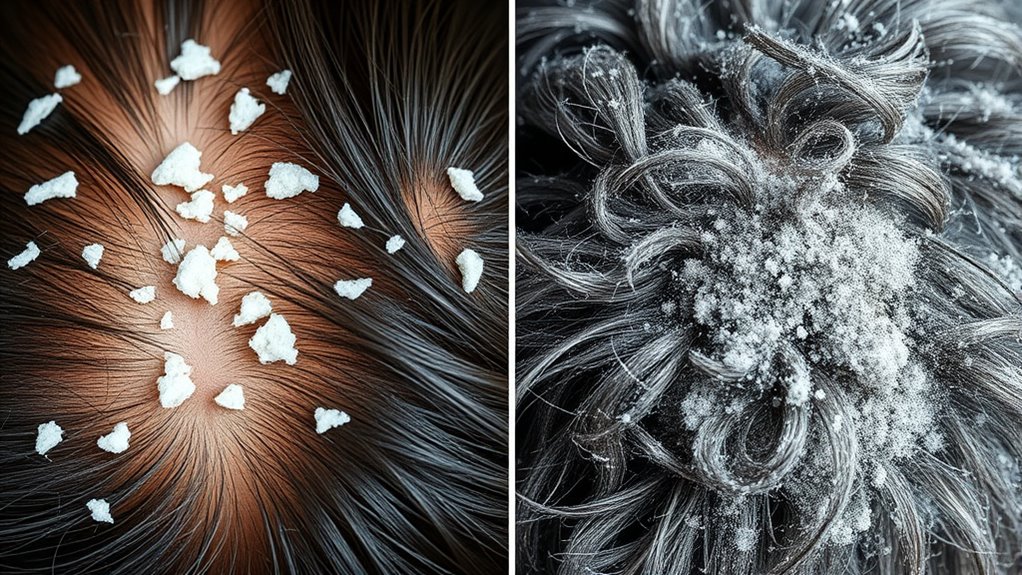
Ever wondered how to tell the difference between dandruff and a dry scalp? It’s a common question because both conditions can cause flaky, itchy scalp discomfort, but they’re quite different in cause and treatment. Understanding these differences helps you choose the right approach to care for your scalp. Dandruff often appears as greasy, yellowish flakes and may be accompanied by scalp redness or irritation. It’s typically linked to a yeast overgrowth called Malassezia, which feeds on scalp oils. On the other hand, a dry scalp results from a lack of moisture, leading to smaller, dry flakes that are usually less oily and may cause significant itching and tightness.
When figuring out which you have, pay attention to your scalp’s overall condition. If the flakes are greasy and cling to your hair or scalp, dandruff is likely the culprit. If your flakes are dry, powdery, and your scalp feels tight or uncomfortable without excessive oiliness, dryness is probably to blame. Factors like hair type considerations also influence how you should approach treatment. Those with curly, coarse, or textured hair often experience dryness more easily because their hair tends to retain less moisture. Conversely, people with oily hair types may be more prone to dandruff. Recognizing your hair type helps tailor remedies that work best. For example, if you have curly hair, using gentle, hydrating shampoos and conditioners designed for moisture retention can make a significant difference.
Natural remedies can be effective when addressing these scalp issues, especially if you prefer avoiding harsh chemicals. For a dry scalp, consider applying coconut oil or olive oil as a pre-shampoo treatment. These oils help lock in moisture and soothe dryness. Aloe vera gel also offers calming, hydrating properties that can relieve itchiness and dryness. For dandruff caused by excess oil and yeast, tea tree oil has antifungal properties that can help reduce flakes and soothe scalp irritation. Apple cider vinegar rinses can restore scalp pH balance and decrease yeast growth, but make sure to dilute it properly to prevent irritation.
Frequently Asked Questions
Can Diet Influence Dandruff or Dry Scalp?
Yes, your diet can influence dandruff and dry scalp. Nutritional impact plays a significant role, as deficiencies in zinc, biotin, omega-3 fatty acids, and vitamins A and E can worsen scalp health. To improve condition, follow dietary recommendations like eating a balanced diet rich in these nutrients. Proper nutrition supports scalp hydration and reduces inflammation, helping to prevent dandruff and dry scalp issues naturally.
Are Certain Hair Products Better for Dandruff or Dry Scalp?
Certain hair products are better suited for dandruff or dry scalp. Look for shampoos with anti-dandruff ingredients like zinc pyrithione or ketoconazole if you have dandruff, and opt for gentle, moisturizing products for dry scalp. Hair product compatibility matters; choose ones that won’t irritate your scalp. Scalp oiling benefits include soothing dryness and reducing flakiness, so incorporate oils like coconut or tea tree to support scalp health effectively.
How Do Climate Changes Affect Scalp Conditions?
Climate changes markedly affect your scalp conditions through seasonal fluctuations and humidity impact. During cold, dry months, your scalp may become dry and flaky, leading to discomfort. Conversely, high humidity in summer can increase oil production, causing dandruff or oily scalp issues. You need to adjust your hair care routine accordingly, using moisturizing products in winter and lightweight, clarifying shampoos in humid seasons to maintain scalp health and balance.
Can Stress Worsen Dandruff or Dry Scalp?
Did you know that stress impacts up to 70% of skin conditions? It definitely worsens dandruff and dry scalp by increasing scalp inflammation, which irritates your skin and disrupts natural oils. When you’re stressed, your body’s immune response can become imbalanced, leading to more flaking and dryness. Managing stress through relaxation techniques can help reduce this impact, improving your scalp’s health and comfort over time.
Are There Natural Remedies Effective for Both Conditions?
Yes, herbal treatments and essential oils can be effective for both dandruff and dry scalp. You might try tea tree oil for its antifungal properties or coconut oil for deep moisture. Applying these natural remedies regularly can help soothe irritation, reduce flakes, and hydrate your scalp. Just remember to dilute essential oils properly and do a patch test first to avoid any allergic reactions.
Conclusion
So, next time you notice flakes or itchiness, remember that what you’re experiencing might just be a coincidence of dry scalp or dandruff. Sometimes, the line between them blurs, and understanding these subtle differences helps you choose the right care. Ultimately, paying close attention to your scalp’s response can reveal more than you think—sometimes, it’s just a coincidence, but other times, it’s a sign to seek the right treatment.