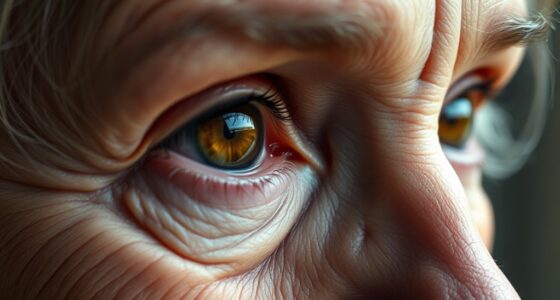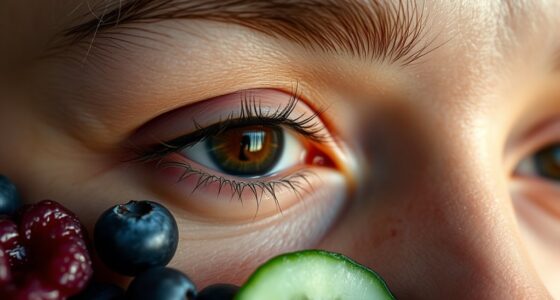
Under-eye bags can be caused by allergies that trigger inflammation and fluid retention, making your eyes appear puffier, or by aging, which reduces collagen and causes skin sagging. If your puffiness fluctuates with allergy symptoms or environmental triggers, allergies are likely the culprit. If it develops gradually with age and persists, it may be aging-related. Understanding the cause helps you choose the right treatment—explore further to discover effective options tailored for you.
Key Takeaways
- Allergies cause puffiness through inflammation and fluid retention, often improving with antihistamines and cold compresses.
- Aging reduces collagen and causes fat pad shifts, leading to sagging and hollows that create under-eye bags.
- Allergic puffiness is usually temporary and linked to environmental triggers, while aging-related bags develop gradually over time.
- Identifying allergy symptoms like itching and redness helps determine if puffiness is allergy-related rather than aging.
- Combining allergy management and skin care or procedures addresses the specific cause for more effective results.

Under-eye bags are a common concern that can stem from both allergies and aging, but figuring out the cause isn’t always straightforward. When you notice puffiness beneath your eyes, it’s natural to wonder what’s behind it. Sometimes, the swelling results from allergies, where your immune system reacts to irritants, causing inflammation and fluid buildup. Other times, aging plays a bigger role; as collagen production slows, your skin loses elasticity, and fat pads around your eyes can shift or sag, creating a tired, puffy appearance. Identifying whether allergies or aging is the main culprit can help you choose the right treatment approach.
Under-eye puffiness can result from allergies or aging—identifying the cause helps determine the best treatment.
If allergies are the cause, addressing the underlying allergy triggers is vital. Over-the-counter antihistamines can reduce your body’s allergic response, decreasing puffiness. You might also consider using cold compresses to constrict blood vessels and reduce swelling temporarily. Incorporating puffiness remedies like eye creams with caffeine can tighten blood vessels and diminish swelling, providing quick relief. Managing allergies with lifestyle changes—like avoiding allergens, keeping your environment clean, or using air purifiers—can prevent recurring puffiness caused by allergic reactions. Additionally, understanding the role of relationships and emotional stress may be helpful, as stress can sometimes exacerbate physical symptoms, including skin issues around the eyes.
When aging is the primary factor, the focus shifts to more targeted solutions. Non-invasive cosmetic procedures like dermal fillers can restore lost volume and smooth out under-eye hollows, giving you a more refreshed look. Laser treatments and chemical peels are also options to stimulate collagen production, tightening the skin and reducing sagging. If you prefer at-home remedies, investing in high-quality eye creams with ingredients like retinol or peptides can support skin firmness over time. For some, surgical procedures such as lower eyelid blepharoplasty might be recommended to remove excess skin or fat, offering a more permanent correction.
Regardless of the cause, it’s important to choose treatments carefully. While puffiness remedies like eye creams can provide quick fixes, they often work best as part of a broader skincare routine or treatment plan. Cosmetic procedures, on the other hand, may offer more dramatic, long-lasting results but require consultation with a specialist. Remember, no matter your age or allergy status, maintaining a healthy lifestyle—staying hydrated, getting enough sleep, and protecting your skin from sun damage—can help minimize under-eye puffiness. Understanding whether your puffiness is allergy-related or due to aging will help you target your efforts effectively, leading to a more vibrant, rested appearance.
Frequently Asked Questions
Can Diet Influence Under-Eye Puffiness?
Diet can markedly influence under-eye puffiness. Your dietary impact includes reducing salt intake to prevent water retention and eating foods rich in antioxidants, like berries and leafy greens, to support skin health. Nutritional strategies such as staying well-hydrated and avoiding processed foods help minimize swelling. By making these adjustments, you can improve your skin’s appearance and reduce puffiness, making your eyes look brighter and more refreshed.
Do Genetics Play a Role in Under-Eye Bag Development?
About 50% of under-eye bags are linked to genetics, making your family history a key factor. If your relatives have prominent under-eye circles, you’re more likely to develop them too. Your genetic predisposition influences skin elasticity and fat distribution, contributing to puffiness. So, understanding your family history helps you anticipate and address these concerns early, and you can explore targeted treatments to reduce their appearance effectively.
Are There Age-Specific Treatments for Under-Eye Bags?
You’ll find that age-specific treatments for under-eye bags often involve tailored cosmetic procedures and skincare routines. As you age, skin loses elasticity, so treatments like fillers or laser therapy can provide targeted results. Younger individuals might benefit from specialized eye creams that boost collagen. Understanding your skin’s needs helps you choose effective options, ensuring you address under-eye bags appropriately at every age.
How Can I Prevent Under-Eye Bags From Worsening?
Imagine your eyes as delicate gardens needing constant care. To prevent under-eye bags from worsening, prioritize good sleep hygiene—aim for consistent sleep schedules and elevate your head while sleeping. Stay hydrated by following hydration tips like drinking plenty of water and limiting salt intake. These simple yet effective steps help maintain skin elasticity and reduce puffiness, ensuring your eyes stay fresh and vibrant, like a well-tended garden.
Do Lifestyle Changes Impact Under-Eye Puffiness?
Lifestyle changes definitely impact under-eye puffiness. Prioritize good sleep hygiene to reduce fatigue-related swelling, and stay consistent with hydration habits to prevent fluid retention. Avoid excessive salt intake and limit alcohol, as they can worsen puffiness. Elevate your head while sleeping and apply cold compresses to reduce swelling. These simple adjustments can make a noticeable difference, helping you achieve a more refreshed, youthful appearance.
Conclusion
Think of your under-eye area like a garden. Sometimes, it’s just needing a little extra water—like allergies causing puffiness—while other times, it’s aging’s natural slope. I once noticed my bags worsened after a sleepless night, much like a garden wilting without care. Understanding whether it’s allergies or aging helps you tend to your skin better. With the right attention, you can nurture your “garden” back to liveliness and enjoy a brighter, fresher look every day.