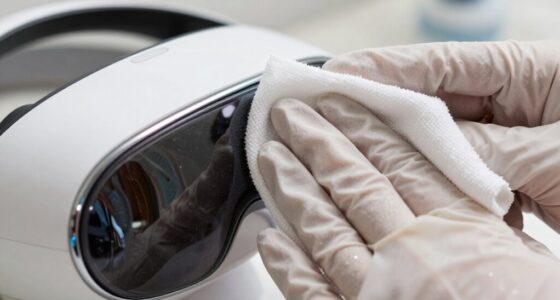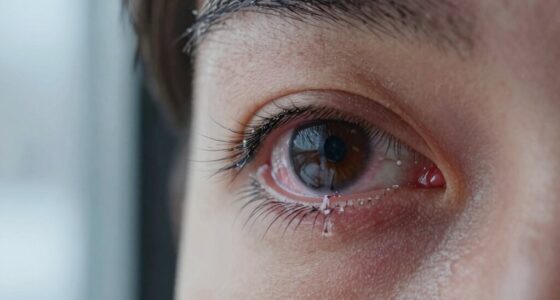
To keep your eyes healthy as a contact lens wearer, always wash your hands thoroughly with soap-free, non-perfumed soap before touching your lenses, and dry them with a lint-free towel. Clean and disinfect your lenses as instructed, avoiding tap water or saliva. Remove lenses before swimming or exposing them to water, smoke, or dust. Regular eye exams and proper hygiene help prevent infections and irritation. Keep exploring for more essential tips to protect your vision.

Get beauty and skincare favorites delivered free with Prime
- Fast, free delivery on millions of items
- Prime Video, Amazon Music and more included
- Member-only deals all year
Key Takeaways
- Wash hands thoroughly with soap-free, non-perfumed soap before handling contact lenses.
- Use recommended cleaning solutions and avoid tap water or saliva for lens cleaning and rinsing.
- Dry hands with a lint-free towel to prevent contamination and handle lenses gently to prevent tears.
- Remove lenses before swimming, showering, or exposure to water or irritants to reduce infection risk.
- Schedule regular eye exams and follow proper hygiene practices to maintain healthy eyes and proper lens fit.
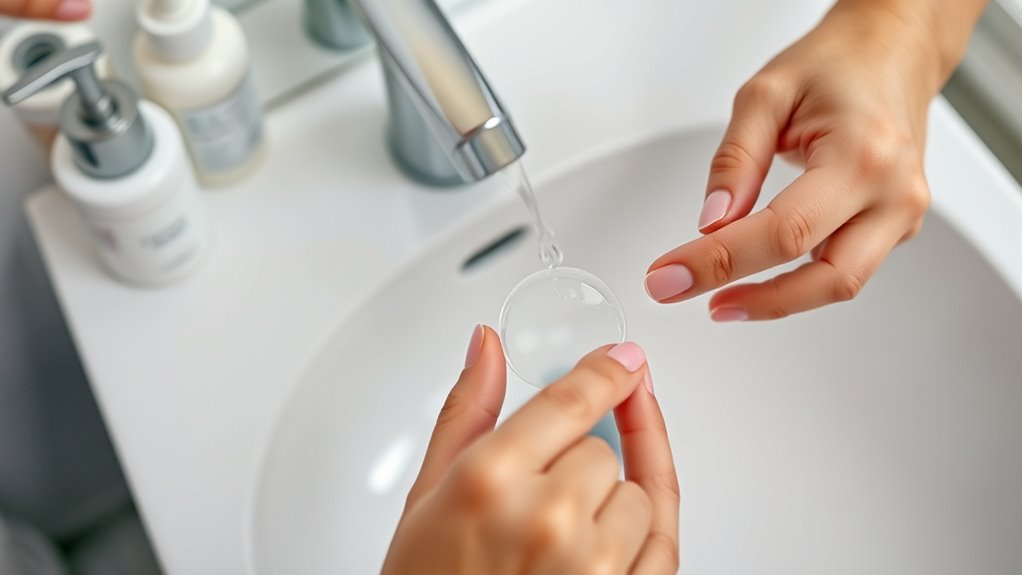
Wearing contact lenses offers convenience and clear vision, but it also requires proper eye care to prevent infections and discomfort. One of the most important aspects of maintaining healthy eyes while wearing contacts is practicing good contact lens hygiene. This means thoroughly washing your hands before handling your lenses to avoid transferring dirt, oils, or bacteria that can cause infections. Always use soap-free, non-perfumed hand wash, and dry your hands with a lint-free towel to prevent any residue from contaminating your lenses. When inserting or removing your contacts, handle them gently to avoid tears or damage that could lead to irritation or contamination.
Proper cleaning and storage of your lenses are essential for maintaining contact lens hygiene. Use the recommended cleaning solution to disinfect your lenses each time you remove them, following the manufacturer’s instructions precisely. Avoid using tap water or saliva to clean or rinse your lenses, as these can harbor harmful microorganisms that increase your risk of eye infections. Store your lenses in a clean, dry case, and replace the case at least every three months to prevent bacterial buildup. When cleaning your lens case, rinse it with fresh solution and let it air dry, never wipe it with a cloth or towel that could introduce bacteria.
Always disinfect lenses with recommended solution and replace your case every three months.
Eye irritation prevention is another key component of contact lens care. To reduce the risk of irritation, avoid wearing your lenses longer than prescribed, and never sleep in them unless your eye care professional approves. Overwearing contacts can reduce oxygen flow to your cornea, leading to discomfort and increasing your chances of infection. If your eyes feel dry, itchy, or gritty, remove your lenses and consult your eye care provider for advice. Using lubricating eye drops compatible with contact lenses can help soothe dryness but avoid drops that are not specifically designed for lens wearers.
Additionally, maintain good overall eye health by avoiding exposure to irritants such as smoke, dust, and strong fumes. Always remove your lenses before swimming or showering to prevent waterborne bacteria from infecting your eyes. Remember, clean hands, proper lens cleaning, and cautious handling are your best tools to prevent eye irritation and maintain good contact lens hygiene. It is also beneficial to be aware that air quality can impact eye comfort, especially for contact lens wearers. Always check your environment and consider using air purifiers in dusty or polluted areas to reduce irritants that may affect your eyes. When in doubt, schedule regular eye exams to ensure your lenses fit correctly and your eyes remain healthy. By following these simple yet essential tips, you’ll enjoy the convenience of contact lenses while keeping your eyes safe, comfortable, and irritation-free.
As an affiliate, we earn on qualifying purchases.
Frequently Asked Questions
Can Contact Lenses Cause Skin Allergies Around the Eyes?
Yes, contact lenses can cause skin allergies around your eyes, especially if lens hygiene isn’t maintained properly. Poor hygiene can lead to allergic reactions from residue on lenses or solutions. To prevent this, always clean your lenses thoroughly and avoid sharing them. If you notice redness, itching, or swelling, remove your lenses and consult your eye care professional. Good hygiene helps reduce the risk of skin allergies and keeps your eyes healthy.
How Often Should I Replace My Contact Lens Case for Skin Health?
You should replace your contact lens case every three months to maintain proper contact lens storage and case hygiene. Regular replacement prevents bacteria buildup, reduces the risk of infections, and keeps your skin healthy around your eyes. Think of it as a routine: check the date, switch the case, and guarantee your storage habits promote eye comfort and safety. Prioritize timely replacements for ideal eye and skin health.
Are There Specific Skincare Products That Improve Eye Comfort With Lenses?
Yes, using moisturizing eye creams designed for contact lens wearers can improve eye comfort. Look for hypoallergenic skincare products that are gentle and free from irritating ingredients. These creams help keep the skin around your eyes hydrated, reducing dryness and irritation caused by lenses. Always choose products specifically formulated for sensitive eyes, and apply them carefully to avoid contact with your lenses to maintain comfort and eye health.
Can Makeup Interfere With Contact Lens Hygiene and Skin Safety?
Makeup can interfere with contact lens safety if you don’t eliminate it properly. Always remove makeup thoroughly before inserting lenses to prevent debris from getting on your eyes. When you do makeup removal, be gentle and avoid touching your eyes directly. This helps prevent irritation and contamination. Following proper makeup removal routines and being cautious with eye area products ensures your contact lenses stay safe and your skin remains healthy.
What Signs Indicate Skin Infections Related to Contact Lens Wear?
You might notice alarming signs like persistent eye redness, swelling, or discomfort that won’t go away. These symptoms could signal contact dermatitis or a skin infection caused by contact lens wear. Be alert for unusual skin changes around your eyes, such as rashes or blisters. Ignoring these signs can worsen the condition, so seek prompt medical advice. Early detection guarantees proper treatment and helps you avoid more serious complications.
Conclusion
So, keep your lenses sparkling and your skin happy—because nothing says “I care” like risking an eye infection just to skip out on good hygiene. Remember, your eyes aren’t just windows to the soul; they’re also the entrance to your next disaster. So, wash up, follow the tips, and maybe, just maybe, avoid turning your eye care routine into a horror story. After all, your eyes deserve better than a cautionary tale.
Halloween Picks
halloween
As an affiliate, we earn on qualifying purchases.