TL;DR

Get beauty and skincare favorites delivered free with Prime
- Fast, free delivery on millions of items
- Prime Video, Amazon Music and more included
- Member-only deals all year
At-home facial cleansing devices use vibration or bristles to help loosen makeup, oil, sunscreen, and debris, but they are optional. Clean hands and a suitable cleanser work for most routines. A device may be worthwhile if it makes cleansing easier or more satisfying, but the tradeoff is extra cleaning, cost, and possible irritation. If you try one, choose a head you can maintain, use light pressure, and stop if your skin stings, reddens, or feels tight.
Your hands may be doing a better job at the bathroom sink than the sleek, buzzing brush on your shopping list. At-home facial cleansing devices can make a wash feel thorough because motion helps spread cleanser and dislodge surface residue, but that feeling does not mean skin is healthier or that manual cleansing is inadequate.
The decision is less about whether a device can clean skin and more about whether its benefits outweigh cost, maintenance, and the risk of overdoing it. The most useful rule remains simple: gentle cleansing beats “deep cleaning.”
Clean hands and a suitable cleanser are enough for most routines; a device is an optional convenience, not a requirement.
A device may be worth it if it makes removing makeup or sunscreen easier, but the tradeoff includes cost, upkeep, and possible irritation.
Silicone heads are generally easier to rinse; bristle heads may feel more thorough but need more careful cleaning and replacement.
Start gently and infrequently, especially if you use exfoliating acids or retinoids, because mechanical cleansing adds to total irritation load.
Stop if you notice stinging, lasting redness, tightness, or increased flaking; those signs suggest the routine is too harsh.
Rinse after each use, let the device dry fully, follow maker care instructions, and do not share it.
What an at-home cleansing device can—and can’t—do
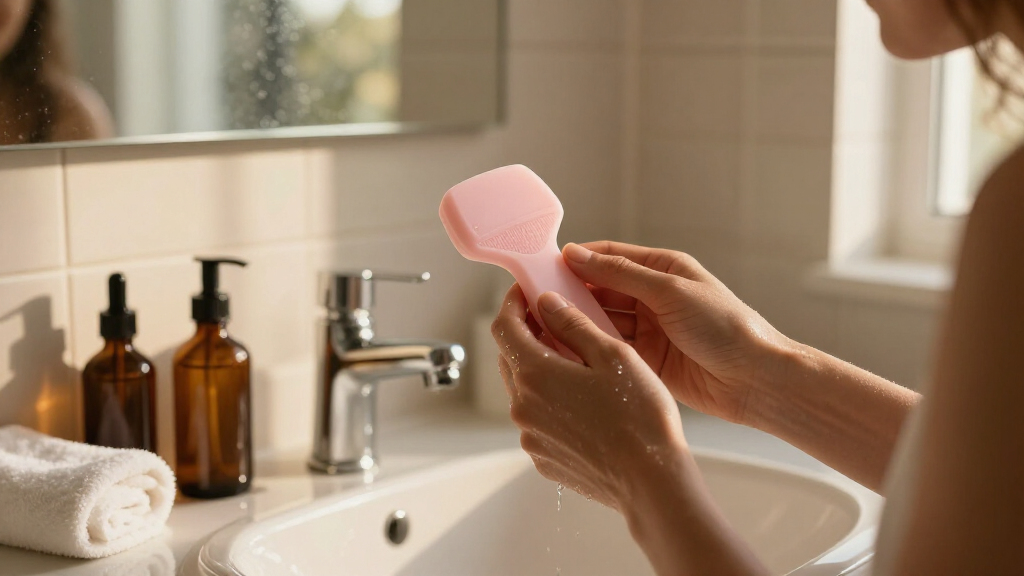
An at-home facial cleansing device is a handheld tool that uses vibration, oscillation, or rotating bristles to help loosen makeup, oil, sunscreen, and everyday debris while you wash. Its main value is mechanical assistance: the moving head can help cleanser reach the skin more evenly and make removal of stubborn surface residue feel easier. It does not replace the cleanser, and it does not make a basic hand-wash inadequate.
The practical implication is that a device is best understood as a convenience, not a necessity. If you wear heavy makeup or water-resistant sunscreen, it may reduce the effort needed for an evening cleanse. If your skin is already comfortable with a gentle cleanser, the added benefit may be small. The tradeoff is that extra motion can become extra friction if you press too hard, use it too often, or pair it with strong exfoliants.
Claims about shrinking pores, preventing acne, or changing wrinkles should be treated cautiously. Cleansing can make pores look temporarily cleaner, but it does not permanently change their size, and acne is driven by factors such as oil, clogged follicles, bacteria, and inflammation that a brush alone does not correct. Features such as warming, massage, or light therapy should be judged separately; a pleasant sensory feature does not automatically prove a clinical benefit. For most people, the foundation remains sunscreen, a suitable cleanser, and products matched to their skin’s needs.
Choose a brush head that fits your routine
Silicone, nylon-bristle, and sonic or vibrating devices differ mainly in feel, hygiene effort, and irritation potential. Silicone heads are generally nonporous and easy to rinse, which matters if you want a quick routine or are concerned about residue. Bristle heads may feel more traditional and satisfying, but their fibers can hold water, cleanser, and makeup residue unless cleaned carefully, and they usually need replacement. Neither design is automatically gentle: pressure, frequency, and intensity matter more than the material alone.
| Design | What it feels like | Upkeep to check | Why it matters |
|---|---|---|---|
| Silicone | Flexible, nubby surface | Rinse well and let it dry | Usually easier to clean and may suit quick routines |
| Nylon bristles | Small, soft brush fibers | Clean carefully and replace as directed | May feel more thorough but needs more attention and replacement |
| Sonic or vibrating | May use silicone or another contact surface | Check surface, intensity levels, and maker care instructions | Intensity can be helpful or irritating depending on setting and pressure |
When choosing, think about the tradeoffs rather than the marketing labels. A soft silicone head may be easier to maintain, but its nubs can still feel stimulating if used too long. A bristle head may help remove heavier residue, but it asks for more attention and ongoing replacement costs. Adjustable intensity can be useful because lower settings reduce the chance of irritation, but more settings also mean you need to resist treating the highest level as better. If your routine is rushed, the device you will actually clean and dry is usually the safer choice.
Use your device gently with this simple routine
Use an at-home facial cleansing device with a suitable cleanser, light pressure, and a short session. The goal is to assist cleansing, not to polish the skin until it feels squeaky. A squeaky or tight feeling often means the barrier has been stressed, not that your face is cleaner. Start with occasional use so you can tell how your skin responds before making it a habit.
- Wet your face and the device with lukewarm water, then apply your usual cleanser. Water helps the head glide and reduces drag.
- Move the head gently over your skin, following the maker’s directions. Let the device do the work instead of pressing it into your face, and avoid lingering on delicate areas.
- Rinse your face and device until cleanser and residue are gone. Leftover cleanser on the skin or head can make the next use less comfortable.
- Pat dry and assess. Skin should feel clean and comfortable. If it stings, looks red, or feels tight, skip the device next time or shorten the session.
This matters because mechanical cleansing adds to your total exfoliation load. If you already use exfoliating acids, retinoids, or strong acne products, adding a brush can tip the balance from helpful renewal to irritation. For example, after a run, a quick gentle pass may be fine, but pairing the device with an acid toner on a dry day may lead to flaking. The tradeoff is simple: a deeper clean feeling is only useful if your skin stays comfortable afterward.
Keep it out of the way when your skin is irritated
Skip mechanical cleansing on skin that is broken, inflamed, sunburned, or already irritated. Friction can worsen redness, stinging, and flaking, especially for people with rosacea, eczema, very sensitive skin, or a damaged barrier. In these situations, the device can turn a manageable flare into a longer recovery. A gentle cleanser applied with clean hands is usually the safer option while skin settles.
It is also important to separate cleansing from treatment. A device may help lift surface residue, but it does not correct the underlying causes of acne, blackheads, or inflammation. If breakouts are frequent, painful, or leaving marks, the better tradeoff is usually targeted treatment or professional advice rather than more scrubbing. Trying to clean away pimples with friction can increase irritation and may make post-inflammatory marks more noticeable.
Stop if your skin stings, stays red, feels tight, or flakes more than usual. Those signs usually mean the routine is too harsh, not that your skin needs to adjust.
Make cleaning the device part of cleansing your face
Rinse the head after every use, remove visible cleanser and residue, and let the device dry fully before storing it. This matters because a damp, product-covered head is less pleasant to use and may hold residue longer than you expect. Follow the manufacturer’s instructions for disinfecting, charging, and replacing heads, since materials and electronics vary. Do not share the device, because sharing can transfer skin microbes and product residue between users.
The upkeep is part of the real cost. If a device requires careful brushing, drying, and replacement heads, it may stop being convenient on busy nights. In that case, clean hands may be the better routine. Silicone is generally easier to rinse and dry, while bristle heads need more attention and may become matted or odorous if neglected. A good rule is to choose a device only if its cleaning steps feel manageable alongside your existing routine.
Frequently Asked Questions
Do facial cleansing devices work better than using my hands?
They may make cleansing feel more thorough and may help remove stubborn makeup or sunscreen, but clean hands and a suitable cleanser work for most routines. The better choice is the method your skin tolerates and you can maintain consistently.
Can a cleansing device help with acne or blackheads?
A device may help remove surface residue, but it does not treat the underlying causes of acne or blackheads. Aggressive use can worsen irritation, so the tradeoff is that more scrubbing may make skin look and feel worse rather than better.
How often should I use a facial cleansing device?
There is no universal schedule. Start occasionally, such as once or twice a week, then adjust based on how your skin responds. Daily use is not automatically better, and irritation is a sign to reduce frequency or stop.
Can I use a device with exfoliating acids or retinoids?
You can, but the combination can increase irritation because mechanical cleansing adds to the exfoliation load. Use caution, reduce frequency, and skip the device when your skin is peeling, stinging, or already sensitive.
Do facial cleansing devices shrink pores or wrinkles?
No cleansing device should be treated as a lasting pore-shrinking or wrinkle treatment. Pores cannot be permanently shrunk by cleansing, and a temporary smooth feel does not mean the structure of the skin has changed.
Conclusion
A cleansing device can be useful if it makes your routine feel easier, more satisfying, or more consistent. Its value depends less on promises of deep cleaning and more on whether you can use it gently and maintain it well. If the device adds pressure, irritation, or upkeep you will skip, your hands remain the simpler option. The best cleanse is the one that leaves skin clean, comfortable, and ready for the rest of your routine.
Fall Picks
fall essentials
As an affiliate, we earn on qualifying purchases.