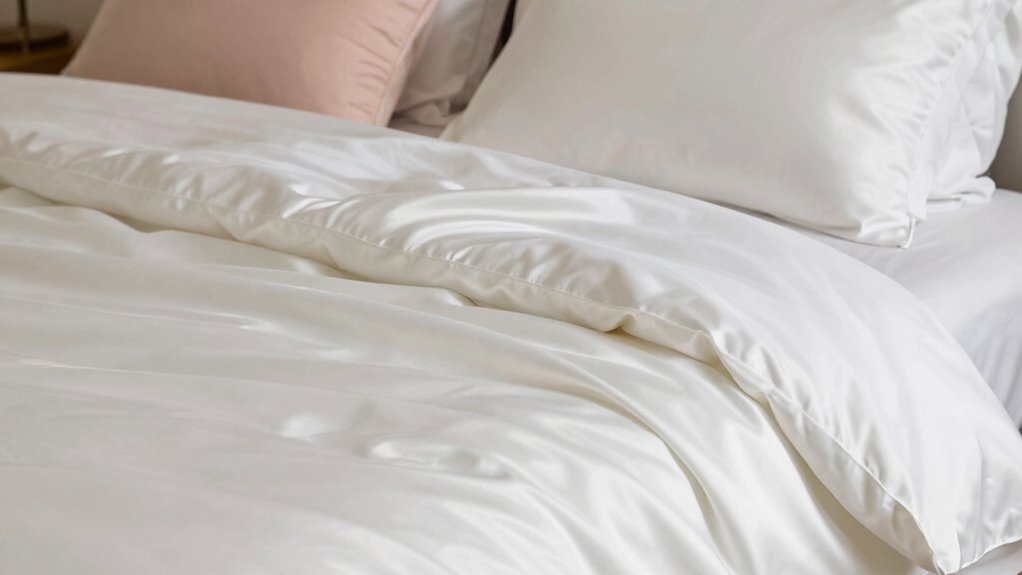

Silk bedding offers a smooth surface that reduces friction, helping to prevent hair breakage and skin creases overnight. It feels soft and can keep your skin hydrated, potentially diminishing fine lines over time. However, it’s not a cure-all for skin conditions like acne or eczema and won’t repair damage from styling or heat. Proper skincare and haircare are still essential. Want to discover more about optimizing your silk bedding benefits? Keep exploring to find out.

Get beauty and skincare favorites delivered free — and shop member deals
- Fast, free delivery on millions of items
- Access to Prime Big Deal Days deals on October 6–7
- Prime Video, Amazon Music and more included
Key Takeaways
- Silk bedding reduces friction, minimizing skin creases and hair breakage, enhancing overnight smoothness.
- It helps retain skin moisture and may improve skin feel, but doesn’t treat underlying skin conditions.
- Proper skincare and haircare are essential, as silk complements but doesn’t replace targeted treatments.
- Silk’s durability depends on quality and care; gentle washing extends lifespan and maintains benefits.
- Hypoallergenic silk options are available, but some sensitivities or allergies may still occur for certain individuals.
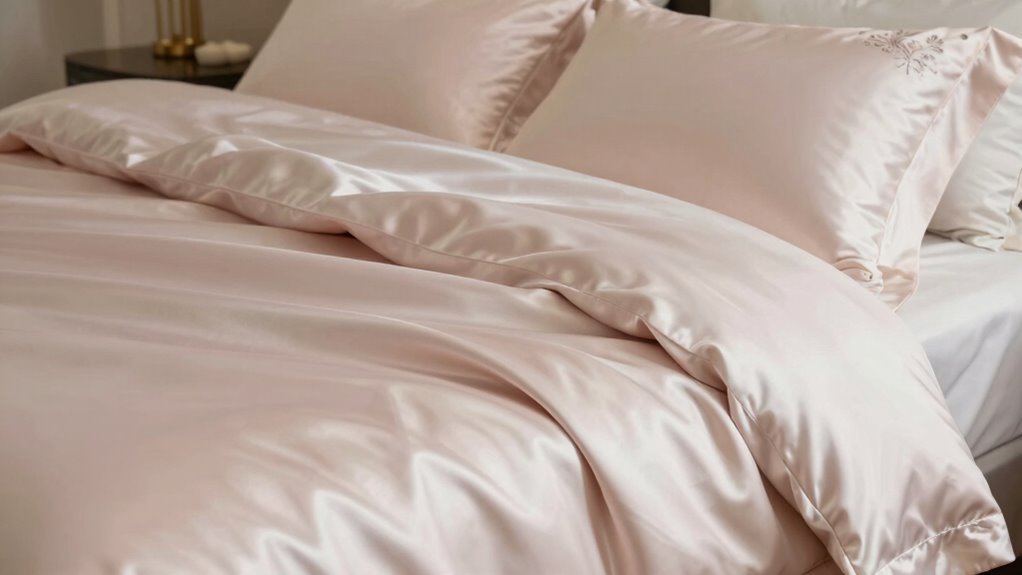
Sleeping on silk bedding can profoundly benefit your skin and hair, especially if you’re looking for a gentle, luxurious option that minimizes damage. Silk’s smooth surface reduces friction, helping to prevent skin creases and hair breakage overnight. This natural fiber is known for its softness, which can make a noticeable difference in how your skin feels when you wake up, leaving it feeling more refreshed and less irritated. Plus, silk’s ability to retain moisture helps keep your skin hydrated, reducing the appearance of fine lines and dry patches over time.
Silk bedding reduces friction, keeps skin hydrated, and leaves you feeling refreshed and irritation-free each morning.
However, silk isn’t a miracle cure for all skin or hair problems. While its smoothness does help reduce friction-related damage, it isn’t a substitute for proper skincare or haircare routines. If you’re dealing with persistent skin conditions like acne or eczema, silk bedding alone isn’t likely to resolve these issues. It can, however, create a gentle environment that supports your existing skincare efforts. When it comes to hair, silk bedding helps minimize split ends and breakage caused by rougher fabrics, but it won’t undo damage caused by harsh styling products or heat tools. Additionally, proper maintenance is essential to preserve the benefits of silk bedding over time. Proper care also helps maintain the fabric’s durability, which can vary depending on quality and handling. Regularly inspecting your silk bedding for signs of wear can help you catch any issues early and extend its lifespan.
You might be wondering about silk’s durability. Silk fabric durability varies depending on quality and care. High-quality silk can last for years if you follow proper washing instructions, but it’s more delicate than cotton or synthetic fabrics. It’s important to handle silk carefully—avoid harsh detergents and opt for gentle, silk-specific cleansers. This not only prolongs the life of your bedding but also maintains its luxurious feel. If you’re concerned about durability, investing in well-made silk sheets can pay off because they tend to hold up better over time, resisting pilling and fraying when properly cared for. Furthermore, understanding fiber quality can help you select the best silk options for longevity.
Another concern some people have with silk bedding is allergic reactions. While silk is generally hypoallergenic due to its natural fibers, some individuals might still experience allergic reactions to silk or the dyes used in certain fabrics. If you notice itching, redness, or swelling after switching to silk bedding, it’s wise to check the fabric’s treatment and dyes. Opting for organic or undyed silk options can help minimize allergic reactions. Additionally, some silk fabrics are processed with chemicals, which can influence the likelihood of allergies. Remember, even though silk is natural, it’s not universally free of allergens, so pay attention to how your skin responds. Being aware of allergy risks can help you make informed choices about your silk bedding.
As an affiliate, we earn on qualifying purchases.
Frequently Asked Questions
How Do Silk Bedding Prices Compare to Other Luxury Bedding Options?
You’ll find silk bedding tends to have higher luxury pricing compared to other luxury options like Egyptian cotton or linen. While silk offers unmatched smoothness and benefits for skin and hair, its material durability can vary, impacting long-term value. Although it costs more upfront, many see it as a worthwhile investment for its comfort and quality. However, if durability or budget are concerns, exploring other luxury fabrics might be a better fit.
Can Silk Bedding Be Used With Sensitive Skin?
Silk bedding can be your gentle sanctuary if you have sensitive skin. It’s naturally hypoallergenic, like a soft shield, helping to reduce allergy relief issues and skin irritation. You’ll find it soothing against your skin, minimizing friction that causes redness and discomfort. While it’s not a cure-all, silk’s smooth surface makes it a smart choice for those with delicate skin, offering comfort without aggravation.
How Often Should Silk Pillowcases Be Washed?
You should wash your silk pillowcases about once a week to maintain pillowcase maintenance and keep them fresh. Use gentle, cold water and a mild detergent designed for silk fabric care. Avoid harsh chemicals and high heat, as they can damage the silk. Hand washing is best, but if you use a machine, select a delicate cycle. Regular cleaning helps preserve the silk’s smoothness and longevity.
Is Silk Bedding Suitable for Hot Sleepers?
Yes, silk bedding is suitable for hot sleepers. Did you know that silk has natural cooling benefits? Its breathability features help regulate your body temperature, preventing overheating during the night. This means you stay cooler and more comfortable, especially if you tend to sweat. Silk’s lightweight, moisture-wicking properties make it an excellent choice for hot sleepers who want a luxurious, cool sleep environment without sacrificing comfort.
What Are the Environmental Impacts of Silk Production?
Silk production has notable environmental impacts. You should know that it contributes to environmental pollution through chemical runoff during processing and dyeing. Additionally, it consumes significant resources, including water and energy, to cultivate silkworms and produce silk fibers. While silk is biodegradable, its environmental footprint is higher than some synthetic alternatives. If eco-friendliness matters to you, consider sustainably sourced silk or alternative fabrics made with lower resource consumption.
Conclusion
So, while silk bedding can give your skin and hair that luxurious feel, it’s not a cure-all for every concern. There’s more beneath the surface—hidden factors and unexpected truths that might change your mind. Are you truly ready to uncover the secrets behind silk’s true power? The next discovery could transform your nightly routine forever. Don’t settle for surface-level comfort—dive deeper and see what silk really has in store for you.
Halloween Picks
halloween
As an affiliate, we earn on qualifying purchases.