Your skin may look weird or overly shiny on camera because of how ring lights interact with your skin’s surface, especially if you don’t diffuse the light properly or if your skin isn’t well-hydrated. Using the wrong brightness or color temperature can also emphasize imperfections or cause glare. Proper positioning, diffusers, and adjusting your camera and light settings can help achieve a smooth, natural glow. Keep going to discover more tips for perfect skin on camera.
Key Takeaways
- Uneven reflection from ring lights can cause excessive shine or weird skin glow on camera.
- Insufficient diffusion or improper light positioning highlights skin imperfections and textures.
- Using non-matte makeup or heavy creams increases shine, making skin look unnatural on video.
- Incorrect lighting brightness or color temperature can wash out or dull skin tones.
- Poor skin preparation and oily products amplify shiny, unflattering skin appearance under ring lights.
Why Does My Skin Look Weird or Overly Shiny in My Skincare Videos?
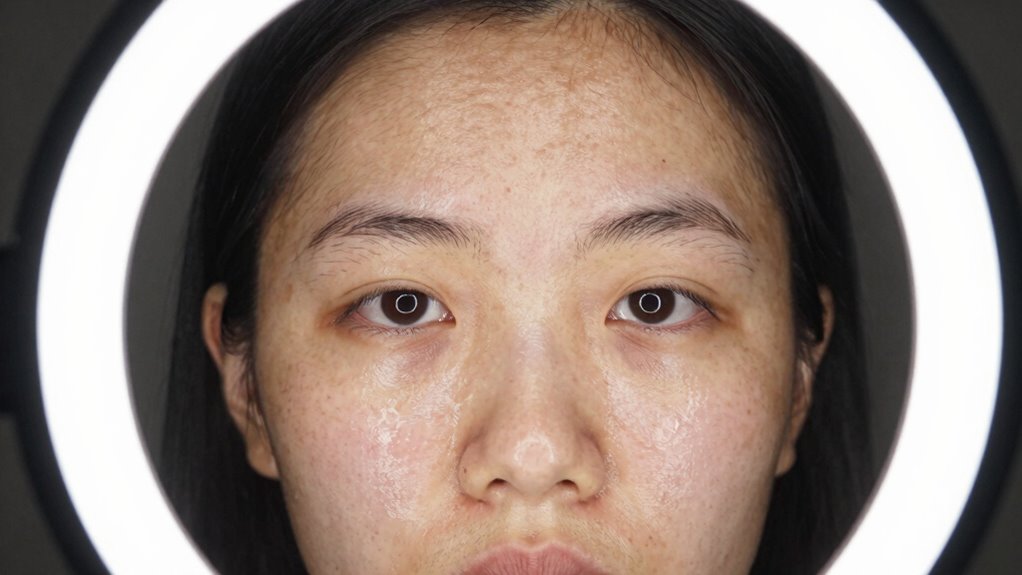
Have you ever noticed your skin looking weird or overly shiny in your skincare videos? That’s often due to how ring lights interact with your skin’s surface. When your skin isn’t well-hydrated, it can reflect light unevenly, making it appear greasy or overly shiny. Proper skin hydration helps create a smooth, matte surface that reduces unwanted shine. Additionally, the makeup techniques you use matter—using mattifying primers and setting powders can control excess oil and shine under bright lights. When filming, avoid heavy creams or oily products right before shooting, as they can make your skin look greasy. Instead, aim for lightweight hydration and matte finishes to achieve a more even, natural glow on camera. Understanding the importance of color accuracy can also help ensure your skin tone appears natural and flattering on camera. Maintaining skin texture through proper skincare routines can further improve how your skin responds under different lighting conditions. Incorporating natural lighting into your filming setup can also significantly enhance the overall appearance of your skin. Additionally, lighting techniques can be adjusted to minimize glare and create a more balanced look. Proper lighting maintenance can also prevent unwanted reflections and ensure consistent illumination throughout your videos.
What Causes Skin to Look Flat or Uneven Under Ring Light?
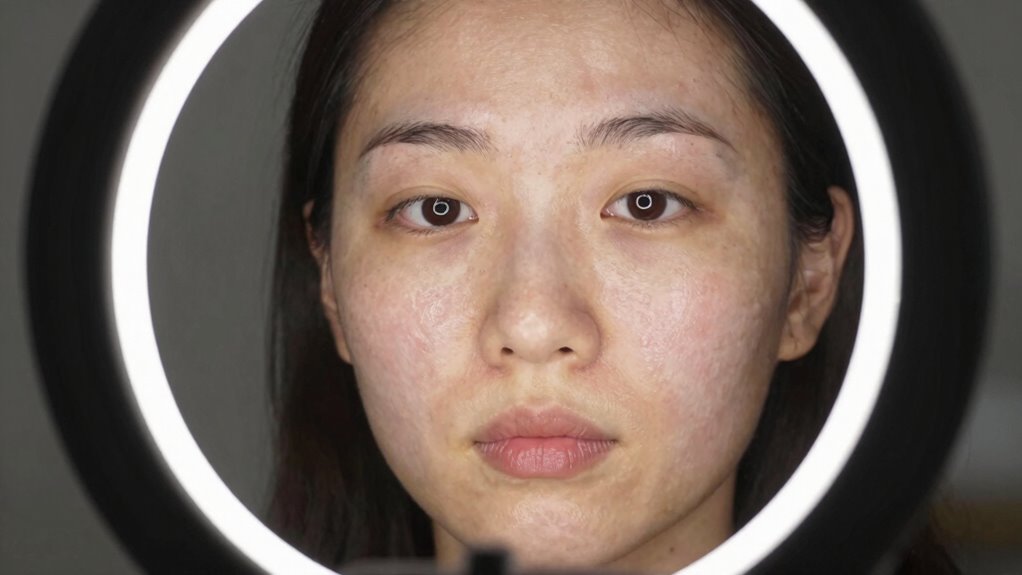
When ring lights create a flat or uneven look on your skin, it’s often due to how they interact with your skin’s texture and tone. Poor light diffusion can highlight fine lines, bumps, or dry patches, making your skin appear less smooth. Additionally, if the light isn’t evenly distributed, some areas may look flat while others seem overly highlighted. The key to avoiding this is understanding how different skin textures respond to light and choosing a ring light with better diffusion. Here’s a quick comparison:
| Skin Texture | Effect Under Ring Light | Recommended Solution |
|---|---|---|
| Smooth | Even glow | Use soft, diffused light |
| Bumpy or textured | Highlights imperfections | Opt for softer diffusion |
| Dry patches | Looks more prominent | Hydrate skin beforehand |
| Oily or shiny | Excess shine amplified | Use matte finish filters |
Understanding light diffusion can help you select the best ring light to achieve a natural and flattering appearance. Being aware of skin texture and how it interacts with different lighting setups can further improve your on-camera look. Additionally, considering how lighting quality impacts the overall appearance can make a significant difference in your skincare content. Properly managing lighting conditions can help mitigate unwanted effects and enhance your skin’s natural glow. Recognizing the importance of consistent lighting ensures your skin looks balanced and avoids distracting shadows or hotspots.
How Do Brightness and Color Temperature Affect Skin Tone and Shine?
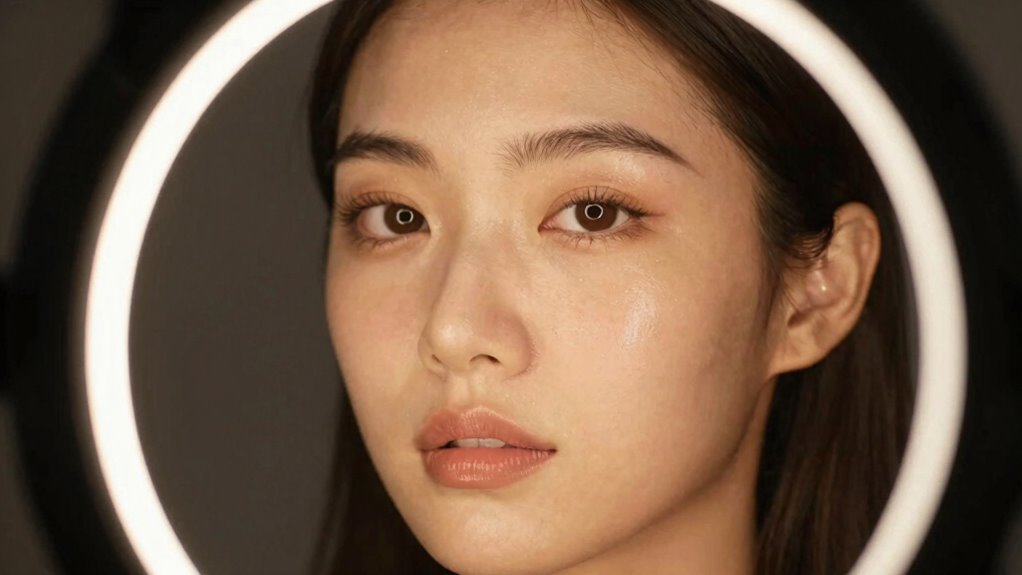
Brightness and color temperature play a crucial role in how your skin appears on camera. Higher brightness can enhance your skin’s natural glow, but too much can cause excessive shine and wash out your skin tone. Conversely, lower brightness might make your skin look dull or flat. Choosing the right lighting setup is essential for achieving a balanced and flattering look. Adjusting these settings thoughtfully can also help minimize unwanted color casts that distort your natural skin tone. Properly managing lighting conditions can prevent unflattering reflections and improve the overall appearance of your skin on camera. Additionally, understanding how different light reflection qualities influence skin texture can help you select the best lighting for a smooth and flattering look. Color temperature influences the warmth or coolness of your skin. A warm, lower temperature (around 3000K) adds a golden glow, enhancing warmth in your skin tone. Cooler temperatures (above 5000K) can make your skin appear paler or more muted. light reflection also matters—softer, diffused light reduces harsh shadows and boosts even skin tone. Adjusting brightness and color temperature carefully helps you achieve a natural, flattering shine without making your skin look overly shiny or flat on camera.
How to Position and Angle Your Ring Light for Flattering Skin?
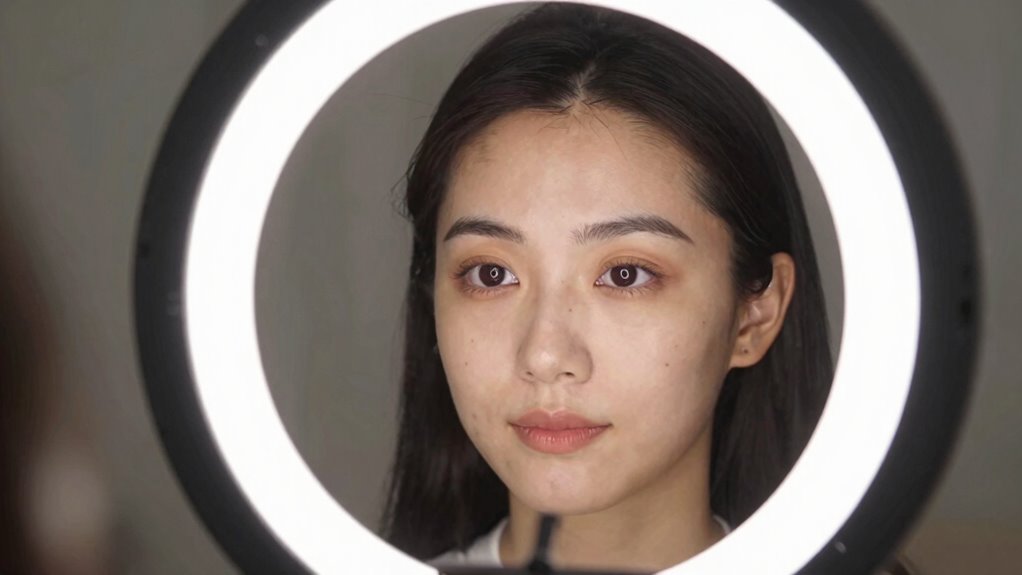
To get the most flattering skin in your videos, position your ring light at eye level or slightly above your face. Adjust the light’s angle to minimize shadows and highlight your best features, ensuring even coverage. Proper placement and angle help create a smooth, glowing look that enhances your skincare content. Additionally, understanding light diffusion can help you achieve a more natural and flattering appearance. Using the right lighting setup can maximize your ring light’s effectiveness and prevent unflattering shadows or glare. Mastering light positioning techniques also ensures your skin appears radiant and well-lit on camera, especially when considering how connected equipment can optimize your overall lighting environment for consistent results. Being aware of light quality can further improve your filming outcomes by choosing the appropriate intensity and color temperature for your skin tone.
Optimal Ring Light Placement
Positioning your ring light correctly can make a significant difference in how your skin appears on camera. To achieve the best results, place the ring light at a slight angle in front of you, about 45 degrees, to create even, flattering illumination. Keep the light slightly above eye level to reduce shadows and emphasize your skin’s natural texture. Use lighting techniques that soften harsh shadows and reduce reflections, which can accentuate uneven skin texture. Guarantee the light is centered to evenly illuminate your face, avoiding hotspots or dark areas. Adjust the distance so the light is close enough for a bright, but gentle glow. Proper placement minimizes the weird skin effects caused by poorly positioned lights, helping your skin look smooth and natural on camera. Incorporating professional-grade lighting can further enhance your skin’s appearance and avoid unflattering glare or shadows.
Adjusting Light Angles
Adjusting the angle of your ring light is key to achieving even, flattering illumination that enhances your skin’s appearance on camera. You want the light angle to be slightly above and directed toward your face, which minimizes shadows and highlights your best features. Position your face so it faces the light directly or at a slight angle; this prevents harsh shadows and creates a soft, natural glow. Keep your chin level and avoid tilting your head too far up or down, as that can distort lighting and skin texture. Experiment with the light angle to find what best complements your face shape and skin tone. Proper face positioning combined with the right light angle ensures your skin looks smooth, vibrant, and camera-ready. Additionally, understanding the importance of light diffusion can help you achieve a more even and flattering glow.
Achieving Even Illumination
Properly positioning your ring light helps create an even, flattering glow that enhances your skin’s appearance on camera. To achieve this, start by placing the ring light directly in front of you at eye level. Use lighting accessories like diffusers or softboxes to soften harsh shadows and distribute light evenly. Adjust the angle slightly if needed to reduce glare or hotspots, ensuring your skin looks smooth and natural. Consistency is key—align your ring light with your skincare routines so your skin’s texture and tone remain consistent across videos. Remember, even illumination minimizes weird shadows and uneven spots, giving your skin a fresh, flawless look. Fine-tuning your positioning will boost your confidence and help your skincare content shine.
How to Set Your Camera and Ring Light for a Natural, Glowing Look?
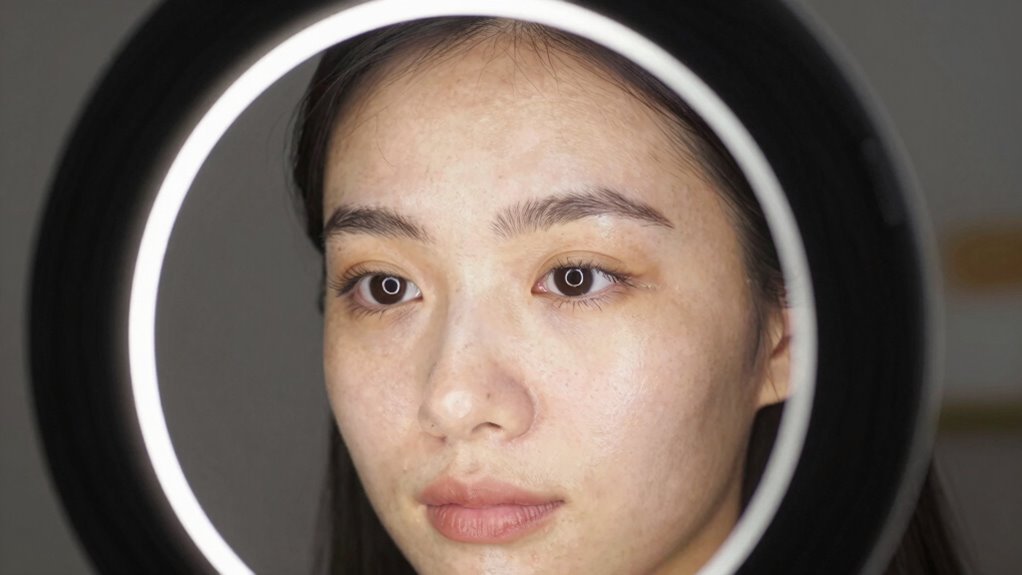
To achieve a natural, glowing look with your ring light, start by setting your camera to a slightly lower ISO, around 100 to 200, to prevent graininess and guarantee clear images. Next, adjust your camera settings for soft, even lighting:
- Set your aperture wide (f/2.8–4) to create a gentle background blur.
- Keep your shutter speed fast enough (1/60–1/125 sec) to avoid motion blur.
- Use lighting accessories like diffusers or reflectors to soften and direct the light for an even glow.
Additionally, understanding the importance of proper lighting techniques can significantly enhance your on-camera appearance. Proper light placement ensures that your skin appears smooth and natural. Recognizing the impact of lighting quality helps in selecting the best equipment for a flattering skin tone that looks radiant and authentic on camera. Moreover, fine-tuning your camera settings and using the right lighting accessories helps you achieve that perfect, radiant look on camera.
Practical Tips to Reduce Shine and Even Out Skin Tones on Camera

Achieving a radiant, matte finish on camera requires more than just good lighting; managing shine and uneven skin tones is key. Start with proper skin prep by cleansing and applying a mattifying primer to control oil. Use lightweight, oil-free foundations or tinted moisturizers that match your skin tone, blending well to even out your complexion. Incorporate strategic makeup techniques like setting your foundation with translucent powder, especially on areas prone to shine, such as the T-zone. Blot excess oil throughout your shoot with oil-absorbing sheets or powders. Remember, less is more—avoid heavy makeup that can appear cakey. Additionally, being mindful of your indoor air quality can help prevent excess oil production caused by environmental factors. With the right skin prep and targeted makeup techniques, you’ll reduce unwanted shine and achieve a smooth, balanced look on camera.
How to Choose the Best Ring Light for Flattering Skincare Content
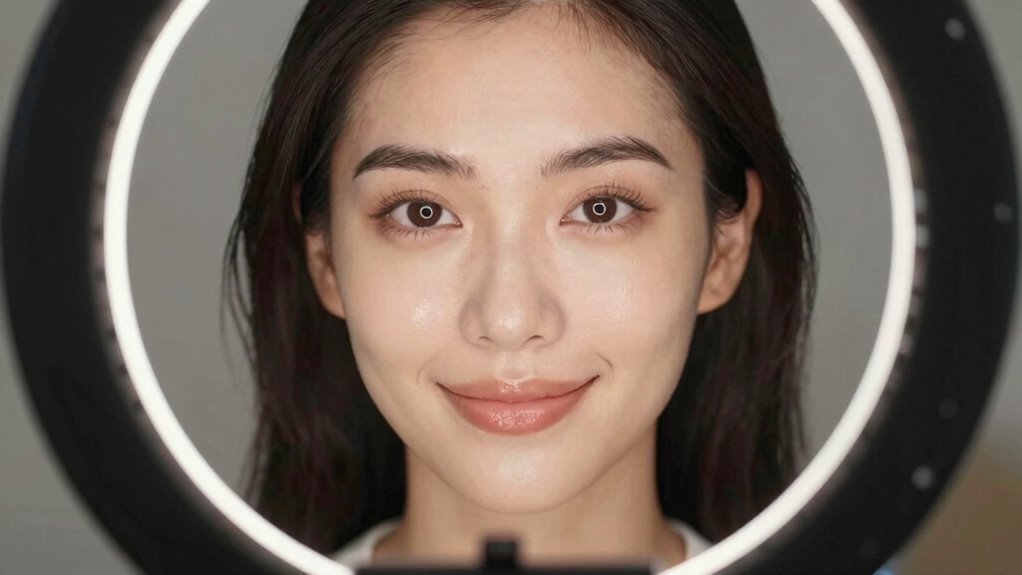
When selecting a ring light for your skincare content, consider how adjustable brightness levels can help you achieve the perfect glow. You should also look for color temperature options to match different skin tones and lighting conditions. Additionally, adjustable mounting features give you the flexibility to position the light exactly where it enhances your skin’s natural beauty.
Light Brightness Levels
Choosing the right brightness level for your ring light is essential for creating flattering skincare content. The correct light intensity can highlight your skin tone naturally and reduce unwanted shadows or glare. To find the best setting, consider these tips:
- Start with a lower brightness and gradually increase until your skin looks even and vibrant.
- Adjust the light intensity based on your skin tone—darker skin may need slightly higher brightness, while lighter skin benefits from softer settings.
- Use dimming options to fine-tune the glow, ensuring your skin appears smooth and realistic on camera.
Always test different brightness levels in your filming environment, as ambient lighting impacts how the ring light interacts with your skin. Proper light brightness enhances your skincare details without washing out or overexposing your complexion.
Color Temperature Options
The color temperature of your ring light can considerably influence how your skin appears on camera. Choosing the right color temperature helps your skin tone look natural and flattering. A warmer temperature, around 2700K to 3500K, adds a soft glow and smooths imperfections, making your skin look healthy and radiant. On the other hand, cooler temperatures, between 5000K and 6500K, mimic daylight and create a crisp, clear effect that highlights fine details. Consider your skin tone when selecting your setting: warmer lights tend to complement darker or warmer skin tones, while cooler lights suit fairer or cooler complexions. Some ring lights offer adjustable color temperature, allowing you to find the perfect balance for your skin and content style.
Adjustable Mounting Features
Adjustable mounting features are essential for customizing your ring light to achieve the most flattering skincare content. Flexible mountings and adjustable arms allow you to position your light precisely, reducing glare and shadows. When choosing a ring light, consider these key features:
- Flexible Mountings – Ensure the mountings can rotate or pivot for versatile positioning.
- Adjustable Arms – Look for arms that extend or bend, giving you control over height and angle.
- Secure Fastenings – Verify the mountings hold your adjustments firmly, preventing slips during recordings.
These features enable you to fine-tune the light’s placement, creating even, flattering illumination. With adjustable arms and flexible mountings, you can adapt your setup quickly for different skincare content styles, ensuring your skin looks its best on camera.
Frequently Asked Questions
Can Different Skin Tones Affect How Ring Light Reflects?
Yes, different skin tone variations can influence how ring light reflects. Lighter skin tends to reflect more light, making it appear brighter and sometimes washed out. Darker skin absorbs more light, which can result in less reflection and a different glow. Understanding these light reflection dynamics helps you adjust your ring light settings or placement to guarantee your skin tone looks natural and flattering on camera.
Does the Size of the Ring Light Impact Skin Appearance?
Yes, the size of your ring light impacts how your skin appears. Larger ring lights provide softer, more diffused light, reducing harsh shadows and creating a natural glow. Smaller ones can produce more focused light that may emphasize skin texture or imperfections. Pay attention to light diffusion and light color; a larger light with good diffusion and a balanced color temperature will make your skin look more even and flattering on camera.
How Does Ambient Lighting Influence Ring Light Effects?
You might notice your skin looks strange on camera because ambient lighting creates contrast and natural shadows that clash with your ring light. When ambient contrast is high, it can wash out or distort your skin tone, making your skin look uneven or “weird.” To avoid this, balance your ambient lighting with your ring light, reducing shadows and ensuring your skin appears smooth and natural on camera.
What Skin Conditions Are Worsened by Ring Light Glare?
Ring light glare can worsen skin conditions like hyperpigmentation visibility and rosacea flare-ups. You might notice increased redness, uneven skin tone, or dark spots appearing more prominent on camera. The intense reflection highlights these issues, making them seem worse. To minimize this, adjust your ring light’s brightness, use diffusers, or soften the lighting to prevent glare from magnifying your skin’s sensitivities.
Are There Specific Filters to Reduce Shine on Camera?
Think of filters as your magic lens, transforming harsh glare into a soft glow. Yes, you can find filters designed for shine reduction that help tame reflective skin and create a smoother look. Adjust the filter settings to fine-tune how much shine is minimized, ensuring your skin appears natural rather than overly matte. With the right filter adjustments, you’ll radiate confidence, letting your true beauty shine through without unwanted shine.
Conclusion
Don’t let shiny or flat-looking skin hold you back from creating stunning skincare videos. With the right ring light setup, positioning, and camera settings, you can achieve a natural, glowing look that highlights your skin’s true beauty. Even if you think lighting is complicated, start simple and experiment—practice makes perfect. Remember, every face is unique, so trust your eye and keep refining until your videos reflect the radiant skin you want to showcase.