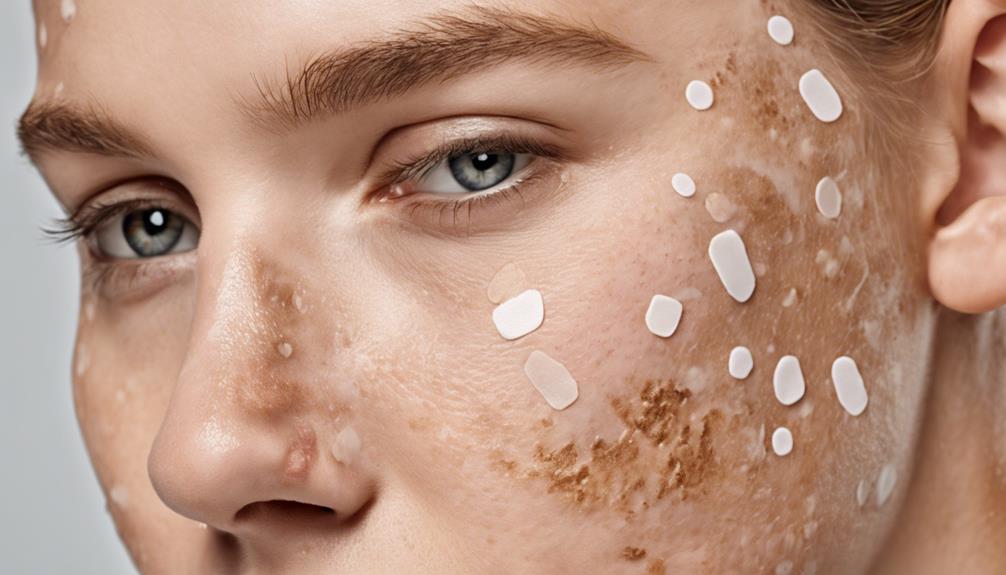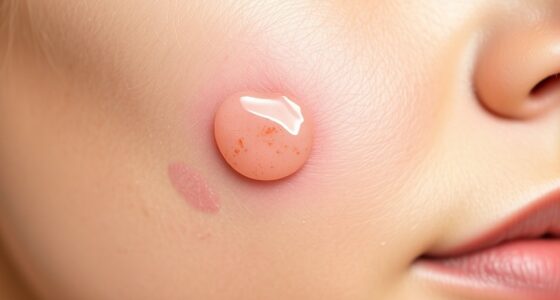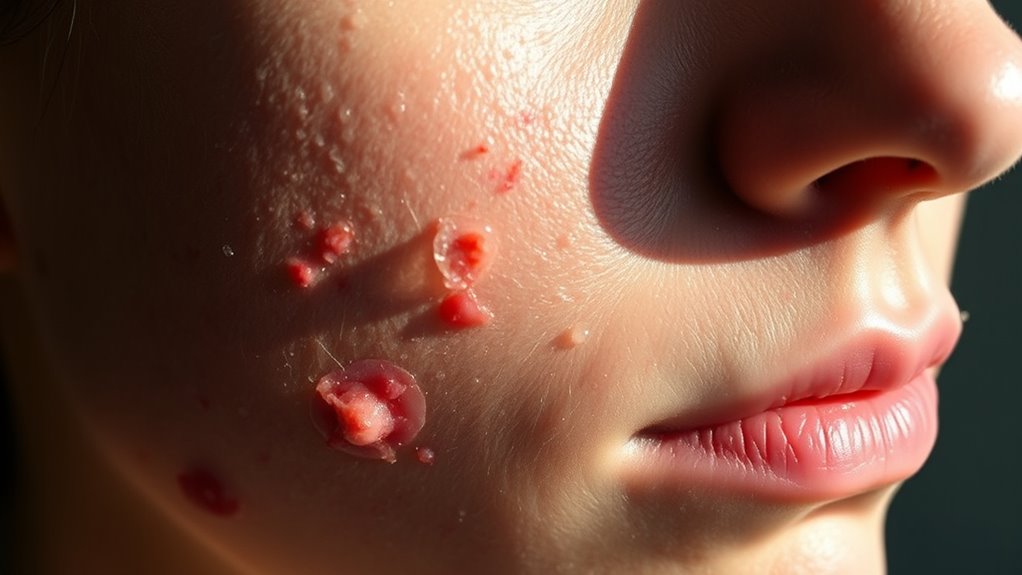

Patches can help with mild surface breakouts and reducing inflammation, but they often don’t penetrate deep enough to treat cystic acne effectively. For cysts that are large, painful, or persistent, topical patches alone usually aren’t enough. In these cases, professional treatments like corticosteroid injections or medications are necessary to target the deep inflammation. If you want to explore when patches work best—and when they don’t—there’s more to contemplate for clearer skin.

Get beauty and skincare favorites delivered free with Prime
- Fast, free delivery on millions of items
- Prime Video, Amazon Music and more included
- Member-only deals all year
Key Takeaways
- Patches containing ingredients like hydrocolloid can absorb pus and reduce inflammation for superficial cysts.
- Patches are less effective for deep or severe cystic acne that requires targeted medications or professional treatments.
- Use patches as an adjunct to a comprehensive skincare routine, not as the sole treatment for cystic lesions.
- Avoid relying solely on patches for large, painful, or persistent cysts; consult a dermatologist for proper care.
- Patches may help prevent scarring if used early but won’t resolve deep cysts without additional medical interventions.
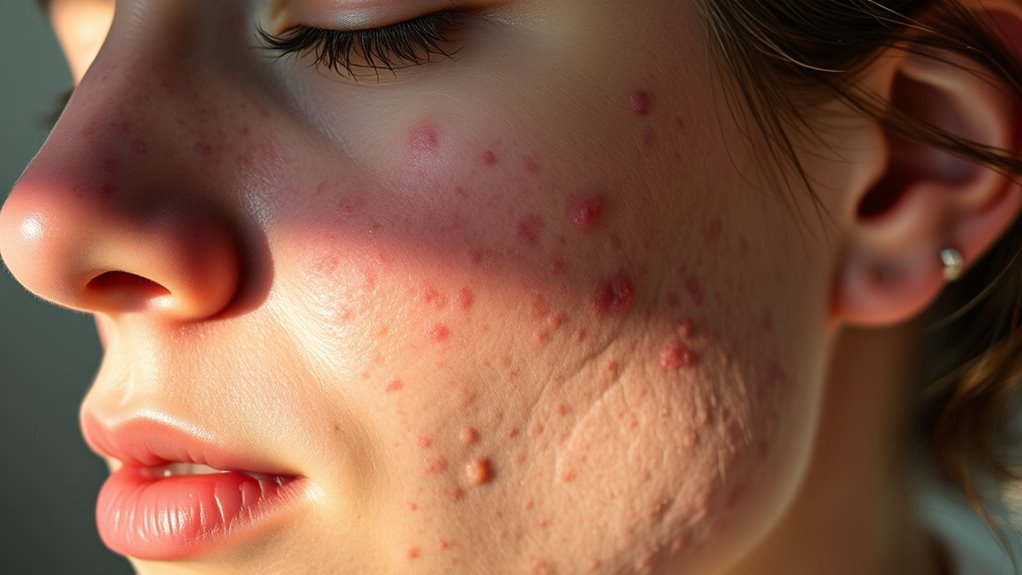
Cystic acne can be one of the most challenging skin conditions to manage, but understanding how to deal with it is essential for clearer skin and improved confidence. When dealing with cystic outbreaks, your approach to pimple treatment must be targeted and consistent. Over-the-counter remedies often fall short because cystic acne resides deep within your skin, requiring more than just topical creams. You might need to incorporate specific ingredients such as benzoyl peroxide or salicylic acid into your skincare routines, but it’s equally important to be cautious. Using harsh products can irritate your skin further, making cystic lesions worse, so look for gentle, non-comedogenic options designed for sensitive skin. Establishing a skincare routine that emphasizes cleansing, moisturizing, and targeted treatment helps prevent new cysts from forming and reduces inflammation. Cleansing twice daily with a mild, non-abrasive cleanser can keep excess oil and dirt at bay, which is vital because cystic acne is often fueled by excess sebum production. Moisturizing is equally important, especially if you’re using acne medications, which can dry out your skin. Choose a lightweight, oil-free moisturizer to maintain your skin’s barrier without clogging pores.
Additionally, some foods and lifestyle factors may influence cystic acne, so paying attention to dietary triggers can be beneficial in managing outbreaks. When it comes to pimple treatment, avoid squeezing or popping cysts, as this can push bacteria deeper and cause scarring. Instead, consider spot treatments with ingredients like sulfur or tea tree oil, which can help reduce inflammation and promote healing. If your cystic acne persists or worsens, it’s best to consult a dermatologist. They might prescribe oral medications such as antibiotics or isotretinoin, which are more effective for severe cases. Remember, consistency is key; even with medications, results take time. Your skincare routines should also include sun protection, as UV exposure can worsen scars and pigmentation caused by cystic acne. Use a broad-spectrum sunscreen daily, and avoid excessive sun exposure to support your skin’s healing process.
Sometimes, patches or topical treatments alone aren’t enough, and professional interventions may be necessary. Treatments like corticosteroid injections can rapidly reduce cyst swelling, but they should be administered by a professional. Ultimately, managing cystic acne requires patience, discipline, and a tailored approach. Understanding when to stick with your skincare routines and pimple treatment strategies and when to seek professional help can make all the difference in regaining clearer, healthier skin.
hydrocolloid acne patches for surface cysts
As an affiliate, we earn on qualifying purchases.
As an affiliate, we earn on qualifying purchases.
Frequently Asked Questions
Can Patches Completely Cure Cystic Acne?
You might hope patches can completely cure cystic acne, but they usually can’t do it alone. Patches are helpful as an alternative treatment for reducing inflammation and absorbing pus, but they shouldn’t replace your overall skincare routine or professional advice. To truly manage cystic acne, you need a thorough approach that includes effective skincare routines and possibly other medical treatments. Patches can be a helpful part, but not the cure-all.
Are There Specific Patch Ingredients for Cystic Acne?
When choosing patches for cystic acne, look for specific ingredients like benzoyl peroxide or salicylic acid, which target inflammation and bacteria. Comparing patch ingredients helps you find effective options, but be mindful of ingredient sensitivities that could cause irritation. You should also consider how different ingredients interact with your skin, and always patch test new patches to avoid adverse reactions while managing cystic acne effectively.
How Long Should I Use Patches Before Seeing Results?
You should typically use acne patches consistently for about 8 to 12 hours to see noticeable results. Patch durability varies, so check the label for recommended wear time. Maintaining treatment consistency is key—you might start noticing improvements within a few days, but it can take up to a week for significant changes. Keep track of your skin’s response, and don’t leave patches on longer than advised to avoid irritation.
Can Patches Cause Skin Irritation or Allergic Reactions?
You might wonder if patches could secretly cause patch sensitivity or allergic reactions. While they’re generally safe, some ingredients can trigger irritation, especially if you have sensitive skin. You could experience redness, itching, or swelling—signs of an allergic reaction. Always patch-test new products and monitor your skin’s response. If irritation persists, stop using the patch and consult a dermatologist to prevent worsening skin issues.
Are Patches Effective for All Skin Types and Severities?
You might wonder if patches work for all skin types and severities. While they can be effective, their success depends on maintaining skin hydration and the patch’s durability. For sensitive or severe cystic acne, patches may not provide enough coverage or absorption. It is crucial to choose patches suitable for your skin type and verify they stay intact, offering consistent treatment and preventing irritation.
Conclusion
Remember, tackling cystic acne is a journey, and sometimes patches are your best allies—like having a trusty sidekick. But other times, they won’t be enough to turn the tide. Keep experimenting and listening to your skin’s signals, because patience is key. Don’t throw in the towel just yet; with persistence and the right approach, you’ll find your way through the storm. Stay resilient, and brighter days are just around the corner.
Fall Picks
fall essentials
As an affiliate, we earn on qualifying purchases.