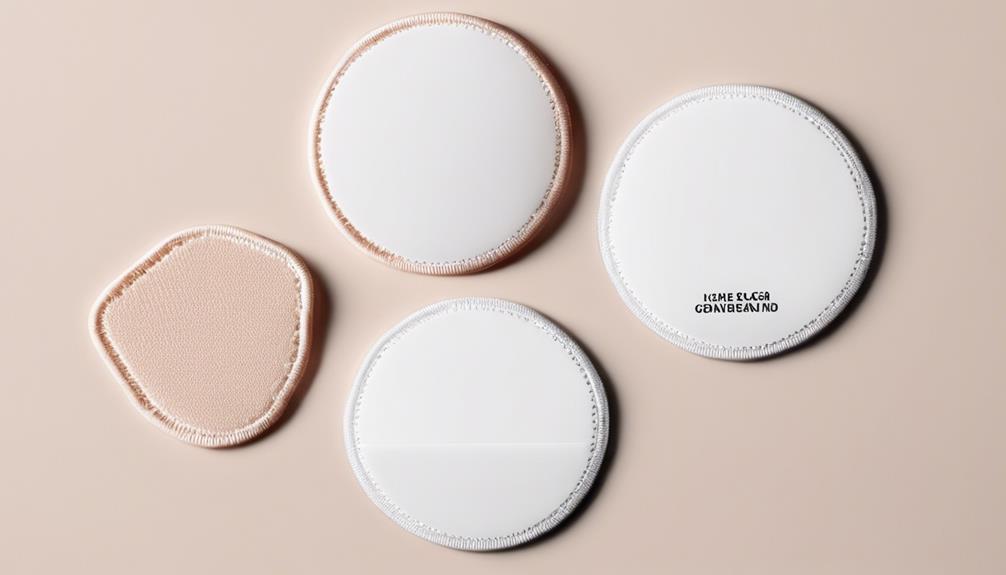
Acne patches are small, adhesive layers that protect pimples while delivering ingredients like salicylic acid or hydrocolloid to reduce inflammation and draw out impurities overnight. They’re a quick, easy way to target spots without squeezing, suitable for various skin types—especially sensitive skin. However, they work best on surface-level pimples and may cause irritation if misused or applied on sensitive skin. To learn more about how to get the best results, keep exploring these FAQs.
Key Takeaways
- Acne patches protect spots from dirt and picking while delivering ingredients like salicylic acid to reduce inflammation.
- They are best suited for surface-level pimples and not deep cysts or inflamed lesions.
- Proper skin cleansing before application and removing patches after recommended time prevent irritation.
- Sensitive skin may react; testing a small area first and choosing gentle patches can minimize reactions.
- Overuse or leaving patches on too long can cause irritation; follow product instructions for safe use.
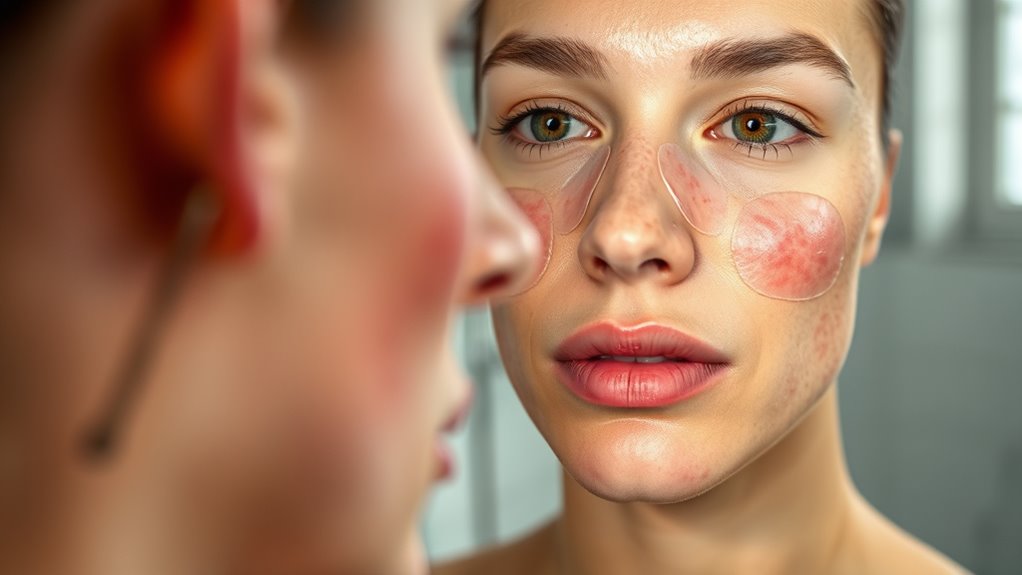
Are you curious about how acne patches work and whether they’re right for your skincare routine? Acne patches are small, adhesive layers that you stick directly onto a pimple or breakout. They act as a barrier, protecting the spot from dirt, bacteria, and picking, while also delivering active ingredients like salicylic acid or hydrocolloid to help reduce inflammation. One of the main appeals is their ability to promote pimple extraction—drawing out excess fluid, pus, and oil that cause the blemish to swell and become inflamed. The hydrocolloid material in many patches absorbs this gunk overnight, making pimples smaller and less noticeable by morning. It’s a quick, fuss-free way to target a breakout without squeezing or irritating the skin further. Additionally, some acne patches are specifically designed to be compatible with various skin types, including those with sensitivities.
However, you should be aware that pimple extraction isn’t always perfectly achieved just by applying a patch. While some patches do help draw out impurities, they don’t replace professional extraction when necessary. If you try to forcefully extract a pimple or remove it prematurely, you risk skin irritation, redness, and even scarring. Acne patches work best when used on surface-level spots that are ready to heal, not on deeply embedded cysts or inflamed lesions. Overusing patches or leaving them on for too long can sometimes cause skin irritation, especially if you have sensitive skin. It’s important to follow the instructions and remove the patches after the recommended time to prevent unnecessary redness or irritation.
Another concern you might have is skin irritation. If your skin is sensitive or prone to allergies, some ingredients in acne patches might cause irritation or a rash. To minimize this, look for patches designed for sensitive skin or test a small area first. Cleanse your skin thoroughly before applying the patch, and avoid using other harsh products simultaneously to reduce the risk of irritation. If you notice increased redness, burning, or discomfort, remove the patch immediately and give your skin time to recover. Always patch test new products and consult with a dermatologist if you’re unsure about how your skin will react. Additionally, selecting patches that contain hydrocolloid material can improve their absorption efficiency and healing properties.
Frequently Asked Questions
Can Acne Patches Be Used on Cystic Acne?
Yes, you can use acne patches on cystic acne, but they work best as a cystic acne treatment for smaller, surface-level cysts. For effective patch application tips, gently clean the area, apply the patch directly on the cyst, and leave it on as directed. Keep in mind, for deeper cysts, you might need more advanced treatments, so consult a dermatologist for personalized advice.
Are Acne Patches Effective Against Scars or Hyperpigmentation?
Acne patches mainly target active breakouts and aren’t designed for scar treatment or hyperpigmentation fading. While they help prevent further inflammation and promote healing of current pimples, they don’t markedly impact scars or hyperpigmentation. For those concerns, look for products specifically formulated for scar treatment and hyperpigmentation fading, like serums with ingredients such as vitamin C, niacinamide, or retinoids, which can improve skin texture and tone over time.
How Long Should I Leave an Acne Patch on Overnight?
You should leave an acne patch on overnight, allowing sufficient time for pimple extraction and healing. During this period, the patch works to absorb excess oil, reduce inflammation, and protect your skin. Incorporate it into your skincare routine by applying before bed and removing in the morning. This continuous process helps keep your skin clear, prevents further breakouts, and supports your overall skincare routine for healthier, calmer skin.
Can I Wear Makeup Over an Acne Patch?
Yes, you can wear makeup over an acne patch, but it’s best to verify makeup compatibility first to avoid irritation. Use a gentle, non-comedogenic makeup product and apply it carefully around the patch. Remember, makeup can affect acne patch removal, so remove the patch gently when you’re ready to take it off. This helps prevent damage to your skin and ensures the patch works effectively.
Are There Any Skin Types That Shouldn’T Use Acne Patches?
Sure, some skin types should think twice before using acne patches. If you have skin sensitivities or allergy risks, these patches might cause irritation or worsen your condition. Ironically, what’s meant to heal could end up hurting, so always do a patch test first. If you notice redness or discomfort, it’s best to skip them and consult a dermatologist. Better safe than sorry, right?
Conclusion
Think of your acne patch as a tiny guardian, quietly working to heal your skin’s story. Just like a steadfast lighthouse guides ships safely ashore, it steers you through clearer days. Remember, each patch is a small symbol of your self-care journey—brightening your confidence one step at a time. Trust in these little protectors, and soon, your skin will shine as brightly as your resilience. Keep going; brighter days are on the horizon.