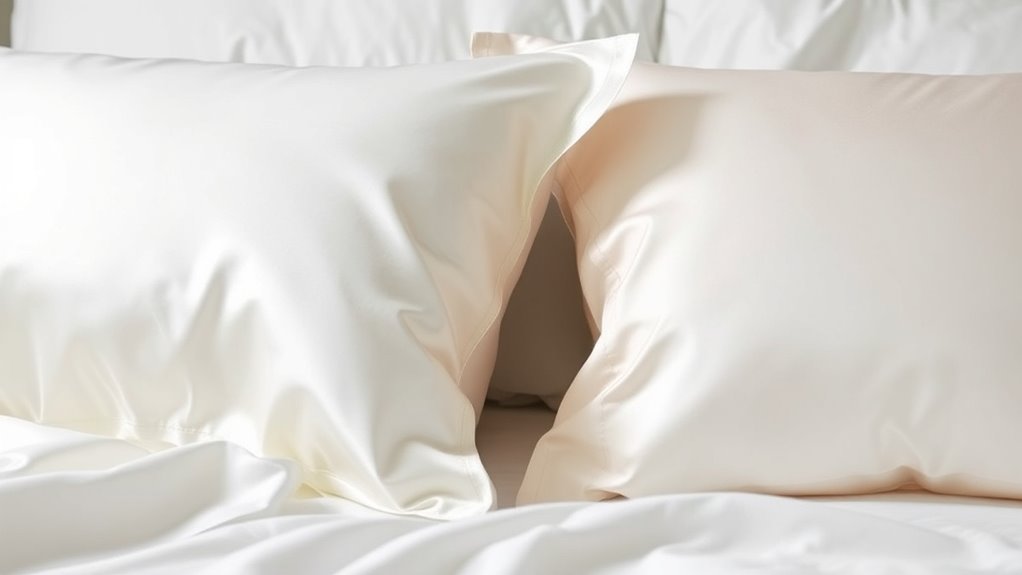

Silk pillowcases, especially high-quality ones with high thread counts, are better for your hair because they create a super-smooth surface that reduces friction, helping prevent breakage and bedhead. Satin can offer similar benefits, especially if made from silk, but synthetic versions often don’t last as long or maintain their smoothness. Choosing the right fabric depends on fiber quality and weave, so if you want long-lasting hair benefits, silk is usually the better choice. Keep exploring to discover more about what makes each option special.
Key Takeaways
- Silk pillowcases with high thread counts reduce hair friction and breakage better than lower-quality satin.
- High-quality silk offers greater durability and maintains smoothness longer than synthetic satin.
- Silk’s natural fibers help retain moisture and prevent hair frizz, benefiting hair health.
- Satin made from silk provides similar benefits but may degrade faster if not high-quality.
- Proper care extends the lifespan of silk pillowcases, ensuring consistent hair and skin benefits over time.
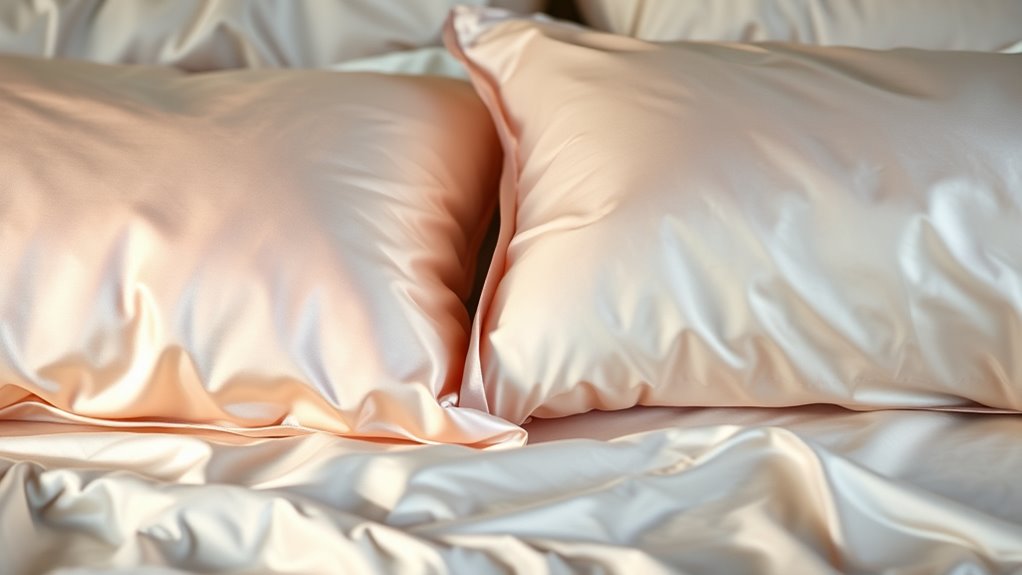
When choosing a pillowcase, many people wonder whether silk or satin is the better option. Both materials offer a luxurious feel and are popular for their benefits to hair and skin, but understanding their differences can help you make the right choice. One key factor to deliberate is the thread count, which impacts the overall quality and feel of the fabric. High thread count silk pillowcases typically feature between 400 and 600 threads per inch, creating a dense, smooth surface that feels incredibly soft against your skin and hair. Satin, on the other hand, isn’t a fabric itself but a weave pattern that can be made from various fibers, including silk, polyester, or nylon. When satin is made from silk, it can have a comparable thread count, but polyester or nylon versions usually have lower counts, which can affect their smoothness and longevity.
Durability is another critical aspect to weigh. Silk pillowcases with a high thread count tend to be more durable because tightly woven fibers are less prone to snagging or tearing over time. Quality silk, especially mulberry silk, is known for its strength and ability to withstand frequent washing when cared for properly. Satin made from synthetic fibers, however, often lacks the same durability. It may feel just as smooth initially but can degrade faster with repeated washes, leading to pilling or roughness. If you’re looking for a pillowcase that lasts longer, investing in a high-quality silk with a high thread count is typically the better choice. It’s more resistant to wear and tear, maintaining its softness and shine through many nights of use.
Additionally, the durability of silk makes it easier to care for in the long run, as it generally withstands washing better than low-quality satin. Proper care—gentle washing, avoiding harsh detergents, and air drying—helps preserve its integrity. Satin made from polyester or nylon may require more delicate handling to prevent pilling or fraying, and it might not age as gracefully. When it comes to thread count, it’s important to note that a higher count usually indicates better quality, but it’s also about the weave and fiber quality. Silk with a high thread count offers a plush, smooth surface that’s gentle on your hair and skin, reducing friction and breakage overnight. Moreover, the fiber quality of silk contributes significantly to its longevity and luxurious feel, making it a preferred choice for those seeking both durability and comfort.
high thread count silk pillowcase
As an affiliate, we earn on qualifying purchases.
As an affiliate, we earn on qualifying purchases.
Frequently Asked Questions
Are Silk and Satin Pillowcases Hypoallergenic?
Yes, silk and satin pillowcases are generally hypoallergenic because they resist dust mites and mold. Silk, known for its fabric durability, naturally repels allergens, making it a good choice for sensitive skin. Satin, often more affordable, offers a cost comparison that’s budget-friendly. Both materials help reduce irritation, but silk’s natural properties might provide a slight edge for allergy sufferers. Choose based on your allergy needs and budget.
How Do Silk and Satin Pillowcases Affect Skin Aging?
Silk and satin pillowcases help slow skin aging by promoting moisture retention and skin hydration. They reduce friction, preventing fine lines and wrinkles, while maintaining your skin’s natural oils. With consistent use, they support a radiant, youthful appearance. You’ll notice smoother skin and less irritation, as these luxurious fabrics preserve elasticity and moisture. Ultimately, silk and satin pillowcases nurture your skin, helping you age gracefully with confidence and comfort.
Can Silk or Satin Pillowcases Help With Hair Loss?
Yes, silk and satin pillowcases can help with hair loss by promoting hair preservation and reducing friction that causes breakage. You notice less frizz and fewer split ends because these fabrics allow your hair to glide smoothly over the surface. This gentle contact minimizes damage, helping you maintain healthier hair. Regular use of silk or satin pillowcases supports your hair’s strength and overall appearance, making them a smart choice for hair care.
Which Pillowcase Type Is More Eco-Friendly?
Imagine waking up on a pillow made from biodegradable materials, feeling good about your choice. Silk pillowcases often come from sustainable production practices and use natural fibers, making them more eco-friendly. Satin, typically synthetic, isn’t as biodegradable. By choosing silk, you support sustainable production and reduce environmental impact, while satin may contribute to plastic pollution. So, silk pillowcases are generally the greener option for eco-conscious sleepers.
Are Silk and Satin Pillowcases Suitable for Sensitive Skin?
Yes, silk and satin pillowcases are suitable for sensitive skin because they’re gentle and smooth, reducing irritation and friction. You’ll find they help maintain your skin’s moisture and minimize breakouts. When choosing between them, consider fabric maintenance; silk requires more delicate care, while satin is more durable and affordable. Keep in mind your affordability considerations, as satin pillowcases are generally less expensive and easier to care for.
Conclusion
Choosing between silk and satin pillowcases ultimately comes down to your hair goals. Both options help reduce friction and prevent damage, but silk’s natural fibers offer added moisture retention. Did you know that silk pillowcases can cut hair breakage by up to 43%? That’s a game-changer for anyone wanting healthier, shinier hair. So, whether you prefer the luxurious feel of silk or the budget-friendly satin, both can give your hair the gentle care it deserves.