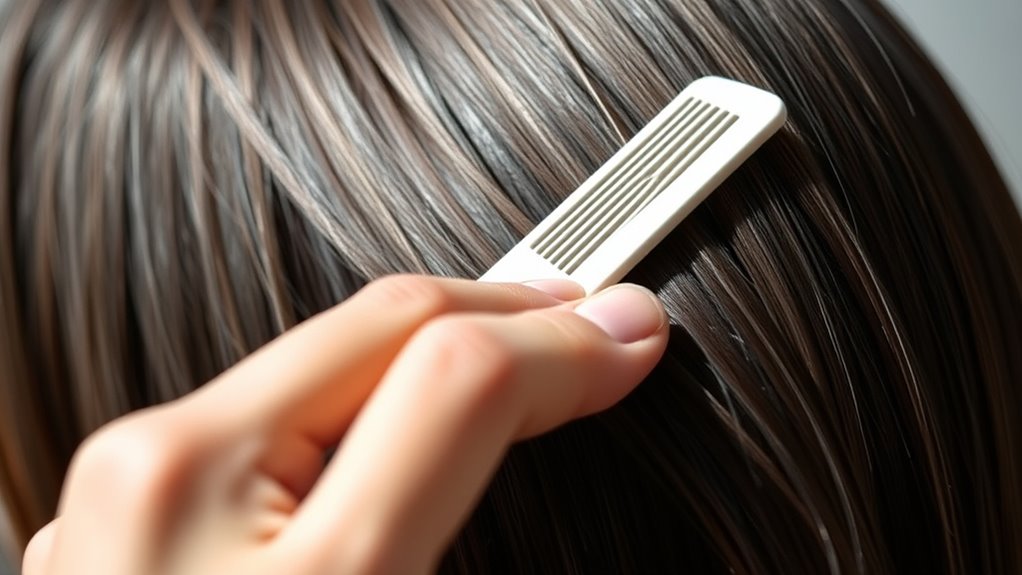

To reduce breakage while brushing and detangling, use gentle techniques with the right tools. Start by working from the ends of your hair and gradually move upward, using wide-tooth combs or brushes with flexible bristles. Always detangle when your hair is damp and coated with a conditioner or detangling spray. Be patient, work in small sections, and avoid harsh strokes. Keep watching to discover more tips for healthy, damage-free hair.
Key Takeaways
- Use gentle detangling tools like wide-tooth combs or flexible-bristle brushes to minimize tension on hair strands.
- Detangle from the ends upward, working in small sections to reduce breakage and stress.
- Avoid harsh, stiff brushes on wet hair; opt for soft, gentle tools to prevent damage.
- Apply detangling sprays or leave-in conditioners to lubricate strands and ease the process.
- Regularly clean and maintain brushes to ensure effective, damage-free detangling over time.
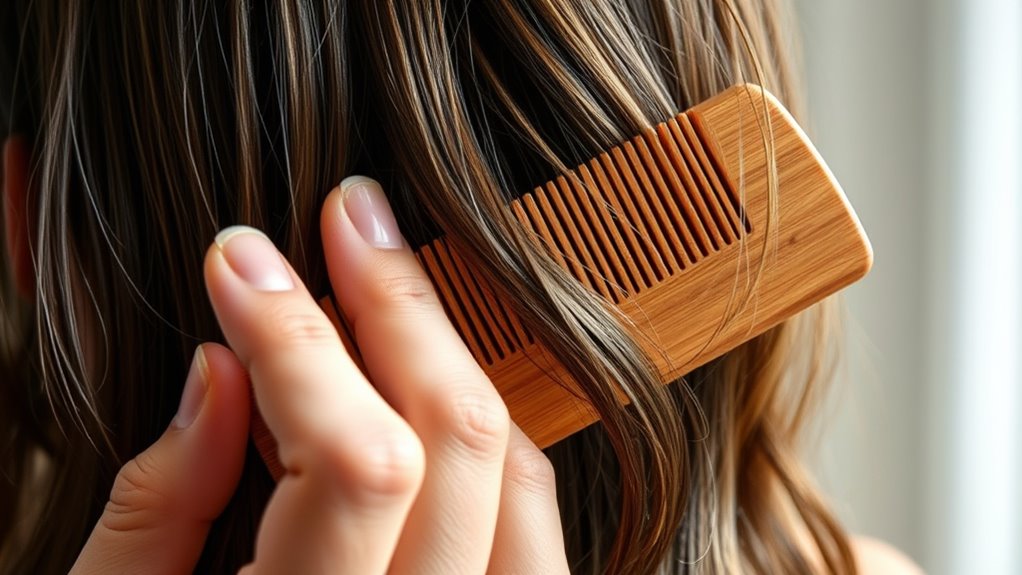
Brushing and detangling are vital steps in maintaining healthy, smooth hair. You might think that any brush or comb will do, but choosing the right tools can make a significant difference in reducing breakage and damage. There are various hairbrush types designed for different hair textures and needs, such as paddle brushes, round brushes, vent brushes, and those with boar bristles. Each has unique benefits; for example, paddle brushes are great for detangling large sections of hair smoothly, while boar bristle brushes help distribute natural oils for added shine. Selecting the appropriate hairbrush type guarantees you gently detangle without pulling or causing unnecessary stress to your strands.
Choosing the right hairbrush minimizes damage and promotes healthy, shiny hair.
In addition to hairbrush types, detangling tools play an indispensable role in gentle hair care. Wide-tooth combs and detangling brushes are excellent options because they are specifically designed to glide through knots with minimal tension. When you start detangling, always work from the ends of your hair upward, gradually moving toward the roots, to prevent tugging that can lead to breakage. Using a detangling spray or leave-in conditioner can also lubricate your strands, making it easier to work through tangles smoothly and safely.
You should avoid using harsh or stiff brushes on wet hair, as this is when hair is most vulnerable to breakage. Instead, opt for gentle detangling tools, such as wide-tooth combs or specially designed detangling brushes with flexible bristles. These tools are crafted to distribute pressure evenly, reducing the risk of snapping or pulling out strands. When detangling, take your time and work in small sections, giving yourself better control and preventing unnecessary stress on your hair. Patience is key—rushing through knots increases the likelihood of damage.
Proper technique is just as important as choosing the right tools. Always start detangling from the tips and slowly work your way up, gently easing out knots rather than forcing through tangles. If you encounter a stubborn knot, hold the section firmly to avoid pulling on the roots and gently work through it with your fingers or a wide-tooth comb. Regularly cleaning your brushes and detangling tools helps prevent dirt and product buildup, which can hinder smooth detangling. Maintaining a routine that emphasizes gentle, careful handling will keep your hair healthy, minimize breakage, and promote a sleek, shiny appearance.
Incorporating the right hairbrush types and detangling tools into your hair care routine, combined with gentle techniques, guarantees your hair stays strong and damage-free. The effort you put into selecting and using the correct tools will pay off with healthier, more manageable hair every day. Proper care techniques are especially important because damage from improper detangling can lead to long-term hair health issues.

Paul Mitchell Detangler Comb, Wide Tooth Comb Detangles Wet or Dry Hair
- Detangles Wet or Dry Hair: Easily detangles wet or dry hair
- Wide-Tooth Design: Glides through hair without pulling
- Reduces Breakage: Prevents damaging hair breakage
As an affiliate, we earn on qualifying purchases.
As an affiliate, we earn on qualifying purchases.
Frequently Asked Questions
How Often Should I Replace My Hairbrush?
You should replace your hairbrush every 6 to 12 months to guarantee maximum hairbrush longevity and maintain healthy hair. Over time, brushes accumulate hair, dirt, and product buildup, which can cause damage and reduce their effectiveness. Regular replacement helps prevent breakage and scalp issues. Keep an eye on the brush’s condition, and if you notice frayed bristles or buildup, it’s time for a new one to keep your hair looking its best.
Are There Specific Tools for Curly Versus Straight Hair?
Yes, there are specific tools for curly versus straight hair. For curly hair, you should use curly hair tools like wide-tooth combs and Denman brushes to prevent breakage and maintain curls. For straight hair, opt for straight hair tools like paddle brushes and round brushes to smooth and style effectively. Using the right tools helps reduce damage, keeps your hair healthy, and makes styling easier.
Can Detangling Cause Hair Thinning or Loss?
Is detangling secretly a villain in your hair routine? It can cause hair shedding if done harshly, especially if your hair texture is delicate or curly. Excessive or aggressive detangling may weaken strands, leading to thinning over time. To protect your hair, use gentle tools and techniques, detangle when wet or conditioned, and avoid pulling. Proper care keeps your hair healthy, strong, and free from unnecessary loss.
What Are Natural Remedies to Strengthen Fragile Hair?
To strengthen your fragile hair naturally, try herbal oil treatments like coconut or argan oil to nourish your scalp and strands. Incorporate protein-rich foods such as eggs, nuts, and lean meats into your diet to promote hair strength from within. Regularly massaging herbal oils boosts circulation, while a balanced diet provides essential nutrients, reducing breakage and making your hair more resilient over time.
How Does Diet Impact Hair Breakage and Health?
Imagine your hair as a lush garden; what you eat determines its significance. When your diet lacks essential nutrients, nutritional deficiencies can weaken hair strands, causing breakage. Incorporate foods rich in vitamins and minerals, and consider hair growth supplements to nourish follicles from within. A balanced diet strengthens your hair’s foundation, promoting healthier growth and reducing breakage, so your locks stay vibrant and resilient.
Conclusion
Now that you know the essential techniques, imagine running your fingers through your hair, feeling it smooth and tangle-free. But what if a simple change in your brushing routine could make your hair stronger and more resilient? The secret to healthier hair is within your reach—just a few mindful adjustments. Are you ready to open the full potential of your hair and see what’s possible when breakage becomes a thing of the past?