
Hard water can sabotage your hair goals by leaving mineral deposits on your scalp and strands. These deposits build up over time, clogging follicles and coating the hair shaft, which prevents moisture from penetrating. As a result, your hair can become dull, rough, brittle, and hard to manage. Ignoring this buildup makes it harder to achieve soft, shiny hair. Keep going, and you’ll discover practical ways to combat and prevent this damage.
Get ready for Prime Big Deal Days — try Prime free
Exclusive member deals on October 6–7, plus fast free delivery. Cancel anytime.
As an affiliate, we earn on qualifying purchases.
Key Takeaways
- Hard water deposits minerals on hair and scalp, leading to buildup and clogged follicles.
- Mineral buildup reduces hair shine, makes hair feel rough, brittle, and more prone to breakage.
- Minerals alter the hair’s cuticle, increasing porosity, frizz, and resistance to moisture absorption.
- Without treatment, hard water damage hampers moisture retention, styling, and overall hair health.
- Installing water softeners and using chelating shampoos can help prevent mineral buildup and restore hair vitality.
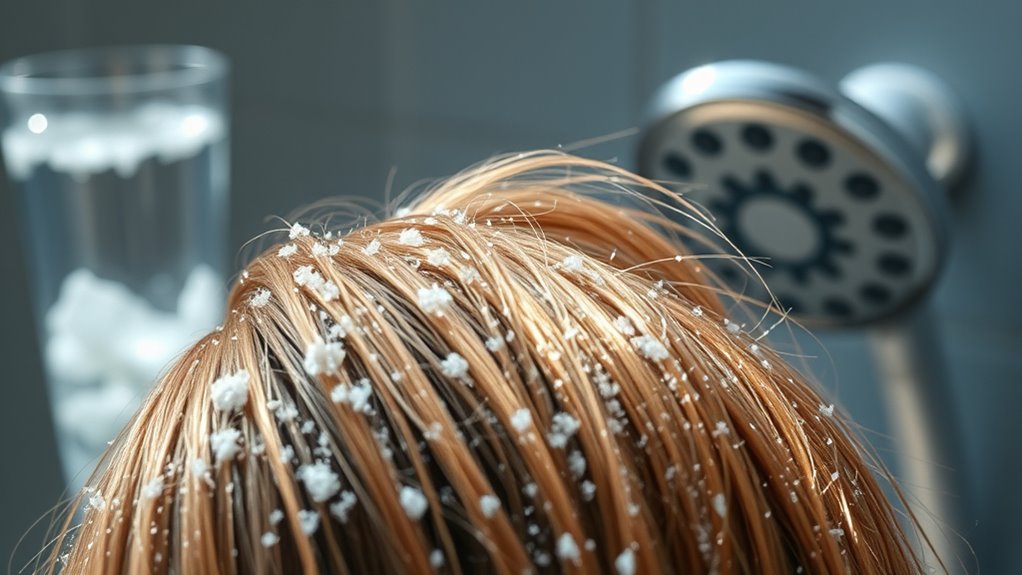
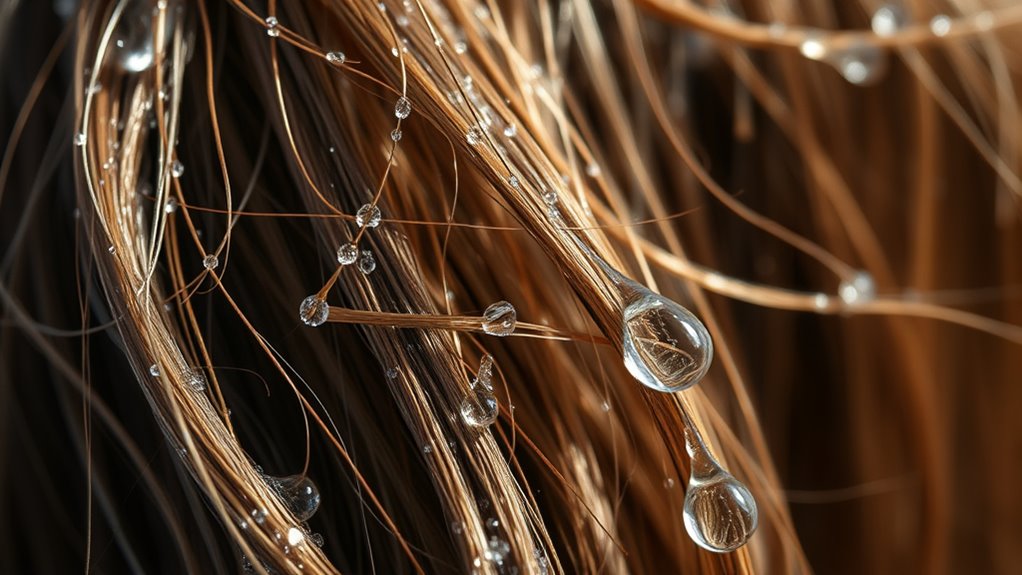
If you’ve noticed your hair feeling dull, brittle, or hard to manage, hard water might be the culprit. Hard water contains high levels of minerals like calcium and magnesium, which can leave deposits on your hair and scalp. Over time, these mineral deposits build up, creating a layer that’s tough to wash away. This mineral buildup can clog your hair follicles and coat the hair shaft, making it harder for moisture to penetrate. As a result, your hair loses its natural shine, feels rough, and becomes more prone to breakage. You might also observe that your usual styling routines don’t work as well, and your hair seems to resist softness no matter what products you apply.
This mineral buildup also directly impacts your hair’s porosity, which is the hair’s ability to absorb and retain moisture. When mineral deposits accumulate, they alter the cuticle layer of your hair, making it more rigid or, conversely, excessively porous. If your hair becomes more porous, it may absorb too much moisture from humid environments but struggle to retain it, leading to frizz and dryness. On the other hand, if the cuticle becomes tightly sealed due to mineral deposits, your hair can become less receptive to conditioning treatments and nourishing products, leaving your hair feeling stiff and lifeless. Understanding your hair’s porosity is essential because it determines how well your hair responds to hydration and styling products. Hard water-induced mineral buildup can disrupt this balance, sabotaging your efforts to achieve sleek, healthy hair.
Dealing with hard water isn’t just about washing hair more often; it’s about addressing the core issue—mineral deposits that compromise your hair’s health and porosity. You might consider installing a water softener or using chelating shampoos designed to remove mineral buildup. Clarifying treatments can also help reset your hair’s porosity, but regular maintenance is key to preventing long-term damage. If you ignore these signs, the mineral deposits will continue to weigh down your hair and hinder your progress toward your hair goals. You’ll find it increasingly difficult to maintain moisture, manageability, and shine. Recognizing the impact of hard water on your hair’s porosity and addressing mineral buildup early on can make a significant difference, helping you restore your hair’s natural vitality and stay on track with your hair care goals.
chelating shampoo for mineral buildup
As an affiliate, we earn on qualifying purchases.
As an affiliate, we earn on qualifying purchases.
Frequently Asked Questions
Can Using Soft Water Improve Hair Growth?
Using soft water can improve hair growth by reducing mineral buildup, which often clogs hair follicles and weakens strands. When you switch to water with fewer minerals, your scalp stays cleaner and healthier. Water filtration systems help remove these minerals, making your hair softer, shinier, and more manageable. As a result, soft water creates a better environment for hair growth, helping you achieve your hair goals more effectively.
Is Hard Water Linked to Scalp Dryness?
Imagine tiny lime scale particles settling on your scalp like a stubborn film, clogging hair follicles. Hard water’s mineral buildup strips away moisture, leaving your scalp dry and irritated. This relentless buildup causes dryness, itching, and flakiness, making your scalp feel tight and uncomfortable. The more mineral deposits accumulate, the more your scalp struggles to stay balanced, turning dryness into a persistent problem you can’t ignore.
How Does Hard Water Affect Hair Color Treatments?
Hard water affects hair color treatments by interfering with water mineralization, which can cause color fading or uneven pigmentation. The high mineral content, especially calcium and magnesium, can deposit on your hair, dulling vibrant hues and reducing the longevity of hair pigmentation. As a result, your carefully treated hair may not stay as bright or rich as you want, and you might find yourself needing more frequent touch-ups to maintain your desired look.
Are There Natural Remedies to Counteract Hard Water Effects?
You can try natural remedies like rinsing your hair with apple cider vinegar or lemon juice to help counteract hard water effects. These solutions help with mineral balancing, removing buildup, and restoring shine. Additionally, using a chelating shampoo once a week can help strip away minerals. Incorporate these practices into your routine to protect your hair from mineral damage caused by hard water and keep your hair healthy and vibrant.
Does Hard Water Impact Hair Porosity or Texture?
Did you know that over 85% of households worldwide experience water mineralization issues? Hard water considerably impacts hair porosity and texture by causing porosity changes, which make your hair more prone to damage and dryness. The mineral deposits from hard water can weaken hair cuticles, leading to roughness and increased porosity. As a result, your hair may lose its natural softness and become more difficult to manage over time.
Conclusion
So, don’t let hard water secretly sabotage your hair goals like an uninvited guest crashing your party. It’s time to take action—consider a water softener or clarifying shampoo—to give your hair the love it deserves. Remember, your hair’s health is the garden; hard water is the weeds trying to choke it out. Take control now, and watch your hair bloom like a beautiful spring day. Your dream hair is just a decision away!
NFL season / tailgating Picks
team gear
As an affiliate, we earn on qualifying purchases.