
TL;DR

Get beauty and skincare favorites delivered free with Prime
- Fast, free delivery on millions of items
- Prime Video, Amazon Music and more included
- Member-only deals all year
Peter Xie, OEM Project Director at oral-care manufacturer ORALABX, says an approved mouthwash sample is the start of production planning, not its finish. Moving to commercial batches requires coordinated specifications and checks for ingredients, water, mixing, filling, packaging and finished products.
Moving mouthwash from an approved sample to commercial production requires more than reproducing the formula, according to Peter Xie, OEM Project Director at oral-care manufacturer ORALABX. In a report for Cosmetics Business, Xie said brands and manufacturers need to coordinate formula, flavour, packaging and filling decisions early, then check that production batches and finished packs meet agreed specifications.
Xie said decisions about flavour, colour or clarity, bottle, closure and filling method are linked rather than independent. A change in flavour can affect clarity, he said, while a different bottle or cap may require another compatibility check. A liquid that performs acceptably in a hand-filled sample also needs to work during routine filling and capping.
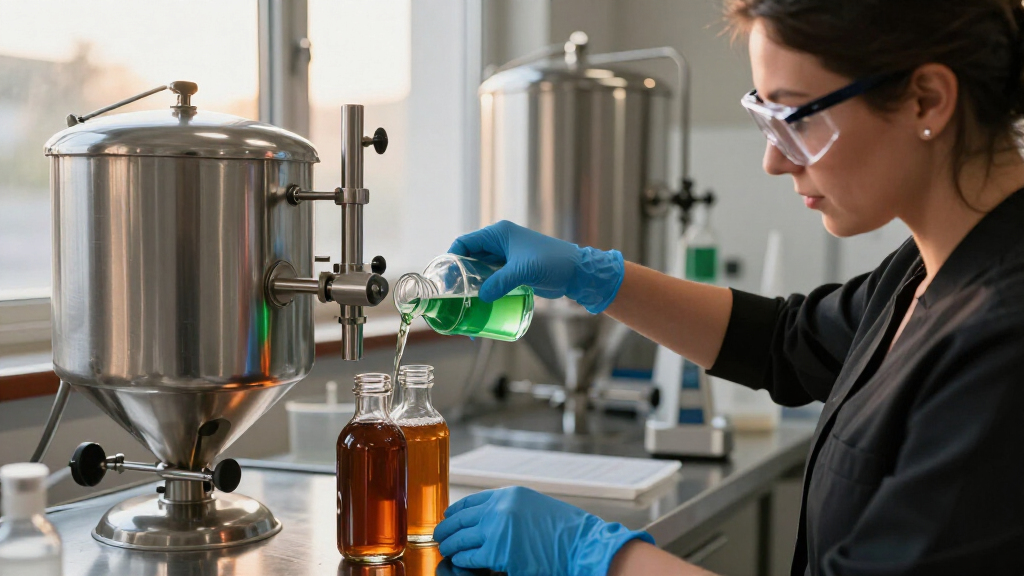
After the product is fixed, production depends on control and repeatability, Xie said. Raw materials must match the approved specification, water quality matters, and teams need to follow the agreed addition sequence and mixing conditions. During a batch, checks include appearance and pH before the mouthwash moves to filling.
Production-line and post-filling checks also form part of the process described in the report. Teams monitor fill level, closure application, leakage and pack appearance; finished products are checked against agreed requirements, production records are kept, and retained samples can be compared with later batches. Xie said these steps need to work together consistently.
Why Early Production Planning Matters
The practical implication for brands is that sample approval does not by itself establish readiness for a commercial run. A formula and pack that appear satisfactory at small scale may still need assessment under production conditions, including the selected filling and capping process. If a mismatch is found only after a line is prepared, it can require changes to the formula, packaging or production plan.
Xie advises involving the manufacturer before final sample approval, particularly in decisions about packaging and scale-up. That recommendation is his account of production planning practice, not evidence in the supplied report of a specific product failure, cost saving or quantified reduction in delays.
For consumers, the described controls relate to whether successive batches and packs match agreed production requirements. The report does not provide test results or details about a particular mouthwash launch, so it does not establish the performance or safety of any named product.
mouthwash filling and capping machine
As an affiliate, we earn on qualifying purchases.
As an affiliate, we earn on qualifying purchases.
From Sample Approval to Batch Control
The source is a Cosmetics Business report titled What changes when mouthwash moves from sample to production. The supplied text identifies Peter Xie as ORALABX’s OEM Project Director and describes the company’s perspective as an oral-care OEM and private-label manufacturer in China.
The report frames the approved sample as a reference for planning, rather than the final step in product development. It describes a sequence from agreeing product and pack details to controlling materials and mixing, checking the batch, monitoring filling and retaining samples for future comparison. The source does not give a named brand, product launch date, production volume or details of a particular manufacturing run.
“The approved sample [is] the starting point for production planning, not the end of product development.”
— Peter Xie, OEM Project Director at ORALABX
Production Details Not Disclosed
The source describes general production considerations but does not identify a specific mouthwash, brand, factory batch or scale-up event. It gives no production quantities, timelines, costs, rejection rates or test data, and it does not quantify how often issues such as changes in clarity or packaging compatibility occur.
The report also does not specify particular acceptance thresholds for pH, appearance, fill level or leakage, or name the testing methods used. Those requirements can depend on a product’s agreed specifications; the supplied material does not say what standards apply to any individual product. Its recommendations are attributed to Xie and ORALABX, and no independent manufacturer or regulatory source is quoted.
Checks Before a Commercial Run
Based on the process Xie describes, the next step for a brand preparing a mouthwash run is to agree product and packaging requirements with its manufacturer before production begins. That planning includes confirming the formula, flavour target, colour or clarity, bottle, closure and filling method, then checking relevant compatibility and production conditions.
During manufacture, teams would follow the approved material and process specifications, check batch appearance and pH, and monitor filling and pack quality. Finished-product checks, production records and retained samples provide reference points for later batches. The source does not announce a scheduled product launch or production milestone, so no specific next date or outcome is confirmed.
Key Questions
Does approving a mouthwash sample mean it is ready for production?
No. In Xie’s account, the approved sample is a starting point for production planning. The manufacturer still needs to confirm that materials, mixing, packaging and filling can meet the agreed requirements at production scale.
Why can a flavour change affect the rest of the product?
Xie says a flavour adjustment may affect clarity. The report does not give a specific formula or explain the chemical cause, so the effect will depend on the product.
What is checked during mouthwash production?
The checks described include raw-material specifications, water quality, addition sequence and mixing conditions. During the batch, teams check appearance and pH; on the filling line, they monitor fill level, closures, leakage and pack appearance.
What remains unknown about the production process in this report?
The report does not name a product or production run, or provide batch sizes, test thresholds, timelines or measured outcomes. It describes the manufacturer’s approach rather than reporting results from a specific scale-up.
Source: rss
Fall Picks
fall essentials
As an affiliate, we earn on qualifying purchases.