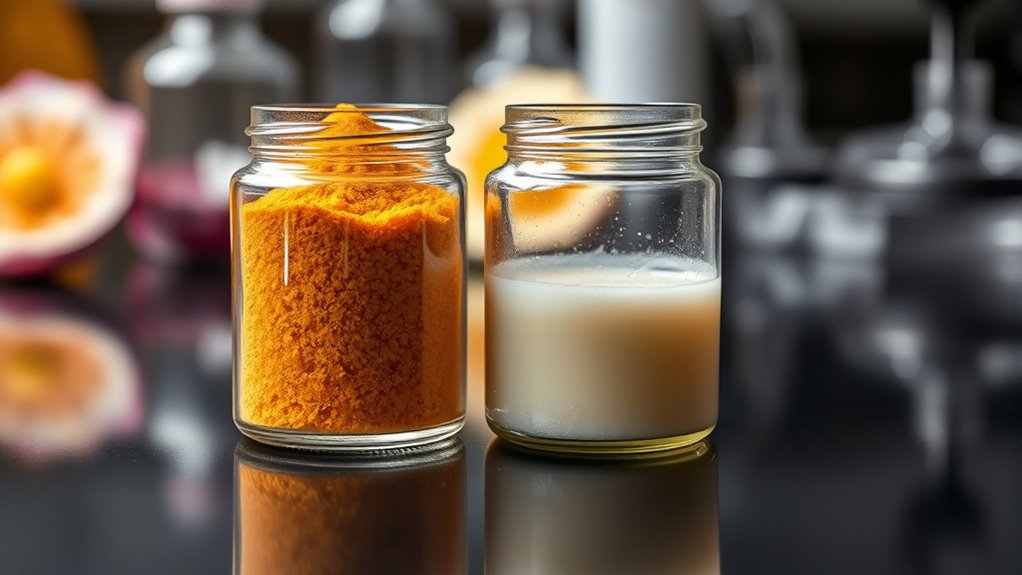

When choosing vitamin C for skincare, you have options like L‑ascorbic acid and derivatives. L‑ascorbic acid offers quick, visible brightening and strong antioxidant protection but is less stable and can cause irritation for sensitive skin. Derivatives, on the other hand, are gentler, more stable, and provide gradual, sustained benefits. Understanding their differences helps you pick the best for your skin’s needs—more insights await to help you make an informed choice.
Key Takeaways
- L‑ascorbic acid is the pure, active form offering immediate antioxidant and brightening effects but is less stable and prone to oxidation.
- Derivatives like magnesium ascorbyl phosphate are more stable, gentler, and provide sustained vitamin C release, ideal for sensitive skin.
- Proper storage and handling are crucial for L‑ascorbic acid to maintain efficacy, while derivatives are more resistant to environmental degradation.
- L‑ascorbic acid can cause irritation for sensitive skin, whereas derivatives are generally milder and suitable for daily use.
- Choice depends on the desired rapid results versus long-term stability and gentleness in skincare routines.
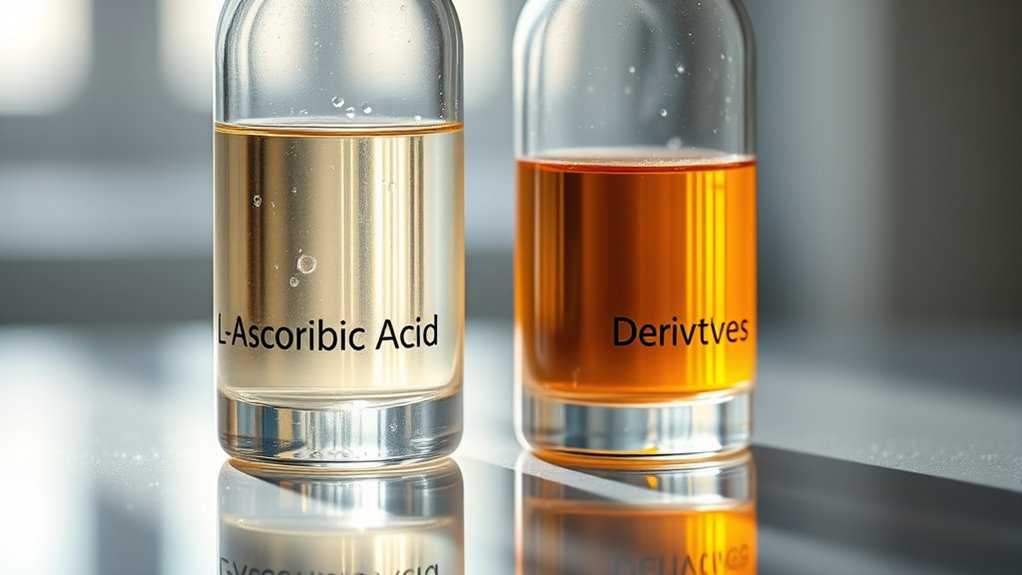
Vitamin C has become a popular ingredient in skincare because of its powerful antioxidant properties and ability to brighten your complexion. When you apply vitamin C topically, you’re giving your skin a potent shield against environmental stressors like pollution and UV rays, which can accelerate aging and cause dullness. Its antioxidant properties help neutralize free radicals, unstable molecules that damage skin cells and lead to premature wrinkles and dark spots. By reducing oxidative stress, vitamin C supports healthier, more resilient skin. Additionally, it plays a notable role in skin brightening, helping to fade hyperpigmentation and even out skin tone, leaving your face looking more radiant and youthful. Some formulations also include stabilizing agents to enhance shelf life and efficacy. There are different forms of vitamin C used in skincare, mainly L‑ascorbic acid and its derivatives. L‑ascorbic acid is the pure, active form that offers the most immediate and potent antioxidant benefits. When you choose a serum with L‑ascorbic acid, you’re getting a highly effective product that can deliver visible results fairly quickly. However, this form is also quite unstable; it tends to oxidize when exposed to air, light, or heat, which can diminish its effectiveness over time. To maximize benefits, you’d want to store it properly and use it within a specified period. Because it’s water-soluble and has a low pH, L‑ascorbic acid can sometimes cause irritation, especially if your skin is sensitive, so patch testing and starting with lower concentrations is advisable.
Vitamin C brightens skin, fights environmental damage, and reduces signs of aging for a radiant, youthful complexion.
On the other hand, vitamin C derivatives, such as magnesium ascorbyl phosphate or tetrahexyldecyl ascorbate, are more stable and less prone to oxidation. These forms tend to penetrate the skin more slowly but offer a gentler, more sustained release of vitamin C. They’re often better suited for sensitive skin types and can be incorporated into daily routines without much concern for irritation. While they may not deliver results as quickly as L‑ascorbic acid, their stability means they maintain effectiveness over longer periods. Plus, because they’re oil-soluble or water-soluble depending on the derivative, they can be formulated into various skincare products like creams, lotions, and serums, broadening your options for skin brightening and antioxidant protection.
Ultimately, choosing between L‑ascorbic acid and its derivatives depends on your skin type, concerns, and preferences. If you want fast, noticeable brightening and antioxidant benefits and don’t mind the careful storage and potential irritation, L‑ascorbic acid is a solid choice. If you prefer a more stable, gentle, and versatile option that can be used consistently without much fuss, derivatives might suit you better. Both forms can markedly improve your skin’s health and appearance when used correctly, helping you achieve a brighter, more radiant complexion.
Amazon Product B07Q4MYZNC
As an affiliate, we earn on qualifying purchases.
Frequently Asked Questions
Can Vitamin C Cause Skin Irritation or Allergic Reactions?
Yes, vitamin C can cause skin irritation or allergic reactions, especially if you have skin sensitivity. Some people experience redness, itching, or stinging when applying products with high concentrations of L‑Ascorbic Acid or certain derivatives. To reduce this risk, start with lower concentrations, do a patch test first, and choose formulations suited for sensitive skin. If irritation persists, consult a dermatologist for personalized advice.
How Long Does It Take to See Results From Vitamin C Skincare?
Most people see visible improvements in their skin within 4 to 6 weeks of consistent vitamin C use. Keep in mind, your skin renews itself roughly every 28 days, so patience is key. If you’re using a potent formula, you might notice a brighter, more even complexion sooner. Stay consistent with your routine, and within a couple of months, you’ll likely notice the results you’re hoping for.
Is Vitamin C Suitable for All Skin Types?
Yes, vitamin C is generally suitable for all skin types, but you should consider skin type considerations and ingredient sensitivities. If you have sensitive skin, start with a lower concentration or try derivatives like magnesium ascorbyl phosphate, which are gentler. Oily or acne-prone skin can benefit from non-comedogenic formulas. Always patch test new products to guarantee they won’t cause irritation, and consult a dermatologist if you’re unsure.
Can Vitamin C Be Combined With Other Skincare Ingredients?
Yes, you can combine vitamin C with other skincare ingredients, but you should check ingredient compatibility and formulation stability first. Use gentle products like hyaluronic acid or niacinamide alongside vitamin C to avoid irritation. Avoid mixing it with retinol or AHAs/BHAs, as it can destabilize the formulation. Always patch-test new combos and choose stability-optimized formulations to maximize benefits and minimize potential reactions.
What Is the Best Way to Store Vitamin C Products?
Did you know that improper storage can diminish vitamin C’s effectiveness by up to 50%? To maximize shelf life, store your vitamin C products in a cool, dark place away from sunlight and heat. Always keep the container tightly sealed and avoid exposure to air. Use opaque or airtight bottles to prevent oxidation. Following these storage tips ensures your vitamin C remains potent and beneficial for your skincare routine.
Amazon Product B09JMRZVFQ
As an affiliate, we earn on qualifying purchases.
Conclusion
When choosing a Vitamin C product, remember that not all derivatives are created equal, and l‑ascorbic acid offers potent benefits if you can tolerate it. Ultimately, it’s about finding what works best for your skin and sticking with it. Don’t put all your eggs in one basket—be patient and consistent. The right formulation can make a world of difference, but it’s up to you to give your skin time to show its true glow.
Amazon Product B0D8RGF49F
As an affiliate, we earn on qualifying purchases.

AquaBliss High Output Revitalizing Shower Filter - Reduces Dry Itchy Skin, Dandruff, Eczema, and Dramatically Improves The Condition of Your Skin, Hair and Nails - Brushed Nickel (SF100-BN)
Day 1 - Immediately begins rejuvenating skin, hair and nails; Hard, chlorinated, chemical ridden water causing itchy skin,...
As an affiliate, we earn on qualifying purchases.