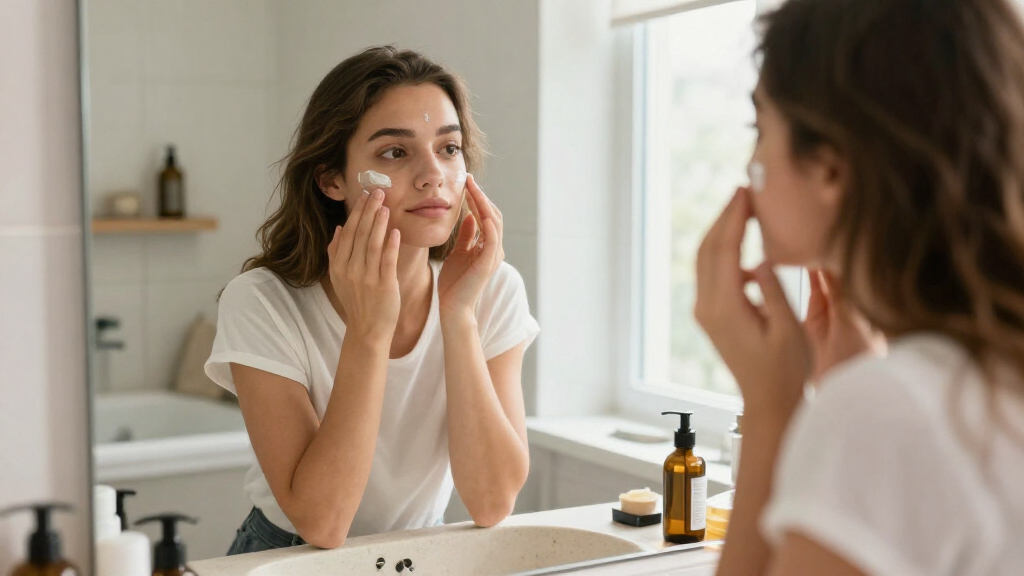
TL;DR

Get beauty and skincare favorites delivered free with Prime
- Fast, free delivery on millions of items
- Prime Video, Amazon Music and more included
- Member-only deals all year
Global Cosmetics News’ fourth Street Talk: Make-Up episode features Chelsea discussing the Clean Girl aesthetic and the complexion products she uses. She says Haus Labs is the only foundation she has found that matches her skin tone, and wants a full-coverage formula with a radiant finish that feels lightweight.
Global Cosmetics News’ fourth Street Talk: Make-Up episode features Chelsea describing her Clean Girl makeup routine and her search for foundation that matches her complexion without feeling heavy. Her account points to shade matching, undertones and comfortable coverage as priorities that shape her product choices.
Chelsea’s routine centres on complexion products and a polished, radiant finish. She says she starts with Huda Beauty Easy Blur Primer, uses foundation from Haus Labs, and finishes with Benefit Cosmetics They’re Real! Mascara. The report identifies Haus Labs as Lady Gaga’s beauty brand and says Chelsea considers its foundation the only one she has found that matches her skin tone.
Her central frustration is that foundations she has tried can look too pale or too orange on her. “That’s the only one that I could find my shade match with,” she says of the Haus Labs product. The report does not identify the specific foundation formulation or shade she uses.
Chelsea also describes shopping in person, including at Superdrug and Sephora, so she can test colour against her skin or lips. Her ideal foundation would provide full coverage and a glowing finish while feeling light on the skin. “I would like a full-coverage, glowy foundation,” she says, adding that she does not want it to feel heavy.
Shade Match Shapes Her Makeup Choices
Chelsea’s experience illustrates why foundation shade and undertone can influence whether a consumer chooses one brand over another. A product may offer the coverage or finish someone wants, but a mismatch can make it unsuitable for their complexion. In Chelsea’s case, she says finding a shade that works has made Haus Labs her preferred foundation.
Her desired combination also complicates a simple reading of the Clean Girl aesthetic as necessarily minimal coverage. Chelsea describes wanting substantial coverage alongside a natural-looking, radiant effect and a lightweight feel. That is her personal preference, not evidence of a wider market trend. The report presents it as a potential product-development consideration for brands seeking to balance coverage, comfort, finish and shade range.
Her preference for in-store testing also shows the role physical retail can play when colour accuracy matters to a purchase. Chelsea says she wants to see how a product looks on her skin or lips before buying; the report does not compare that experience with online shopping or quantify how common this preference is.
lightweight radiant foundation for sensitive skin
As an affiliate, we earn on qualifying purchases.
As an affiliate, we earn on qualifying purchases.
The Products Behind Chelsea’s Routine
The source presents the episode as part of Street Talk: Make-Up, a series featuring individual consumers and their makeup preferences. Episode Four focuses on Chelsea and the Clean Girl aesthetic. The material is a profile of her routine and views, rather than a product test, a survey or a report of new product launches.
The three named products serve different roles in her routine: Huda Beauty Easy Blur Primer prepares the complexion, Haus Labs foundation supplies coverage and colour, and Benefit Cosmetics’ They’re Real! Mascara defines the lashes. Chelsea’s comments about shade matching and desired foundation texture are personal assessments reported by Global Cosmetics News.
“That’s the only one that I could find my shade match with. Every other one either makes me too white or too orange.”
— Chelsea, as quoted in Global Cosmetics News
Details the Profile Does Not Specify
The source does not give the episode’s publication date, identify the precise Haus Labs foundation or shade Chelsea uses, or name the foundations that looked too pale or orange to her. It also does not provide product prices, ingredient details, wear-test results or independent comparisons. Her comments should be read as one consumer’s experience and preferences, not as an assessment of every product in a brand’s range.
The report suggests an opportunity for brands to combine accurate shade matching with full coverage and a radiant, lightweight feel, but it includes no sales data, consumer survey or company response to establish demand or show that a particular product delivers that combination.
Further Episodes and Product Questions
The supplied report does not announce a next episode, a follow-up, or a product launch tied to Chelsea’s comments. Readers seeking more information about her routine can consult the original Global Cosmetics News feature; the source material itself does not provide further testing or a detailed shade breakdown.
For brands, the questions raised by her account are specific: whether foundation ranges offer shades and undertones that suit more consumers, and whether formulas can pair the requested coverage and radiance with a lightweight feel. No new development on those questions is confirmed in the report.
Key Questions
What is Street Talk: Make-Up Episode Four about?
It profiles Chelsea’s Clean Girl makeup routine, her product preferences and her difficulty finding foundation shades that suit her complexion.
Which products does Chelsea mention?
Her routine includes Huda Beauty Easy Blur Primer, Haus Labs foundation and Benefit Cosmetics They’re Real! Mascara.
Why does Chelsea prefer shopping for makeup in person?
She says she wants to test whether a product matches her skin or lips before purchasing it, and names Superdrug and Sephora as stores she visits.
What kind of foundation does Chelsea want?
She wants full coverage and a radiant finish in a formula that feels lightweight rather than heavy, with a shade that suits her complexion.
Does the report establish that these preferences are common among consumers?
No. It reports Chelsea’s individual experience and discusses possible opportunities for brands, but provides no survey or market data to show how widespread her preferences are.
Source: rss
Fall Picks
fall essentials
As an affiliate, we earn on qualifying purchases.