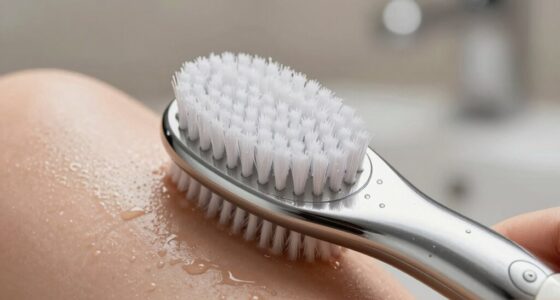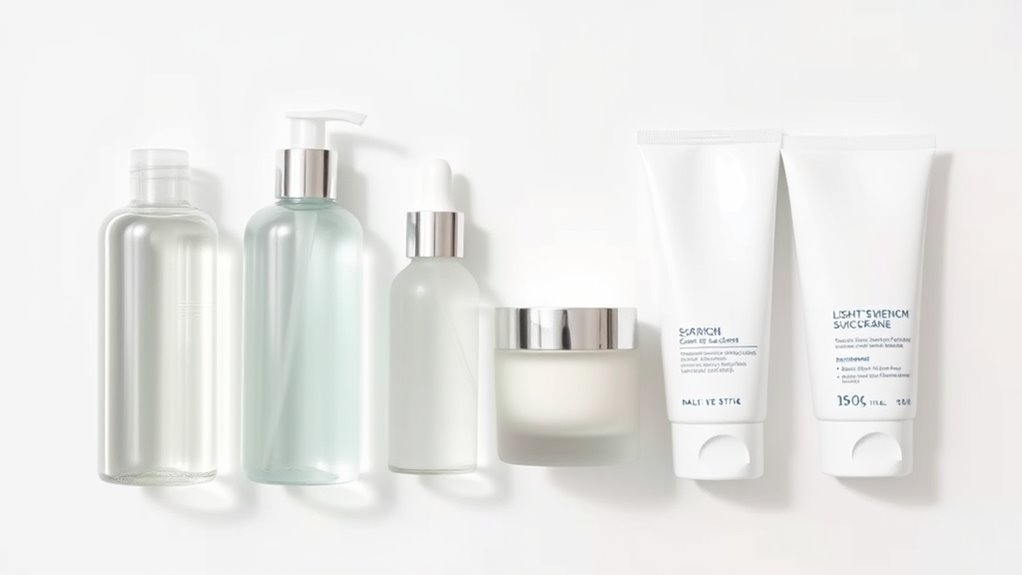

To apply skincare correctly, start with cleansing to remove dirt and oil. Follow with toner to balance your skin’s pH. Next, apply your serums or treatments, allowing each to absorb fully before moving on. Then, layer your moisturizer to lock in hydration. Finish with sunscreen in the morning or targeted products at night. Keeping this sequence guarantees each product works effectively, and you’ll discover more tips as you continue to care for your skin.
Key Takeaways
- Start with cleansing to remove dirt and impurities, creating a clean base for subsequent products.
- Apply lightweight serums first for direct skin absorption, followed by heavier moisturizers.
- Wait a few moments between layers to allow each product to fully absorb.
- Use targeted treatments after serums and moisturizers, and apply sunscreen last in the morning.
- Follow a consistent sequence to maximize product effectiveness and achieve better skincare results.
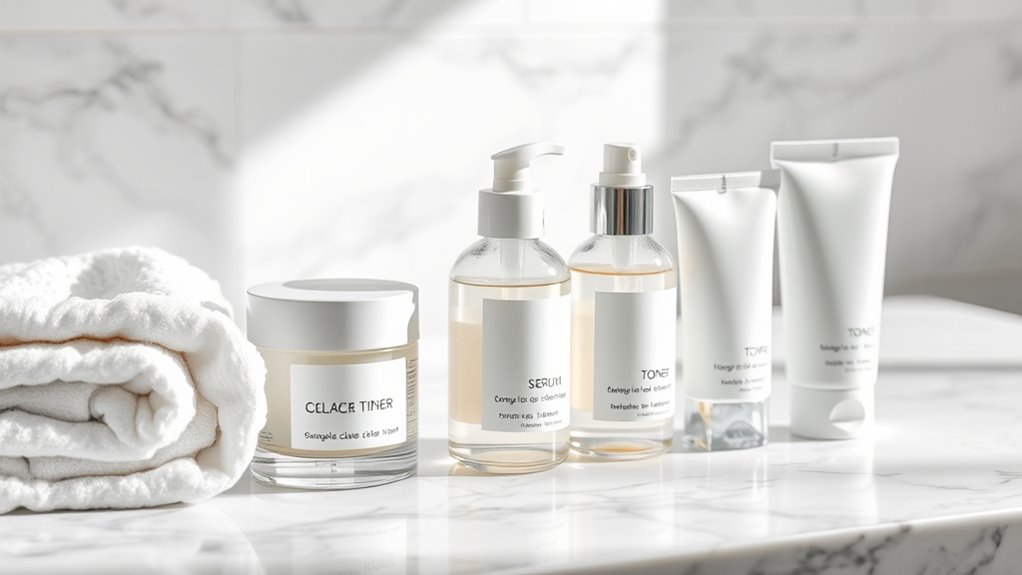
Have you ever wondered if you’re applying your skincare products in the right order? It’s a common question, and the answer can make a huge difference in how effective your routine is. The key is understanding the concept of serum layering and moisturizer timing. When you layer your products correctly, you ensure each one penetrates properly, maximizing their benefits and preventing wasted effort.
Start with cleansing to remove dirt, oil, and impurities. This creates a clean canvas, allowing your active ingredients to work more effectively. After cleansing, apply your toner if you use one; it helps balance your skin’s pH and prepares it for subsequent treatments. Now, this is where serum layering comes into play. Serums contain concentrated active ingredients, and because they’re lightweight, they should be applied before heavier products like moisturizer. When you put on your serum first, you give those potent ingredients direct access to your skin, increasing their absorption.
Apply serums before moisturizers to maximize absorption of concentrated active ingredients.
Timing is everything with moisturizer. You want to apply it after your serum, but the key is to wait a few moments between layers. This pause allows your serum to absorb fully, preventing it from being diluted or wiped away when you move on to the next step. If you rush, the moisturizer might sit on top, blocking some of the serum’s benefits. Moisturizers form a barrier that locks in hydration, so applying them at the right time ensures your skin stays nourished and plump. If you’re using a treatment serum, like one for acne or anti-aging, always follow it with your moisturizer to seal in the active ingredients.
Don’t forget sunscreens in your morning routine — they should be the last step after moisturizer. In your nighttime routine, after moisturizer, you might add targeted treatments like eye creams or overnight masks, but the sequence remains consistent: cleanse, tone, serum, moisturizer, and then any additional treatments. Remember, the order isn’t just about order for order’s sake; it’s about giving each product the best chance to do its job. Proper layering and timing mean you get the most out of your skincare, and your skin can truly benefit from the active ingredients you invest in.
Getting into the habit of applying products in the right order might seem small, but it can lead to noticeable improvements in your skin’s health and appearance. Following proper layering techniques and principles, and you’ll see your skincare work more efficiently, leaving you with healthier, more radiant skin.
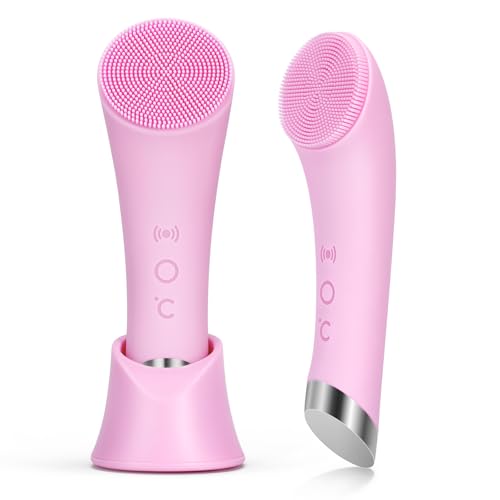
PRITECH Facial Cleansing Brush, Rechargeable Silicone Face Scrubber with Heat Massage End, Vibrating Exfoliator Scrubber for Deep Cleaning, Waterproof Face Brush for Women and Men (Pink)
VIBRATION DEEP CLEANING: The facial cleansing brush is suitable for various skin types with 5 adjustable vibration levels....
As an affiliate, we earn on qualifying purchases.
Frequently Asked Questions
Can I Skip Toner in My Skincare Routine?
You can skip toner if you prefer, but don’t forget it’s more than just a myth about skincare routines. Toner helps balance your skin’s pH and prepares it for other products, making their product combinations more effective. Skipping it might seem fine, but you could miss out on benefits like extra hydration or oil control. Consider your skin type and needs before removing it from your routine.
How Long Should I Wait Between Applying Products?
They say, “Patience is a virtue,” and that’s especially true for skincare. You should wait about 30 seconds to a minute between applying products to guarantee proper absorption and maintain product compatibility. This allows ingredients to work effectively without interfering with each other. Always follow the correct ingredient order, starting with lighter formulas and moving to heavier ones, so each product has enough time to do its job.
Is It Okay to Use Multiple Serums Together?
Yes, you can use multiple serums together, but it’s important to contemplate serum combinations and layering strategies. Opt for serums with compatible ingredients, like vitamin C with hyaluronic acid, and apply lighter, water-based formulas first, followed by thicker, oil-based ones. Always patch test new combinations to avoid irritation, and give each serum time to absorb before applying the next. This way, you maximize their benefits without compromising your skin.
Should I Apply Moisturizer Before or After Sunscreen?
Think of your skincare routine as a carefully choreographed dance. You should apply your moisturizer after sunscreen to guarantee proper product layering and maximum protection. The application timing is key; sunscreen acts as a barrier, so it’s best to put it on last, then follow with moisturizer to lock in hydration. This sequence keeps your skin protected and nourished, giving you a flawless, well-balanced glow.
Can I Layer Different Acids in One Routine?
Yes, you can layer different acids in one routine, but you need to contemplate acid layering and product compatibility. Start with the thinnest, most pH-sensitive acids like AHAs or BHAs, then move to thicker or less reactive ones. Always patch-test new combinations, and avoid overloading your skin to prevent irritation. Incorporate acids gradually to see how your skin responds and maintain a balanced routine.

UMICKOO Electric Facial Cleansing Brush, 2-Way Rotating Face Scrubber for Daily & Deep Cleaning, 3 Modes, 5 Brush Heads, Rechargeable, IPX7 Waterproof for All Skin Types
Gentle Daily Facial Cleansing for Sensitive to Oily Skin: Designed for safe everyday use, this electric facial cleansing...
As an affiliate, we earn on qualifying purchases.
Conclusion
Following the right skincare order guarantees your products work effectively. For example, imagine using a moisturizer after a serum; your skin absorbs the active ingredients better, leaving you with a healthy glow. Think of it like building a sandwich—layering from light to heavy ingredients. Stick to the correct sequence, and you’ll see better results, saving you time and money. Your skin will thank you for the proper care, so make it a daily habit!

PRITECH Silicone Face Scrubber, Rechargeable Facial Cleansing Brush with Heat Massage End, Vibrating Exfoliator Scrubber for Deep Cleaning, Waterproof Face Brush for Women and Men (Green)
VIBRATION DEEP CLEANING: The facial cleansing brush is suitable for various skin types with 5 adjustable vibration levels....
As an affiliate, we earn on qualifying purchases.

EZBASICS Facial Cleansing Brush Made with Ultra Hygienic Soft Silicone, Waterproof Sonic Vibrating Face Brush for Deep Cleansing, Gentle Massaging, Inductive Charging (Violet) 1 Pack+5 Speed Settings
Distinctive Facial Cleansing Brush: The exterior of the silicone face scrubber is made of Ultra Hygienic Soft Silicone...
As an affiliate, we earn on qualifying purchases.