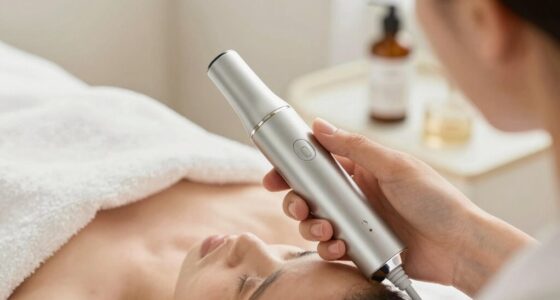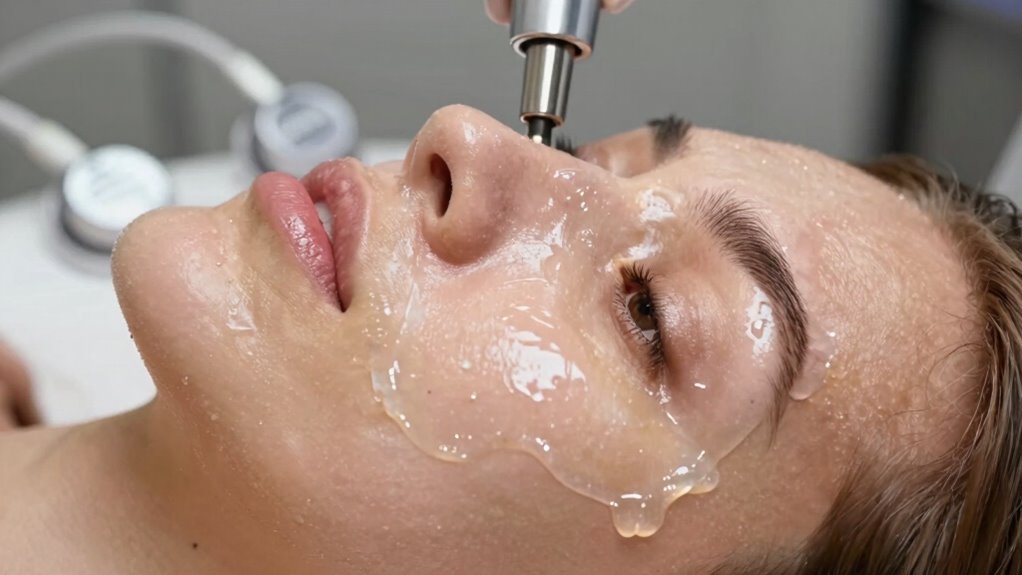

Conductive gel is the real star of a microcurrent routine because it guarantees you get the best energy transfer between your device and skin. It acts as a bridge, improving contact, reducing irritation, and making sessions more comfortable. Using the right gel compatible with your device enhances results and prevents damage. Choosing a gentle, consistent gel helps your skin adapt while delivering consistent, effective treatment. Keep going to discover how mastering gel choice boosts your microcurrent experience.

Get beauty and skincare favorites delivered free with Prime
- Fast, free delivery on millions of items
- Prime Video, Amazon Music and more included
- Member-only deals all year
Key Takeaways
- Conductive gel ensures efficient energy transfer, maximizing the effectiveness of microcurrent treatments.
- It improves electrode contact, preventing interruptions and uneven stimulation during sessions.
- Proper gel selection minimizes skin irritation, enhancing comfort, especially for sensitive skin.
- The right consistency maintains continuous conductivity, preventing slipping or uneven treatment coverage.
- Using compatible, high-quality gels protects electrodes and prolongs their lifespan.
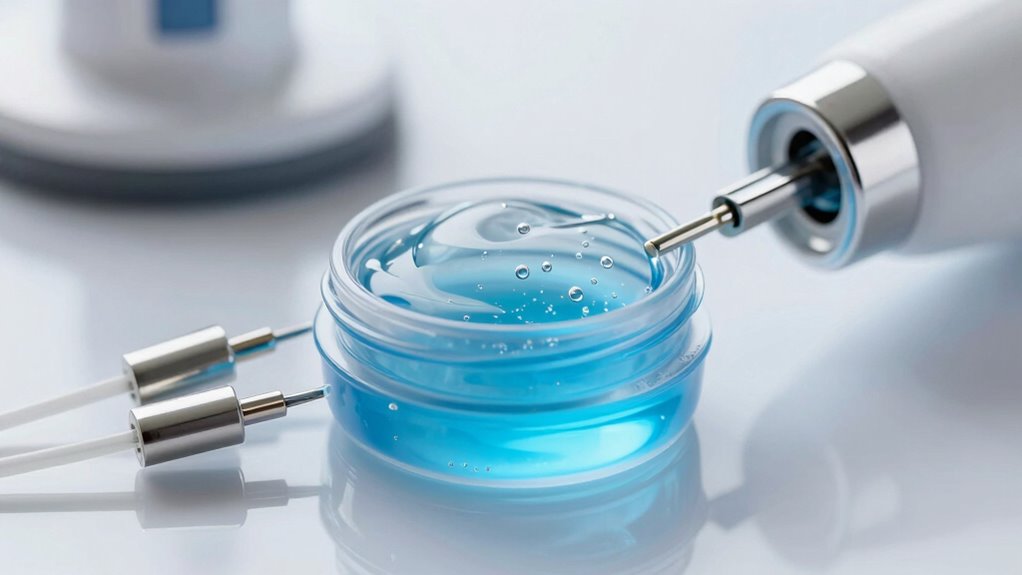
When performing microcurrent routines, using conductive gel is vital for guaranteeing effective energy transfer between the device and your skin. Without it, your treatments can be inefficient or even uncomfortable. The gel acts as a conductive medium, bridging the gap between the electrodes and your skin, allowing the tiny electrical currents to penetrate smoothly. This not only enhances the overall effectiveness of your session but also minimizes irritation. That’s why choosing the right conductive gel matters, especially considering electrode compatibility and skin sensitivity.
Electrode compatibility is a key factor. Different microcurrent devices come with various electrode types, each requiring specific gel formulations to work best. Some gels are designed for flexible, reusable electrodes, while others suit disposable or gel-based electrode pads. Using the wrong gel can reduce conductivity, leading to inconsistent results or even damaging the electrodes. When selecting a conductive gel, check the manufacturer’s recommendations to guarantee it’s compatible with your device’s electrodes. Proper compatibility ensures a secure connection, preventing energy loss and maintaining the device’s lifespan. Additionally, understanding conductive gel properties can help you choose a product that performs optimally for your specific needs.
Skin sensitivity is another critical consideration. Your skin might be sensitive or prone to reactions, so it’s important to choose a hypoallergenic, gentle gel. A high-quality conductive gel minimizes the risk of redness, irritation, or allergic responses. If you have sensitive skin, look for gels with soothing ingredients and free from artificial fragrances, dyes, or harsh chemicals. Applying an appropriate gel not only enhances comfort but also helps your skin adapt to microcurrent treatments, making the experience more pleasant and effective.
In addition, the consistency of the gel influences its performance. A good conductive gel should be thick enough to stay in place during your routine but spread easily for even coverage. Too watery, and it might slide off or create uneven contact; too thick, and it might be difficult to apply evenly. Finding a balance ensures consistent conductivity across the treatment area, maximizing results while reducing discomfort. Remember, the right gel will also prevent the electrodes from drying out during longer sessions, maintaining continuous conductivity.
Ultimately, the right conductive gel enhances electrode compatibility, adapts to your skin’s sensitivity, and guarantees a smooth, effective microcurrent experience. It’s a small investment for big results—better energy transfer, less irritation, and more visible improvements. Pay attention to your skin’s needs and your device’s specifications, and you’ll see how vital this seemingly simple product truly is in elevating your microcurrent routine. Proper conductive gel selection can make all the difference in achieving optimal outcomes.
microcurrent device conductive gel
As an affiliate, we earn on qualifying purchases.
As an affiliate, we earn on qualifying purchases.
Frequently Asked Questions
Can Conductive Gel Cause Skin Irritation or Allergies?
Yes, conductive gel can cause skin irritation or allergy risks, especially if you have skin sensitivity. You might notice redness, itching, or discomfort after use. To reduce these risks, choose hypoallergenic gels and do a patch test before applying broadly. If your skin reacts badly, stop using the gel and consult a dermatologist. Always follow product instructions to minimize the chance of irritation or allergic reactions.
How Often Should I Replace My Conductive Gel?
Think of your conductive gel as the heart of your microcurrent routine—it needs proper care to keep beating strong. You should replace it every 3 to 6 months to guarantee ideal application longevity and gel preservation. Using fresh gel prevents drying out or bacterial buildup, which can compromise effectiveness. Regular replacement keeps your treatments smooth, safe, and effective, so don’t let your gel become a forgotten relic—change it before it’s too late.
Is Conductive Gel Necessary for All Microcurrent Devices?
Conductive gel isn’t necessary for all microcurrent devices; it depends on device compatibility. You should check your device’s instructions to see if gel is recommended. If it is, proper gel application techniques are essential for effective contact and results. Using the right amount of gel guarantees efficient current transfer, prevents discomfort, and enhances your microcurrent routine. Always follow your device’s guidelines for maximum performance and safety.
Are There Natural or Organic Conductive Gel Options Available?
You can find natural, organic conductive gel options that act like a gentle river flowing over your skin, powered by nature’s pure ingredients. These organic alternatives use natural ingredients like aloe vera, glycerin, or plant-based compounds, making them a healthier choice. They guarantee your microcurrent routine stays effective while embracing the purity of organic formulations, letting you nourish your skin with ingredients straight from nature’s own palette.
Can Conductive Gel Improve Microcurrent Treatment Results?
Yes, conductive gel can improve microcurrent treatment results by enhancing electrode conductivity and maintaining skin hydration. When you use a high-quality gel, it guarantees better contact between the electrodes and your skin, allowing the microcurrent to penetrate effectively. Keeping your skin well-hydrated also boosts conductivity, leading to more noticeable and quicker results. So, using the right conductive gel makes a significant difference in your microcurrent routine’s overall effectiveness.
Conclusion
Don’t overlook the power of conductive gel—it’s the true star of your microcurrent routine. Sure, some might think it’s just a small detail, but without it, your device can’t work effectively. Plus, it’s super easy to use and makes your experience more comfortable. So, next time you set up your session, remember: a good gel isn’t just an accessory, it’s the secret to better results and a smoother, more enjoyable treatment.
Halloween Picks
halloween
As an affiliate, we earn on qualifying purchases.