
TL;DR

Get beauty and skincare favorites delivered free with Prime
- Fast, free delivery on millions of items
- Prime Video, Amazon Music and more included
- Member-only deals all year
Glamour UK published a 2026 guide to nine hyaluronic acid serums, presenting product recommendations alongside expert skincare advice. The supplied material does not identify all nine products or document a testing method, so the list’s full selections and comparative results cannot be verified here.
Glamour UK has published a 2026 guide to nine hyaluronic acid serums, combining product recommendations with expert advice about hydration, ingredients and application. The supplied source material describes one serum in detail but does not provide the complete nine-product list or a full account of how products were tested, limiting what can be confirmed about the comparison.
The guide presents hyaluronic acid as a humectant used to attract and retain moisture, and distinguishes it from exfoliating acids such as glycolic, lactic and salicylic acid. Its product commentary highlights a serum from a brand’s Rx line, described as a straightforward formula combining hyaluronic acid with glycerin, ceramide NP and vitamin E. The writer says it absorbs quickly, layers with other skincare and makeup, and leaves skin feeling hydrated.
A quoted contributor, Wu, says she reaches for that serum when her skin feels dry, including in winter or after retinoid use, and describes it as fast-absorbing and not heavy. Those are personal product impressions, not clinical findings. The supplied material does not include a complete list of all nine products, prices, testing dates or consistent scoring criteria, so readers cannot assess the full lineup from this excerpt alone.
The article also includes recommendations attributed to skincare professionals. It says concentrations around 0.5% to 1% are generally suitable across skin types and gives 2% as the maximum recommended in its guidance. Formula matters too: the source points to glycerin and ceramides as complementary moisturising ingredients, while noting that people with sensitive, oily or mature skin may have different formulation preferences. These are general editorial recommendations, not a substitute for individual medical advice.
How the Guide Helps Shoppers Compare Serums
The roundup matters to readers choosing among products marketed for hydration because it focuses attention on more than the headline ingredient. A serum’s supporting ingredients, texture and layering can affect how it fits into a routine, and the guide’s advice encourages shoppers to check the full formula rather than treating every hyaluronic acid product as interchangeable.
At the same time, the information available here is not enough to establish that one serum performs better than another. Product descriptions and an individual reviewer’s experience can help readers understand texture and routine compatibility, but they do not show results for every skin type or prove a treatment effect. The nine-product framing is useful as a shopping shortlist, while the missing product details and methodology remain relevant limitations.
hyaluronic acid serum with glycerin and ceramides
As an affiliate, we earn on qualifying purchases.
As an affiliate, we earn on qualifying purchases.
The Guide’s Ingredient and Application Advice
The source explains that hyaluronic acid in skincare is a synthetic version of a substance naturally present in skin. It says the ingredient is not an exfoliant and should not be confused with retinol or peeling acids. The article attributes its hydration role to its water-binding properties; its broad claims about benefits, including the amount of water it can hold, are presented as ingredient guidance rather than evidence from the serum comparison.
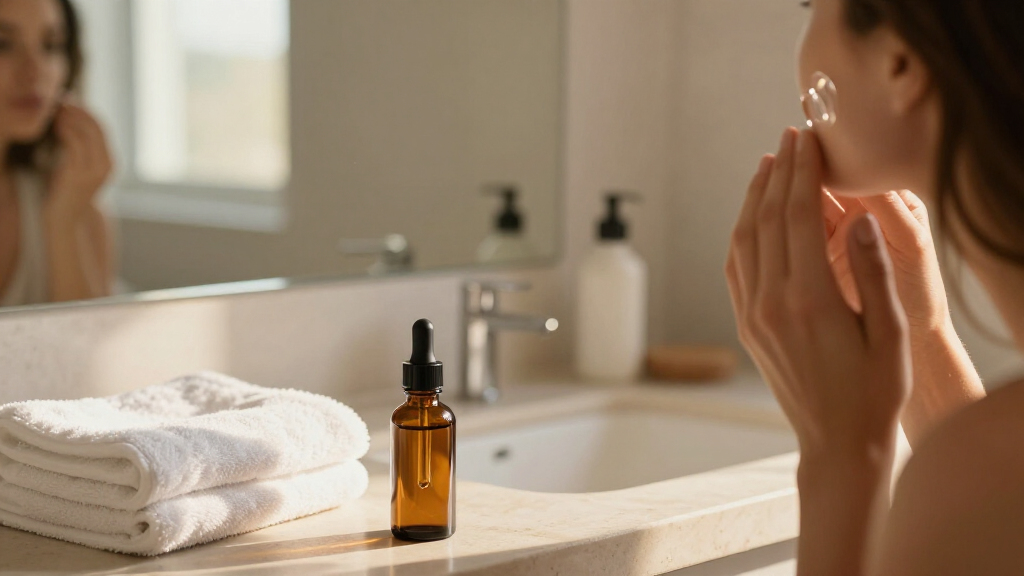
For application, the guide recommends putting serum on slightly damp skin after cleansing, then following with moisturiser containing emollient ingredients such as glycerin or ceramides. A dry environment may affect how the product feels, the source cautions. It also says hyaluronic acid can be paired with retinol or vitamin C, and advises applying products from lighter to thicker consistency. People with persistent irritation or specific skin conditions should seek advice from a qualified professional.
“When my skin is parched—especially during winter or post-retinoid use—I reach for this.”
— Wu, quoted in Glamour UK’s guide
What the Available Product Details Do Not Show
The supplied source excerpt does not name all nine recommended serums, give their prices or provide a complete product-by-product comparison. It also does not state when the guide was published, how many testers took part, how long products were used, or whether the testing followed a standard protocol. The headline says the products were tested with experts, but the available material is insufficient to independently describe or evaluate that process.
Claims about hydration, skin comfort and compatibility should be understood as the guide’s descriptions, expert comments or reviewer impressions. The excerpt does not provide clinical measurements or establish that the products prevent water loss, reduce wrinkles or suit every reader. Those points cannot be confirmed from the supplied material.
What Readers Can Check Before Buying
Readers looking for the full recommendations can consult Glamour UK’s original guide for its complete product list and any additional testing details. Before buying, compare the ingredient lists, concentration information and texture, and consider whether added ingredients match your skin’s needs. Patch testing a new skincare product may help identify irritation; stop using it if a reaction occurs. Anyone managing a skin condition or persistent symptoms should consult a dermatologist or other qualified clinician.
Further clarity would come from the publisher’s full product-by-product notes, including the testing period and selection criteria. Until those details are available in the source material here, the roundup is best read as an editorial shopping guide supported by general ingredient advice rather than a verified ranking based on disclosed comparative results.
Key Questions
What is the news in Glamour UK’s 2026 guide?
Glamour UK published a roundup of nine hyaluronic acid serums with product commentary and expert advice. The source excerpt provided here does not show all nine selections.
Does hyaluronic acid exfoliate skin?
No. The guide describes it as a humectant that attracts and retains moisture, and distinguishes it from exfoliating ingredients such as glycolic, lactic and salicylic acid.
How does the guide recommend applying a hyaluronic acid serum?
It recommends applying serum to slightly damp skin and following with moisturiser to help seal in hydration. Individual products may have different directions, so check their labels.
Can hyaluronic acid be used with retinol or vitamin C?
The guide says it can be paired with both. It advises applying products from thinner to thicker consistency; people prone to irritation should introduce products cautiously and seek professional guidance if needed.
Does the available source confirm which serum is best?
No. The supplied excerpt describes one formula and a reviewer’s experience, but lacks the complete product list and disclosed comparative testing details needed to verify a best-performing serum.
Source: rss
Fall Picks
fall essentials
As an affiliate, we earn on qualifying purchases.