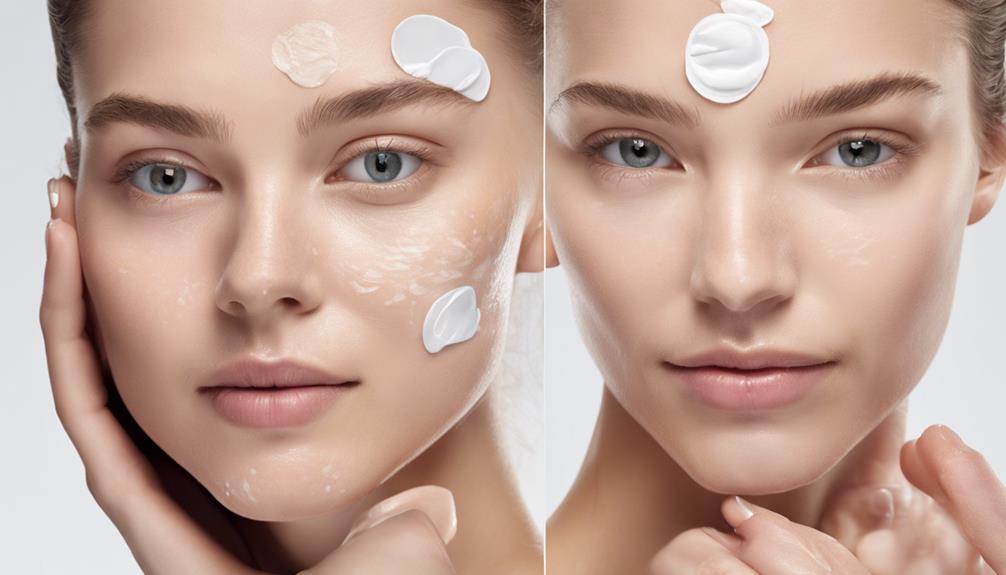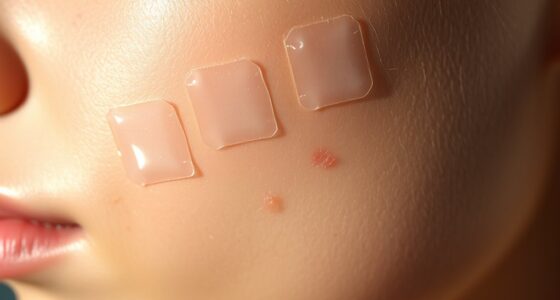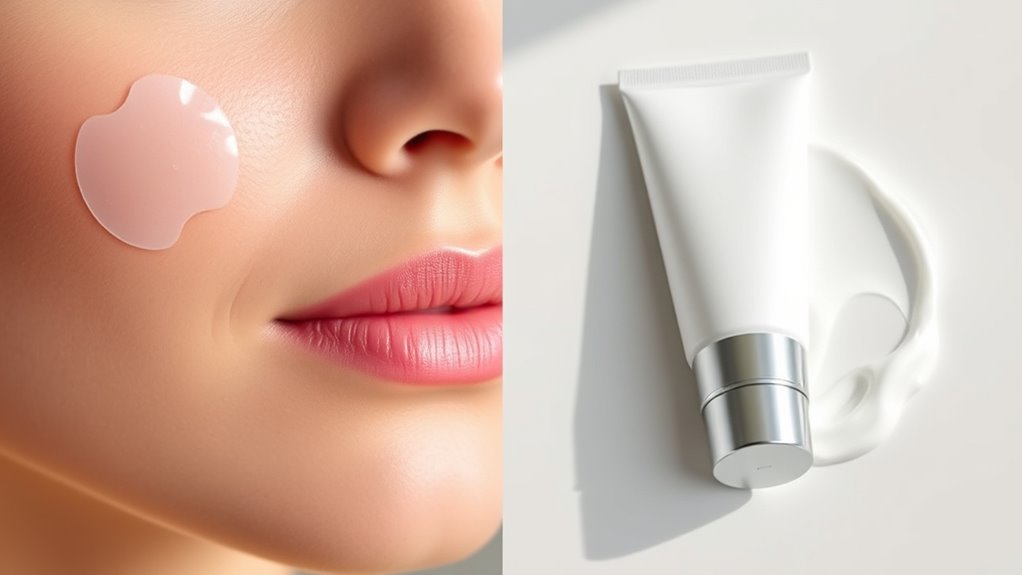

Skincare patches offer steady, controlled delivery of ingredients directly to your skin, which helps reduce irritation and boosts effectiveness, especially for targeted concerns. In contrast, creams are more versatile and easier to apply over larger areas but can be less precise and may lose potency through washing or wiping away. Your choice depends on your skin needs and routine, and exploring both options reveals which method suits you best for ideal results.
Key Takeaways
- Patches provide controlled, sustained delivery of active ingredients, ensuring consistency and reducing irritation risks.
- Creams offer flexibility for large-area coverage and can combine multiple skincare agents easily.
- Patches enhance skin absorption by maintaining close contact and reaching deeper layers, unlike creams that may wash away.
- Creams require proper application and reapplication, which can affect their effectiveness and lead to uneven results.
- Patches are ideal for targeted, long-lasting treatment, while creams suit broader, customizable skincare routines.
When it comes to treating skin concerns, choosing between skincare patches and traditional creams depends on your needs and preferences. Skincare patches offer a unique approach to drug delivery by releasing active ingredients steadily over time, which can improve skin absorption and guarantee a sustained effect. Unlike creams, which require you to apply a thin layer and often need frequent reapplication, patches adhere directly to your skin, creating a controlled environment for the medication or skincare agent to penetrate deeply. This method minimizes the loss of active ingredients that can occur with creams when they’re wiped or washed away, making patches particularly effective for delivering consistent doses of medication or targeted skincare ingredients.
Skincare patches deliver active ingredients steadily, ensuring deep absorption and consistent results without frequent reapplication.
Since skin absorption is a critical factor in how well a product works, patches often provide a more efficient route for active compounds to reach the deeper layers of your skin. The adhesive material in patches ensures close contact with your skin, allowing the active ingredients to bypass some of the barriers that slow absorption when using creams. This can be especially beneficial for delivering drugs that need to penetrate beyond the surface, like anti-inflammatory agents, acne medications, or other targeted treatments. Plus, because patches release ingredients gradually, they often reduce the risk of irritation that sometimes accompanies the overuse of creams, which can be too potent if applied excessively or unevenly.
Additionally, proper application techniques can significantly influence the effectiveness of both patches and creams, highlighting the importance of following instructions carefully. However, traditional creams still hold advantages. They’re generally more versatile and easier to use for widespread or large-area coverage. You can control the amount you apply, and they adapt easily to different skin textures. Creams also allow you to incorporate a variety of ingredients in one product, which is great if you’re treating multiple skin concerns simultaneously. Yet, their drug delivery can be less precise, and active ingredients may not fully penetrate the skin if not applied correctly or if the formulation isn’t optimized for absorption. Furthermore, creams tend to evaporate or wash away over time, reducing their overall effectiveness, especially if you don’t reapply frequently.
Ultimately, your choice depends on your specific skin concern, lifestyle, and how you prefer to manage your skincare routine. If you want targeted, consistent delivery with minimal fuss, patches could be your best bet. But if you prefer flexibility and broader application, creams might suit you better. Understanding how each method interacts with your skin’s absorption process can help you make a more informed decision, ensuring your treatment is both effective and convenient.
Frequently Asked Questions
Are Skincare Patches Suitable for Sensitive Skin Types?
Skincare patches can be suitable for sensitive skin, but you should be cautious. If you have patch allergies or ingredient sensitivity, check the patch’s ingredients carefully. Some patches use gentle, hypoallergenic materials designed for sensitive skin, but others might cause irritation. Always do a patch test before full application to see how your skin reacts. If you experience redness or discomfort, discontinue use and consult a dermatologist.
How Long Do Skincare Patches Typically Last During Wear?
Skincare patches typically last between 8 to 24 hours during wear, depending on the product and your skin type. The patch longevity varies based on factors like adhesive quality, exposure to water, and skin oils. You’ll want to check the packaging for specific recommendations, but generally, most patches are designed for a full day’s wear, providing consistent delivery of active ingredients without the need for reapplication.
Can Patches Be Used Alongside Traditional Creams?
Yes, you can use patches alongside traditional creams for enhanced results. Combining therapy allows you to target specific skin concerns more effectively, leveraging ingredient synergy. Just make certain you apply patches first and wait a few minutes before layering creams, preventing interference. This approach maximizes absorption and benefits, giving you a more thorough skincare routine without sacrificing the efficacy of either product.
Do Patches Provide Better Ingredient Absorption Than Creams?
Patches generally provide better ingredient penetration and absorption efficiency compared to creams because they deliver active ingredients directly through the skin over a sustained period. When you use a patch, it maintains consistent contact, allowing for more controlled and effective absorption. In contrast, creams rely on diffusion and can be affected by skin type or application thickness, making patches a more reliable option for targeted ingredient delivery.
Are Skincare Patches More Cost-Effective Than Regular Creams?
Skincare patches can be more cost-effective than regular creams over time, especially if they deliver ingredients more efficiently and reduce waste. While patches might have a higher upfront cost, their targeted delivery can lead to better results with less product, saving you money in the long run. A proper cost comparison shows that investing in patches could offer long-term savings, making them a smarter choice for many skincare routines.
Conclusion
Ultimately, choosing between skincare patches and traditional creams is like selecting a trusted map for your skin’s journey. Patches offer targeted, mess-free treatment, but may lack the versatility of creams that adapt to your daily routine. Think of patches as a steady lighthouse guiding your skin through rough waters, while creams are the gentle tide that nurtures from all directions. Whichever you choose, make sure it aligns with your skin’s unique story and needs.