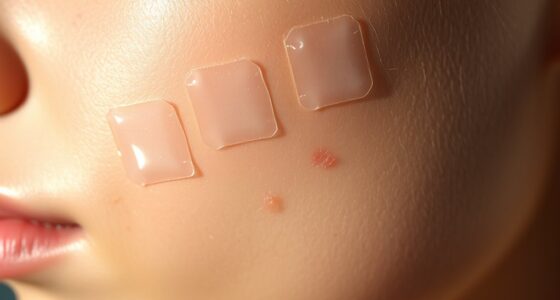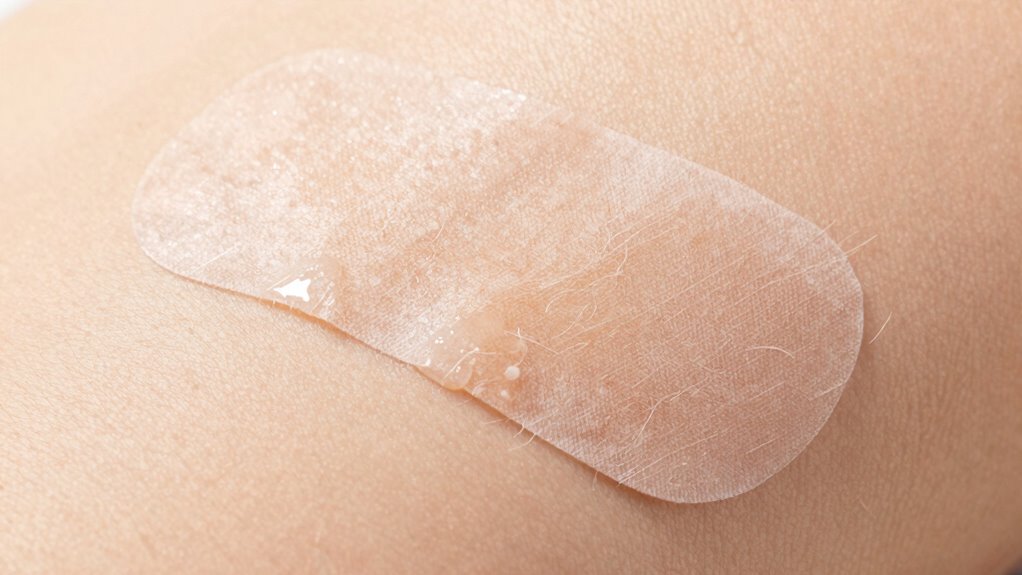
Patch residue is the sticky film or adhesive leftovers that stay on your skin after removing a patch. It can cause discomfort, irritation, or interfere with new applications. Residue forms when adhesive doesn’t fully detach, especially if removal isn’t gentle. To minimize this, gently peel the patch and use warm water or oils to loosen the adhesive. Want to learn more about preventing and managing patch residue effectively? Keep exploring to find helpful tips.

Get beauty and skincare favorites delivered free with Prime
- Fast, free delivery on millions of items
- Prime Video, Amazon Music and more included
- Member-only deals all year
Key Takeaways
- Patch residue consists of adhesive or sticky material remaining on the skin after removal.
- Residue buildup can cause skin irritation, redness, itching, or allergic reactions.
- Proper removal involves gentle peeling, using warm water or oils to loosen adhesive.
- Residue may persist despite careful removal, especially with strong adhesives or resistance.
- Using hypoallergenic patches and proper techniques can minimize residue and skin reactions.
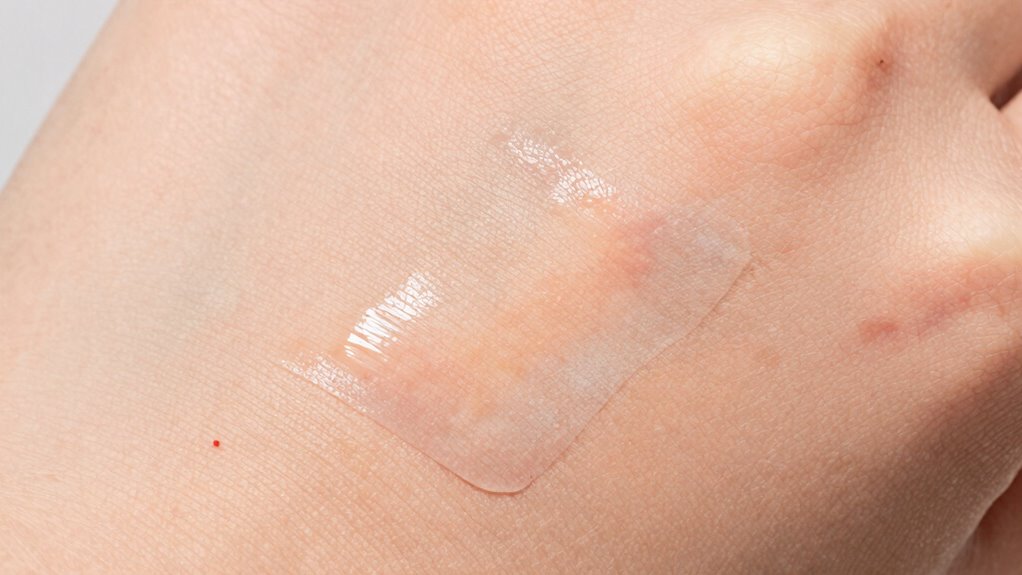
Patch residue refers to the leftover material or adhesive that remains after removing a patch, whether it’s a medical bandage, cosmetic sticker, or adhesive tape. When you peel off a patch, you might expect a clean removal, but often, a sticky film or adhesive remnants stay on your skin. This residue can be bothersome, especially if it causes discomfort or interferes with your next application. It’s important to understand how to manage this residue properly, especially if you notice any signs of allergic reactions, such as redness, itching, or swelling. These reactions can be triggered by the adhesive itself or by residues that irritate your skin, so it’s vital to handle residue carefully and choose gentle removal techniques.
Your first step in managing patch residue should be to use proper removal techniques. Instead of ripping the patch off quickly, gently peel it back, pulling slowly and steadily. This reduces the risk of tearing skin or leaving more residue behind. If you encounter resistance, applying a bit of warm water or oil—like baby oil, coconut oil, or mineral oil—can help loosen the adhesive. These substances break down the sticky substances without harsh chemicals, making removal smoother and less irritating. Avoid harsh solvents or alcohol-based products, as they can cause additional skin irritation or allergic reactions. Once the patch is removed, you can use a soft cloth or cotton pad soaked in warm water to wipe away any remaining residue, taking care not to scrub too hard. Understanding the adhesive properties of patches can also help you choose the most suitable removal method.
If you notice skin irritation or signs of an allergic reaction after removing the patch, it’s best to wash the area with mild soap and water. Applying a soothing lotion or an over-the-counter hydrocortisone cream can help reduce inflammation and discomfort. If allergic reactions persist or worsen, consult a healthcare professional for further advice. To prevent future issues, consider testing a small amount of adhesive on your skin before applying a new patch, especially if you have sensitive skin or known allergies. Using hypoallergenic patches or those designed for sensitive skin can also minimize the risk of allergic reactions and residual buildup.
As an affiliate, we earn on qualifying purchases.
Frequently Asked Questions
Can Patch Residue Cause Skin Irritation or Allergic Reactions?
Yes, patch residue can cause skin irritation or allergic reactions, especially if you have allergic sensitivities. When residue remains on your skin after removal, it can lead to mild or more severe skin reactions like redness, itching, or swelling. To minimize risks, clean your skin thoroughly after removing a patch and monitor for any adverse reactions. If you notice persistent discomfort, consult a healthcare professional promptly.
How Can I Effectively Remove Residual Patch Adhesive?
To effectively remove residual patch adhesive, start by identifying the adhesive type—like acrylic or silicone—as different removal techniques work best for each. Gently peel the patch or use an oil-based remover, such as baby oil or petroleum jelly, to break down the adhesive. Apply it with a soft cloth, then wash the area with soap and water. Be patient and avoid harsh rubbing to prevent skin irritation.
Does Patch Residue Affect Medication Absorption?
Patch residue can affect medication efficacy by creating a barrier that impairs skin penetration. When residue remains, it may prevent the medication from fully absorbing into your skin, reducing its effectiveness. To guarantee ideal absorption, make sure to remove any adhesive residue thoroughly before applying a new patch. Proper skin preparation helps maintain consistent medication delivery and maximizes the therapeutic benefits of your treatment.
Are There Specific Skincare Products to Clean Patch Residue?
Think of patch residue like stubborn glue sticking around after peeling off a sticker. To clean it effectively, try alternative removal methods like rubbing alcohol or oil-based cleansers. Residue prevention tips include applying the patch on dry skin and pressing firmly. For cleaning, use gentle, skin-friendly products like micellar water or specialized adhesive removers. These methods guarantee your skin stays clean and irritation-free, making patch removal smoother and safer.
How Long Does Patch Residue Typically Stay on the Skin?
Patch residue usually stays on your skin for a few hours to overnight after removal, depending on the removal techniques you use. If you gently lift the patch and wash the area with warm water and mild soap, residue tends to come off quicker. However, if adhesive remains, using an oil-based remover or alcohol wipes can help. To avoid prolonged residue, follow proper removal techniques and clean your skin thoroughly afterward.
Conclusion
So, now you know what patch residue is and how to handle it. Remember, it’s not the end of the world if a little bit stays behind; just give your skin a good wash and be patient. Sometimes, it’s like trying to find a needle in a haystack—just need a bit of persistence. With proper care, your skin will be back to normal in no time. Stay vigilant and keep your skin happy!
Halloween Picks
halloween
As an affiliate, we earn on qualifying purchases.