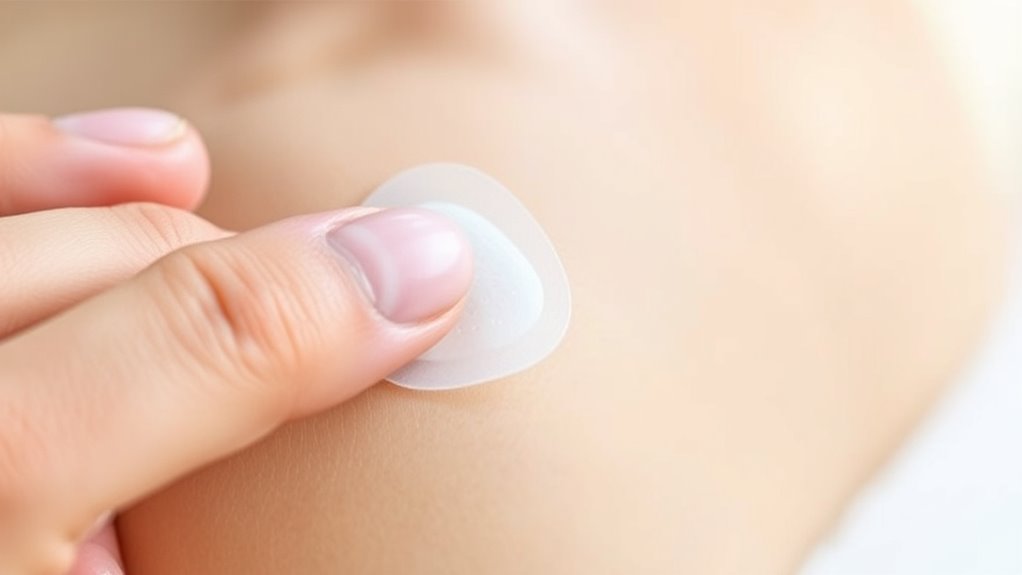

To apply and remove patches safely, start by washing your hands thoroughly and keeping your skin dry and free of oils or lotions. Carefully follow the manufacturer’s instructions, pressing the patch firmly to guarantee good adhesion. When removing, peel slowly from one edge to prevent skin damage, using gentle techniques or adhesive removers if needed. Proper patch hygiene helps maximize effectiveness and reduces skin irritation—continue to explore ways to protect your skin and ensure safe use.
Key Takeaways
- Wash hands thoroughly before applying or removing patches to prevent contamination.
- Prepare skin by keeping it dry, clean, and free of oils or lotions to promote good adhesion.
- Apply patches carefully following manufacturer instructions, ensuring they are fully adhered and secure.
- Remove patches slowly from one edge to minimize skin trauma, using gentle techniques or adhesive removers if needed.
- Inspect skin after removal for irritation or residue, and clean the area gently to maintain skin health.
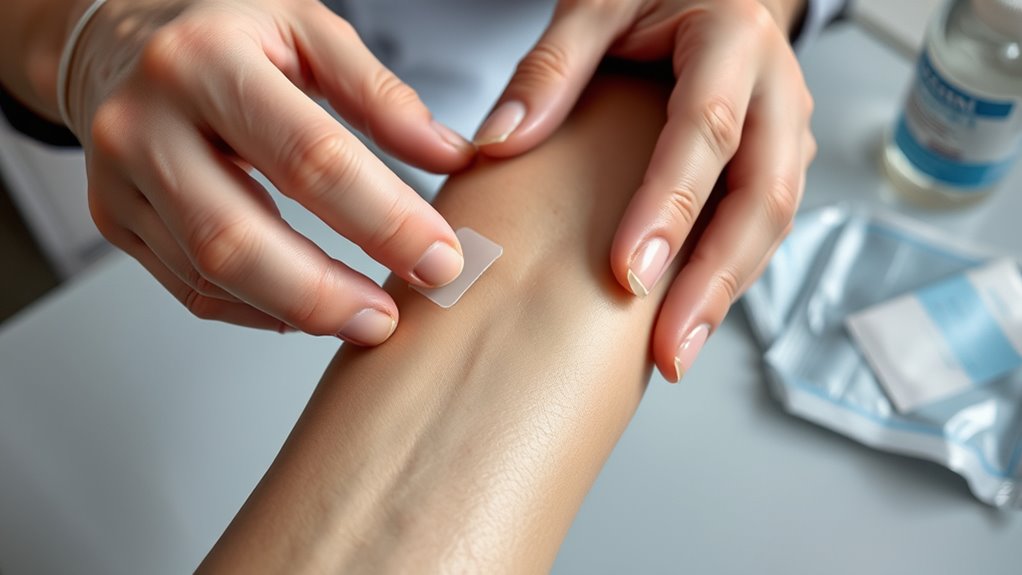
Have you ever considered how maintaining your patches can impact their effectiveness and your skin’s health? Proper patch management isn’t just about sticking something on and forgetting about it; it’s a vital step in ensuring both your safety and the success of the treatment. When you take care of your patches correctly, you optimize their ability to deliver medication or other substances, while also reducing the risk of skin irritation or infection. Good patch hygiene is essential for vulnerability mitigation, especially if you’re using patches to manage health conditions or to administer medication regularly. Neglecting proper handling can lead to decreased adhesion, uneven medication delivery, or even adverse skin reactions, which defeats the purpose of using patches in the first place.
Proper patch care enhances effectiveness and skin health, preventing irritation and ensuring safe, successful treatment.
To start, make sure your hands are clean before applying or removing a patch. Wash thoroughly, as dirt and bacteria on your skin or fingertips can introduce germs that cause irritation or infection. When applying a new patch, carefully follow the instructions provided, making sure the skin is dry and free of oils, lotions, or sweat. This promotes better adhesion and reduces the chance of the patch peeling prematurely, which could compromise the medication’s efficacy or leave you vulnerable to skin issues. Regular patch management involves checking the patch’s condition daily, ensuring it’s secure, and replacing it at the recommended intervals. Proper removal is equally important: gently peel the patch from one edge, avoiding sudden tugs that might damage the skin or leave adhesive residue behind.
When removing a patch, do so slowly and carefully to minimize skin trauma. If adhesive residue remains, use a mild, skin-safe adhesive remover or warm water with gentle soap. Avoid harsh scrubbing or alcohol-based cleansers, which can irritate your skin. During removal, observe your skin for signs of redness, rash, or irritation—these could be signs of an allergic reaction or improper patch application. If you notice any issues, consult your healthcare provider for advice on how to proceed or whether an alternative patch might be necessary. Proper patch hygiene not only enhances the patch’s effectiveness but also serves as a key part of vulnerability mitigation by preventing skin infections or discomfort that can compromise overall health.
Incorporating consistent patch management routines supports your health goals and guarantees the medication is delivered effectively. Remember, a clean, dry, and properly managed patch can make all the difference in your treatment’s success. Taking the time to apply and remove patches correctly protects your skin and maximizes their intended benefits, giving you peace of mind and a safer, more effective experience.
adhesive patch remover
As an affiliate, we earn on qualifying purchases.
As an affiliate, we earn on qualifying purchases.
Frequently Asked Questions
Can I Reuse a Patch After Removing It?
No, you shouldn’t reuse a patch after removing it. Patch reuse isn’t recommended because adhesive and medication effectiveness diminish once removed, and there’s a risk of contamination. Always dispose of patches properly after use, following patch disposal guidelines. If you need a new dose, always apply a fresh patch to clean, dry skin. Reusing patches can lead to skin irritation or inconsistent medication delivery, so it’s best to use a new one each time.
What Should I Do if a Patch Causes Skin Irritation?
If a patch causes skin irritation, remove it immediately and wash the area with soap and water. Use skin irritation remedies like over-the-counter hydrocortisone cream or cool compresses to soothe your skin. For patch allergy management, consider switching to a different type or brand of patch, and consult your healthcare provider for personalized advice. Keep an eye on the area, and seek medical attention if irritation worsens or persists.
Are There Age Restrictions for Using Medicated Patches?
Using medicated patches is like walking a tightrope—you need to be cautious. Age restrictions vary depending on the medication and your child’s age, so always check the medication guidelines. Usually, children under a certain age shouldn’t use patches without doctor supervision. Always follow age restrictions and consult healthcare providers, ensuring safe application and effective treatment. Your safety and proper medication use come first, so never ignore age guidelines.
How Do I Store Patches to Maintain Their Effectiveness?
To maintain your patches’ effectiveness, store them in a cool, dry place away from direct sunlight, heat, and moisture. Keep the patches in their original packaging until use, as this helps preserve their patch lifespan. Avoid storing patches in the bathroom or near any sources of heat. Follow any specific storage tips provided on the packaging, and check expiration dates regularly to guarantee safety and potency.
Can I Shower or Swim While Wearing a Patch?
Did you know that water exposure can reduce a patch’s effectiveness by up to 50%? You can shower or swim while wearing a patch, but it’s essential to take into account water exposure and activity considerations. Use waterproof coverings if swimming, and avoid prolonged immersion or vigorous activities that might loosen the patch. Always follow your healthcare provider’s advice to ensure the medication stays effective during your water activities.
skin-safe adhesive remover
As an affiliate, we earn on qualifying purchases.
As an affiliate, we earn on qualifying purchases.
Conclusion
Think of patch hygiene like caring for a delicate garden—you need to tend to it carefully to keep it thriving. Always follow the proper steps to apply and remove patches, wash your hands, and keep the area clean. Doing so prevents infections and guarantees the patch works effectively. Remember, taking a little extra time now is like watering your plants regularly—small efforts lead to healthy, safe results. Stay mindful, and your skin will thank you!
medication patch applicator
As an affiliate, we earn on qualifying purchases.
As an affiliate, we earn on qualifying purchases.
skin irritation relief cream
As an affiliate, we earn on qualifying purchases.
As an affiliate, we earn on qualifying purchases.