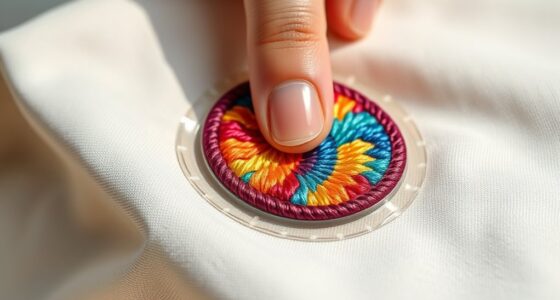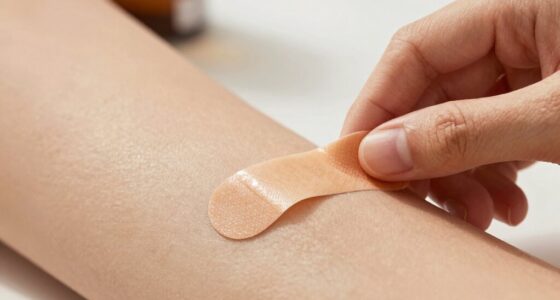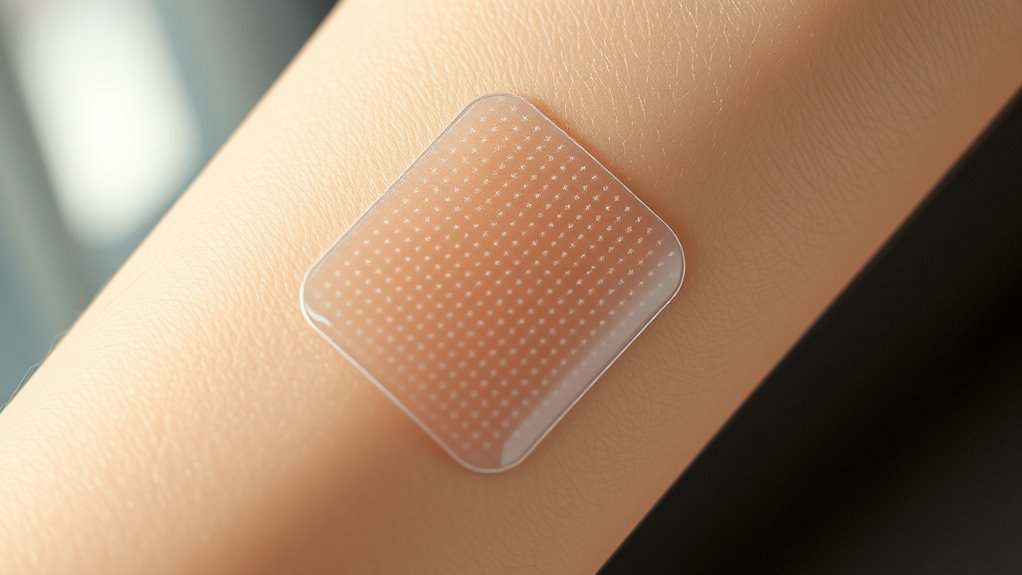

Microneedle patches work by inserting tiny, dissolvable needles into your skin, creating microchannels that bypass the outer barrier to deliver medications effectively. They are designed to minimize pain and discomfort while enabling rapid absorption of vaccines, insulin, or pain relievers. These patches are perfect for quick, controlled, and convenient drug delivery, especially if you prefer avoiding injections. To understand how they can fit into your treatment plan, keep exploring more about their use and benefits.
Key Takeaways
- Microneedle patches use tiny needles to create microchannels, allowing drugs to bypass the skin’s outer barrier for better absorption.
- They are ideal for delivering vaccines, insulin, and pain medications quickly and with minimal discomfort.
- Needles can dissolve or remain for controlled, sustained drug release, enhancing effectiveness.
- They are suitable for rapid onset treatments, especially when traditional injections are inconvenient or painful.
- Easy to self-apply, making them a convenient alternative for patients with needle phobia or requiring quick drug absorption.

Microneedle patches are an innovative way to deliver medications and vaccines through the skin with minimal discomfort. These tiny patches contain arrays of microscopic needles that penetrate the outermost layer of your skin, allowing active ingredients to reach your body efficiently. Unlike traditional injections, microneedle patches eliminate the need for sharp needles, reducing pain and anxiety associated with injections. This method leverages the skin’s natural absorption properties, making it an effective means of drug delivery.
When you apply a microneedle patch, the needles quickly create microchannels in your skin’s surface. These channels serve as direct pathways for the medication to enter your bloodstream or target tissues. Because the needles are so small, they don’t reach nerve-rich areas, meaning you experience little to no pain. The process enhances skin absorption, which is vital for guaranteeing that the drug or vaccine is absorbed effectively. The skin’s layers are designed to act as a barrier, but these microchannels bypass the outermost layer, the stratum corneum, which is often the main obstacle for topical drug absorption. This allows for faster and more consistent drug absorption compared to traditional topical methods.
Applying a microneedle patch creates microchannels that enhance absorption without pain or nerve contact.
The design of microneedle patches ensures that the medication is delivered precisely where it needs to go. Once the needles are inserted, the patch either dissolves, releasing the drug directly into the skin, or remains in place to facilitate sustained delivery over time. This controlled release can improve the stability and bioavailability of medications that might otherwise degrade before reaching your bloodstream. You can use microneedle patches for a variety of treatments, from vaccines to insulin and pain medications. They’re particularly advantageous when you need quick absorption or when traditional routes are less effective or inconvenient.
Timing is key when considering a microneedle patch. They’re ideal for situations where rapid onset of action is desired, such as during vaccination campaigns or managing acute pain. They’re also suitable for patients who have difficulty with injections, including children or those with needle phobia. Furthermore, because they’re easy to apply, they can be self-administered, making medication adherence more straightforward. Overall, microneedle patches offer a promising alternative to conventional drug delivery methods, utilizing the skin’s natural absorption capabilities to deliver treatment efficiently and comfortably. Understanding skin absorption can help in optimizing the effectiveness of these innovative patches.

PRITECH Silicone Face Scrubber, Rechargeable Facial Cleansing Brush with Heat Massage End, Vibrating Exfoliator Scrubber for Deep Cleaning, Waterproof Face Brush for Women and Men (Green)
VIBRATION DEEP CLEANING: The facial cleansing brush is suitable for various skin types with 5 adjustable vibration levels....
As an affiliate, we earn on qualifying purchases.
Frequently Asked Questions
Are Microneedle Patches Suitable for All Skin Types?
Microneedle patches are generally suitable for most skin types, but you should consider your skin sensitivity first. If you have sensitive or reactive skin, test the patch on a small area to check for irritation. Patch compatibility varies, so choose patches formulated for your skin type. If unsure, consult a dermatologist to ensure safe use and avoid potential adverse reactions.
How Long Does It Take for a Patch to Deliver Medication?
It typically takes about 15 to 30 minutes for a microneedle patch to deliver medication, depending on the drug absorption rate and patch design. During this time, the patch’s lifespan guarantees continuous delivery, often lasting several hours to days. You can expect the medication to be absorbed efficiently as the microneedles penetrate the skin, with the patch working steadily throughout its lifespan for consistent treatment.
Can Microneedle Patches Be Reused or Are They Single-Use?
You should know that microneedle patches are designed for single-use safety, meaning they’re typically disposable after one application to prevent infection and ensure effectiveness. Reuse feasibility isn’t recommended because reusing could compromise the patch’s integrity and safety. Always follow manufacturer instructions, as using a new patch each time guarantees proper medication delivery and minimizes risks. Protect your health by adhering to these guidelines for safe, effective treatment.
What Are the Potential Side Effects or Risks?
You might experience side effects like allergic reactions or skin irritation after using microneedle patches. These reactions are usually mild, but in some cases, they can cause redness, swelling, or itching. To minimize risks, follow instructions carefully, and avoid patch use if you have known allergies to any ingredients. If you notice severe reactions or persistent irritation, consult your healthcare provider promptly.
How Do Microneedle Patches Compare to Traditional Injections?
They say “difference makes the difference,” and that’s true with microneedle patches versus traditional injections. You’ll find microneedle patches are less invasive, with shorter needle lengths, resulting in increased patient comfort. Unlike sharp, bulky syringes, these patches deliver medicine painlessly through tiny needles that barely break the skin. They’re easier to use, cause less anxiety, and may improve compliance, making them a more comfortable option for many people.
PRITECH Facial Cleansing Brush, Rechargeable Silicone Face Scrubber with Heat Massage End, Vibrating Exfoliator Scrubber for Deep Cleaning, Waterproof Face Brush for Women and Men (Pink)
VIBRATION DEEP CLEANING: The facial cleansing brush is suitable for various skin types with 5 adjustable vibration levels....
As an affiliate, we earn on qualifying purchases.
Conclusion
Now that you know how microneedle patches work like tiny, powerful explorers delivering medicine beneath your skin, you’re ready to harness their potential. Think of them as your skin’s secret agents, silently targeting trouble spots with precision. When you need a quick, painless boost or a steady dose of medication, these patches become your trusty sidekicks. Embrace this innovative technology, and let it be the gentle, yet mighty wave that carries your health to calmer shores.

Michael Todd Beauty Soniclear Allure 2024 Best of Beauty Winner Facial Cleansing + Exfoliation Brush System with Antimicrobial Protected Bristles, 4 speeds, Serum Infusion Head + Travel Case
2-IN-1 FACE BRUSH - Enjoy the powerful yet gentle removal of pore-blocking impurities and dead skin. The Soniclear...
As an affiliate, we earn on qualifying purchases.

UMICKOO Electric Facial Cleansing Brush, 2-Way Rotating Face Scrubber for Daily & Deep Cleaning, 3 Modes, 5 Brush Heads, Rechargeable, IPX7 Waterproof for All Skin Types
Gentle Daily Facial Cleansing for Sensitive to Oily Skin: Designed for safe everyday use, this electric facial cleansing...
As an affiliate, we earn on qualifying purchases.