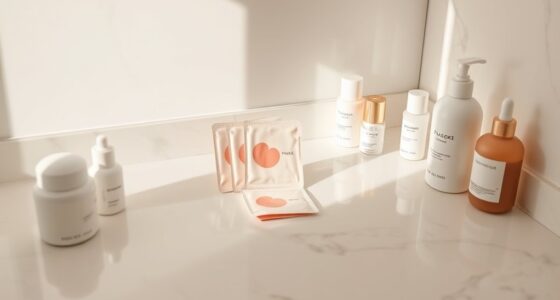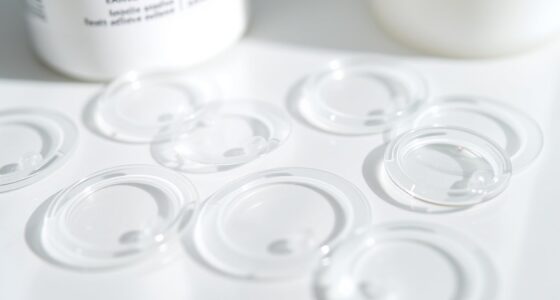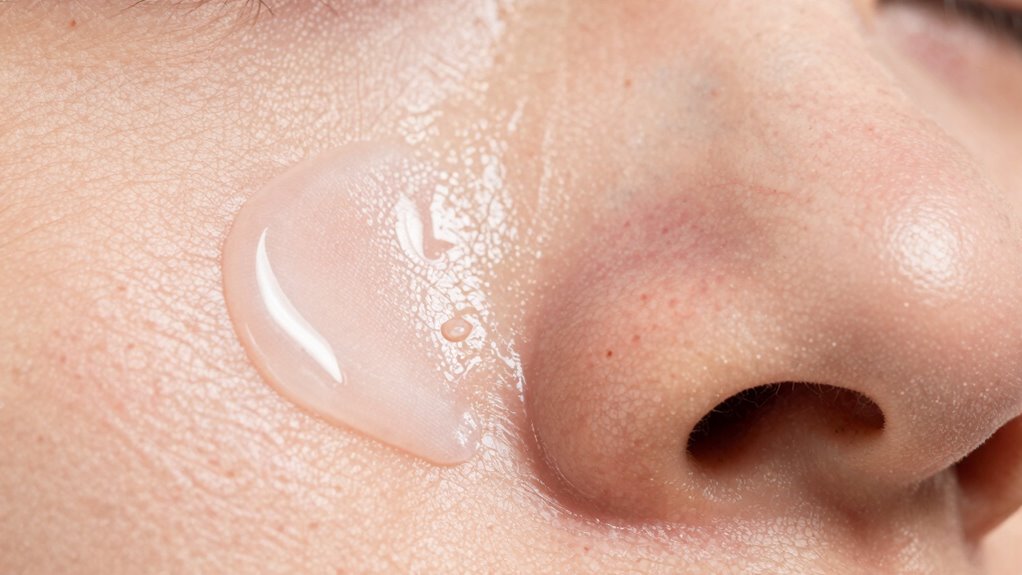

Pimple patches work wonders on whiteheads because they target surface oil, bacteria, and impurities, creating a sealed, hydrated environment that speeds healing and reduces inflammation. They draw out pus and help flatten spots, making them look noticeably smaller. However, they’re less effective on deeper bumps like cysts, as they can’t penetrate internal layers or reach the core of inflamed tissue. To discover why some spots still resist, stay tuned for more insights.

Get beauty and skincare favorites delivered free with Prime
- Fast, free delivery on millions of items
- Prime Video, Amazon Music and more included
- Member-only deals all year
Key Takeaways
- Pimple patches effectively absorb surface whiteheads’ pus and excess oil, promoting quick healing.
- They create a sealed, hydrated environment that accelerates surface skin recovery.
- Bumps deeper under the skin are inaccessible to patches, limiting their effectiveness.
- Patches lack the penetration to reach internal inflammation or cystic lesions.
- The efficacy depends on active ingredients and proper skin hydration, which mainly target surface issues.
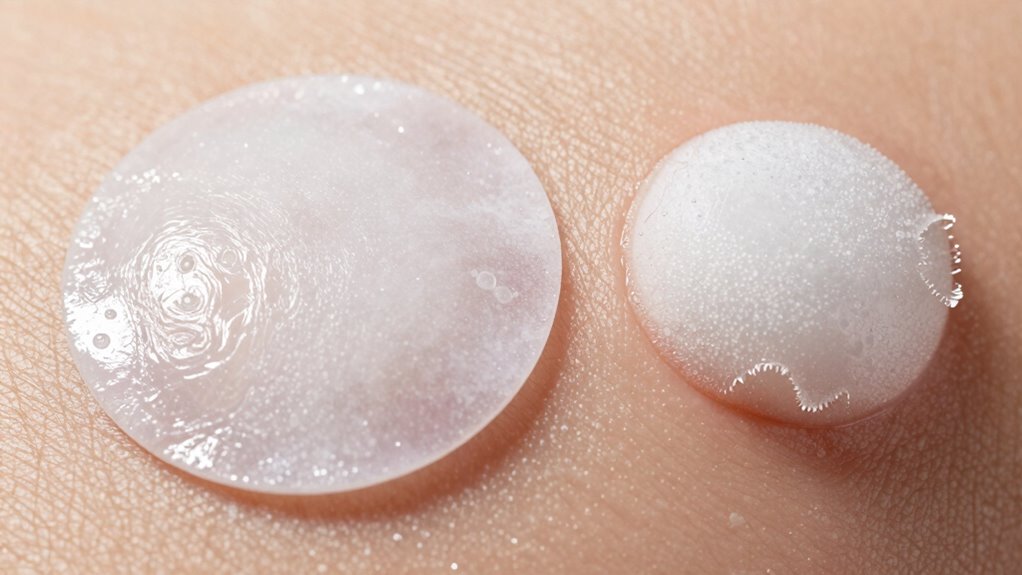
If you struggle with whiteheads and bumps, pimple patches can be a helpful solution to contemplate. They’re designed to absorb excess oil, keep bacteria out, and speed up healing, making them particularly effective on whiteheads. When you place a patch on a whitehead, it creates a sealed environment that promotes skin hydration, which helps reduce inflammation and prevents the spot from becoming more irritated. Over time, this moisture barrier can also minimize the appearance of acne scars, making your skin look smoother and more even. The patches work by drawing out pus and impurities, which is why they often seem to work like magic on whiteheads—you’re visibly witnessing the drying and flattening process happen under the patch.
However, when it comes to bumps that aren’t whiteheads—like cysts or deeper pimples—the effectiveness drops markedly. These bumps are usually located deeper in the skin, which means the surface-focused pimple patches can’t reach the core of the problem. Instead of flattening or shrinking, these bumps often remain unchanged or even appear more swollen because the patch doesn’t penetrate deep enough to address the inflammation internally. The reason pimple patches seem weak on these bumps is that their design is primarily for surface-level spots. They can’t provide the necessary ingredients or penetration to resolve deeper blockages or cystic acne.
Furthermore, the effectiveness of pimple patches depends heavily on their ability to maintain skin hydration. On whiteheads, the hydration helps keep the surrounding skin healthy, preventing further damage and reducing the likelihood of scars. But on deeper bumps, the hydration isn’t enough to tackle the internal inflammation or cyst formation. You might notice that the skin over a bump remains inflamed, swollen, or even worsens because the patch isn’t addressing the root cause beneath the surface. Additionally, understanding skin penetration can help clarify why these patches struggle with deeper issues. Recognizing that product formulation plays a crucial role in their efficacy can guide you in selecting patches with better active ingredients for complex skin problems. Improving your knowledge about active ingredients can also enhance your ability to choose the most effective treatment options for different types of acne. Moreover, using patches with penetrating ingredients might improve their effectiveness on deeper cystic lesions.
As an affiliate, we earn on qualifying purchases.
Frequently Asked Questions
Can Pimple Patches Prevent Future Breakouts?
Yes, pimple patches can help with breakout prevention by protecting your skin from bacteria and picking, which often worsen acne. While they’re effective at reducing existing whiteheads, their role in preventing future breakouts is limited. Patches improve healing and keep blemishes from spreading, but for thorough breakout prevention, you should also focus on a good skincare routine, diet, and managing stress. Their patch effectiveness varies depending on the type of blemish.
Are Pimple Patches Suitable for All Skin Types?
Pimple patches aren’t suitable for all skin types. While they work well for many, their limitations include potential irritation for sensitive skin, so skin sensitivity considerations matter. If you have allergies or easily react to ingredients, you should test the patch on a small area first. For best results, choose patches formulated for your skin type, and consult a dermatologist if you’re unsure about their suitability for your skin.
How Long Should I Leave a Pimple Patch On?
You should generally leave a pimple patch on for about 6 to 8 hours, or overnight, to maximize its effectiveness. Pimple patch longevity depends on your skin’s sensitivity considerations—if your skin feels irritated or red, remove it sooner. For best results, follow the instructions on the packaging, and avoid leaving patches on longer than recommended, especially if you notice any discomfort. This helps protect your skin while treating blemishes effectively.
Do Pimple Patches Cause Skin Irritation?
Do pimple patches cause skin irritation? They can, especially if you have sensitive skin or react to certain ingredients like salicylic acid or adhesives. You might notice redness, itching, or peeling, which indicates skin sensitivity or ingredient reactions. To minimize irritation, always patch test first and choose patches suited for sensitive skin. Are you prepared to monitor your skin’s response and adjust your routine accordingly?
Can Pimple Patches Be Used With Other Skincare Products?
Yes, you can use pimple patches with other skincare products, but be mindful of ingredient interactions. Apply patches after cleansing and treating your skin, ensuring minimal disturbance to the patch. Use patch application techniques by gently pressing them onto clean, dry skin and avoiding overlapping with active ingredients like acids or retinoids that might cause irritation. This approach helps maximize effectiveness while reducing the risk of irritation or reduced patch adhesion.
Conclusion
Now, understanding why pimple patches work better on whiteheads than bumps helps you make smarter skincare choices. Did you know that over 50% of people experience skin issues at some point in their lives? That’s a huge chunk of us dealing with breakouts and bumps. So, next time you reach for a patch, remember it’s most effective on whiteheads. Taking care of your skin with the right approach can make all the difference in your confidence and comfort.
Halloween Picks
halloween
As an affiliate, we earn on qualifying purchases.