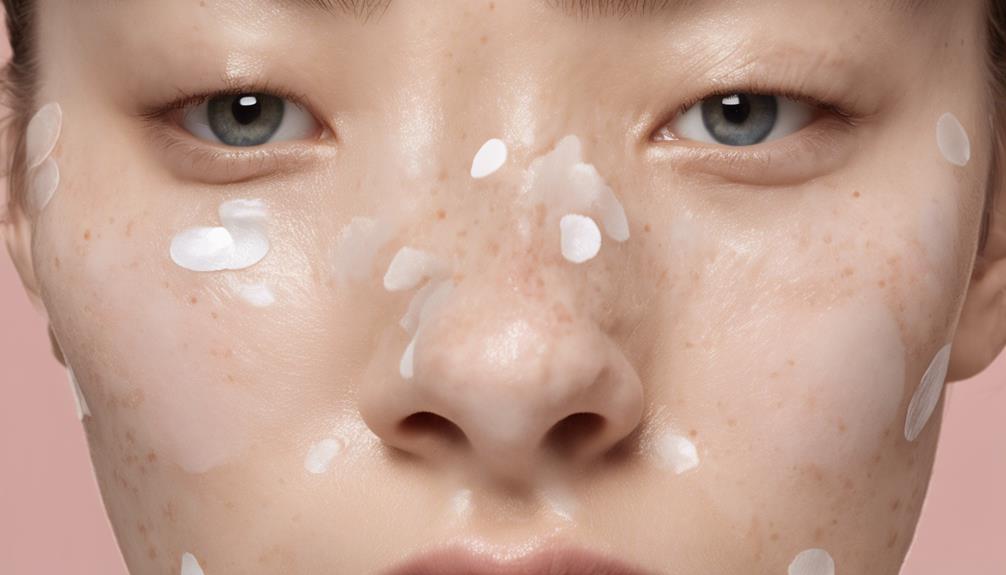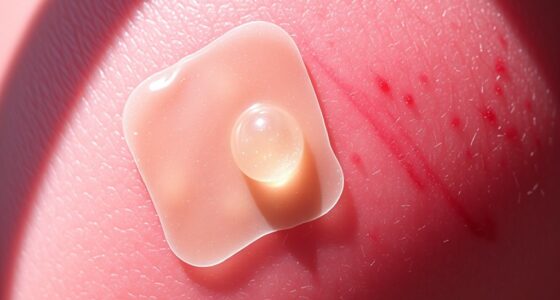

During pregnancy, it’s important to be cautious with pimple patches since many contain ingredients that might not be safe for you and your baby. Hydrocolloid patches are generally safe as they act as physical barriers, but active ingredients like salicylic acid or benzoyl peroxide should be avoided unless your healthcare provider approves. Always perform a patch test first and consult your doctor for personalized advice. If you want to understand more about safe options and what to watch out for, keep exploring.
Key Takeaways
- Hydrocolloid patches are generally safe during pregnancy as they act as physical barriers, but avoid patches with active chemicals.
- Always perform a patch test 24 hours before applying pimple patches to check for irritation or allergic reactions.
- Consult your healthcare provider before using any pimple patches or new skincare products during pregnancy.
- Choose patches free from fragrances, dyes, and harsh chemicals to minimize skin sensitivity risks.
- Maintain good skin hygiene and use gentle, pregnancy-safe treatments to manage breakouts effectively.

Pregnancy can bring about many skin changes, including increased breakouts and pimples. During this time, your body undergoes significant hormonal changes that can influence your skin’s behavior. These hormonal fluctuations can lead to increased oil production, clogged pores, and, ultimately, more blemishes. Alongside these hormonal shifts, your skin often becomes more sensitive, making you prone to irritation and reactions from products that previously worked well for you. That heightened skin sensitivity means you need to be cautious about what you apply to your face, especially when it comes to acne treatments or patches.
Pregnancy increases skin sensitivity and breakouts due to hormonal fluctuations.
When considering pimple patches during pregnancy, your primary concern should be safety. Many over-the-counter patches contain ingredients that might not be suitable for pregnancy or could be absorbed into your bloodstream, potentially affecting your baby. While some hydrocolloid patches are generally considered safe because they act as physical barriers and don’t contain active medicinal ingredients, it’s still wise to consult your healthcare provider before using any new product. You want to avoid anything that might cause an allergic reaction or irritate your skin further, particularly since your skin is more reactive right now.
Because your skin sensitivity is heightened, you might notice that some patches cause redness, burning, or discomfort. Always perform a patch test before applying a patch to your entire face. Place a small piece on your skin and wait 24 hours to see if any reaction occurs. If irritation develops, it’s best to avoid that product altogether. Additionally, look for patches that are free from fragrances, dyes, and harsh chemicals, as these can exacerbate your skin’s sensitivity. It’s also helpful to remember that skin care ingredients should be chosen carefully during pregnancy to avoid any potential risks.
It’s important to remember that pregnancy-related skin changes are temporary, and many skin issues improve postpartum. Prioritize gentle, non-invasive remedies to manage pimples, such as keeping your face clean with mild cleansers, staying well-hydrated, and maintaining a balanced diet. If your breakouts are severe or persistent, consult your healthcare provider or dermatologist. They might recommend pregnancy-safe topical treatments or other strategies tailored to your skin’s needs.
Frequently Asked Questions
Can Pimple Patches Cause Hormonal Changes During Pregnancy?
Pimple patches don’t cause hormonal changes during pregnancy. They mainly target surface skin issues and have minimal systemic effects, so they don’t impact your hormonal balance. However, due to increased skin sensitivity during pregnancy, some ingredients in pimple patches might irritate your skin. Always check labels and consult your healthcare provider before using any skincare products, especially if you’re concerned about hormonal impact or skin sensitivity during pregnancy.
Are There Natural or Organic Pimple Patches Safe for Pregnant Women?
Yes, you can choose natural, organic pimple patches that prioritize safety during pregnancy. Look for herbal remedies and topical supplements that are gentle, non-toxic, and free from harsh chemicals. These safe solutions soothe skin without stirring hormonal chaos. By choosing wisely, you’ll ward off worries and welcome wellness, ensuring your skin’s health stays harmonious and happy throughout your pregnancy journey.
How Do Pimple Patches Affect the Absorption of Pregnancy Skincare Products?
Pimple patches can impact skin absorption effects by creating a barrier that limits how pregnancy skincare products penetrate your skin. The ingredients in pimple patches, like hydrocolloid or active medications, often stay on the surface, reducing absorption of other products. If you use a patch, it’s best to apply your skincare before or after removal, ensuring the pimple patch ingredients don’t interfere with the absorption of your pregnancy-safe products.
Can Pimple Patches Be Used on Stretch Marks or Other Pregnancy Skin Changes?
Using pimple patches on stretch marks or other pregnancy skin changes isn’t recommended, as they’re designed for acne, not stretch mark treatment. You need pregnancy-safe ingredients specifically formulated for stretch marks, not the active agents in patches. Trying to patch up stretch marks with acne patches could do more harm than good, potentially irritating sensitive skin. Stick to safe, proven stretch mark treatments, and always consult your healthcare provider before trying new products.
Are There Any Long-Term Effects of Using Pimple Patches While Pregnant?
Using pimple patches during pregnancy generally doesn’t cause long-term skin effects if used as directed. Their safety largely depends on the ingredients, so it is crucial to choose patches with safe, pregnancy-approved components. Overuse or improper use might lead to irritation or sensitivity, but these effects usually resolve quickly. Prioritize pimple patch safety by consulting your healthcare provider, and avoid prolonged or aggressive use to prevent potential long-term skin issues.
Conclusion
During pregnancy, always prioritize safety over convenience. While pimple patches might seem like a quick fix, it’s wise to consult your doctor before use—think of it as a wise knight consulting their squire. Remember, your skin’s health is part of your little one’s kingdom, so choose products carefully. Trust your instincts, stay informed, and don’t forget, a little patience now will save you from a dragon-sized worry later.