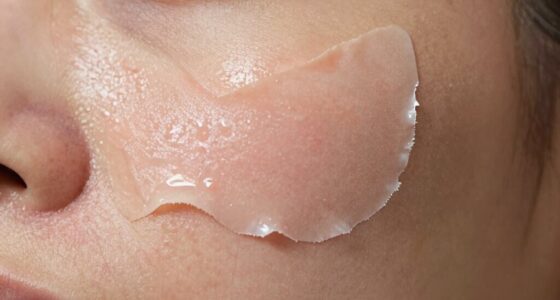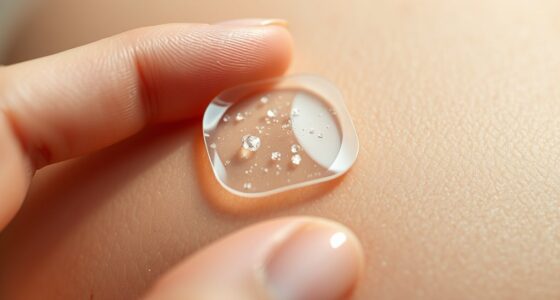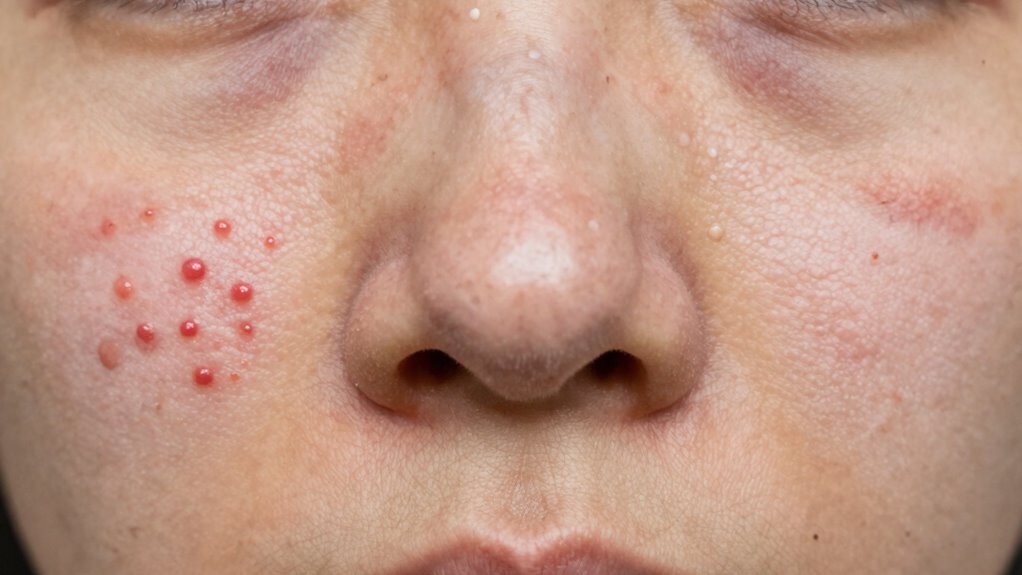

Pimple patches work differently on your chin compared to your forehead because of their causes. On your forehead, breakouts are usually surface-driven from excess oil and sweat, so patches can absorb impurities and reduce inflammation effectively. But on your chin, hormonal fluctuations cause deep cystic breakouts that surface treatments like patches can’t reach. If you want to understand how to better target these spots, there’s more to discover about tailored skincare strategies.

Get beauty and skincare favorites delivered free with Prime
- Fast, free delivery on millions of items
- Prime Video, Amazon Music and more included
- Member-only deals all year
Key Takeaways
- Pimple patches on the forehead effectively absorb surface oils and impurities, reducing inflammation for surface-driven breakouts.
- Chin breakouts are primarily hormonal and deeper, making patches less effective at addressing internal causes.
- Surface breakouts respond quickly to patches by trapping debris, while hormonal ones require targeted treatments.
- Patches act as barriers preventing skin picking on the chin, but do not treat underlying hormonal imbalances.
- The effectiveness of patches depends on whether breakouts are surface-level or internally driven by hormones.
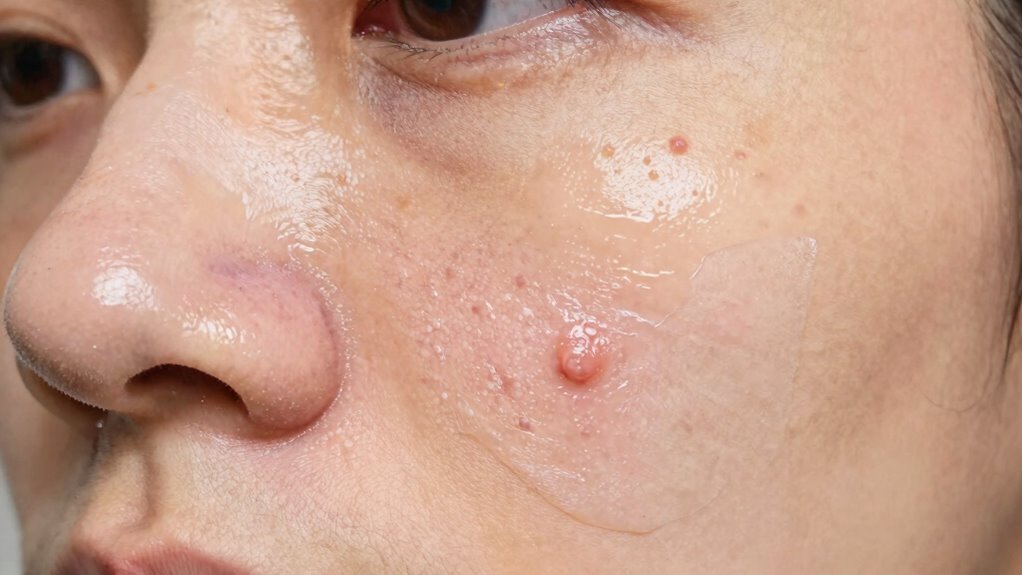
When it comes to treating pimples, applying patches on your chin versus your forehead can lead to different results, mainly because these areas often experience distinct types of breakouts. Your skin’s absorption capabilities and the underlying causes of breakouts influence how effective pimple patches are on each area. The chin typically hosts breakouts driven by hormonal influence, especially during periods like your menstrual cycle, when fluctuations in hormones stimulate oil production. These hormonal breakouts tend to be deeper and more cystic, making them more resistant to surface treatments. On the other hand, the forehead often experiences breakouts related to excess oil and sweat, which clog pores more superficially. Consequently, pimple patches on the forehead might act faster at absorbing surface oils and impurities, reducing the likelihood of new spots forming.
Skin absorption plays a vital role here. Pimple patches act as a barrier that traps impurities and prevents you from picking at your skin, but they also facilitate the absorption of excess oil, pus, and debris. On the forehead, where oil production is typically high, patches can effectively draw out surface impurities through their adhesive and absorbent layers. This keeps the pores clear and minimizes inflammation. Conversely, on the chin, where breakouts are often caused by hormonal fluctuations deep within the skin, the patches may not be as immediately effective at pulling out the root cause. Instead, they serve more as a protective barrier, preventing you from aggravating cystic spots by touching or squeezing. Additionally, understanding the types of breakouts common in each area can help tailor your skincare routine more effectively. Recognizing the impact of hormones on skin health can further inform targeted treatment strategies.
Furthermore, the location of breakouts can influence how your skin responds to different treatments, emphasizing the importance of personalized skincare approaches. Hormonal influence profoundly affects how the skin responds to pimple patches. Hormonal breakouts tend to be more stubborn because they originate from internal hormonal shifts that increase oil production and inflammation deep in the skin. While patches can help manage surface-level symptoms on the chin, they don’t directly address hormonal causes. For forehead breakouts, which are more surface-driven, patches can provide quicker visible improvements because they are acting on the excess oil and debris clogging your pores. Understanding these different breakout patterns can help you choose the most effective treatment for each area. So, in essence, while patches work on both areas, the underlying cause—hormonal versus surface oil—dictates how noticeable the results will be and how fast they appear.
Products Worth Considering

Garmin Venu 4 GPS Smartwatch, 45 mm, Slate with Black Silicone Band

Levoit Vital 100S-P Air Purifier with Washable Pre-Filter

Fitbit Charge 6 Fitness Tracker Bundle – Black/Obsidian
As an affiliate, we earn on qualifying purchases.
Frequently Asked Questions
Do Pimple Patches Affect Skin Sensitivity Differently on the Chin and Forehead?
Yes, pimple patches can affect your skin sensitivity differently on the chin and forehead due to varying skin types and sensitivities. The patch formulation may cause irritation if your skin is more sensitive in one area. For example, patches with stronger ingredients might be harsher on the chin, which often has more oil and sensitivity, while forehead skin might tolerate certain formulations better. Always choose patches suited for your skin type.
Can Pimple Patches Be Used Overnight on Both Areas Safely?
Yes, you can use pimple patches overnight on both areas safely. Just consider pimple patch longevity—most are designed to stay on for several hours, often up to 12-24 hours. Keep skin irritation factors in mind; if you notice redness or discomfort, remove the patch. Overnight use is generally safe if your skin tolerates it, but avoid leaving patches on longer than recommended to prevent irritation.
Are Certain Ingredients More Effective for Chin Versus Forehead Breakouts?
Yes, certain ingredients are more effective for breakout location due to ingredient specificity. For chin breakouts, look for ingredients like benzoyl peroxide or salicylic acid, as they target clogged pores and bacteria effectively. On the forehead, ingredients like sulfur or tea tree oil work well, as they help reduce oil and calm inflammation. Choosing pimple patches with these ingredients based on breakout location boosts their effectiveness and speeds healing.
How Do Movement and Facial Expressions Impact Patch Adhesion?
Facial tension and muscle movement can substantially impact patch adhesion. When you move your face, especially around areas with frequent muscle activity, the patch may loosen or peel off. On the chin, constant movements like talking or chewing affect adhesion more, while the forehead’s smoother surface may hold the patch better unless you facially tense or make expressions. To maximize effectiveness, stay as still as possible during wear.
Do Hormonal Changes Influence Patch Effectiveness on Different Facial Areas?
Hormonal fluctuations can affect patch effectiveness by increasing oil production and inflammation, making pimples more stubborn, especially on your chin. Facial muscle movements, like frowning or raising your eyebrows, can loosen patches on areas with frequent motion, reducing their adhesion and effectiveness. You might notice patches work better on static areas, but on busy zones, facial movements and hormonal changes can challenge their ability to stay put and do their job.
Conclusion
You might think all pimples are the same, but the truth is, they respond differently depending on where they appear. Pimple patches work better on your chin because that area has more oil and bacteria, making the patch’s ingredients more effective. On your forehead, sweat and oil can interfere. Believing in these small differences can empower you to target breakouts more wisely, giving you control over your skin’s health and confidence.