
To treat back acne effectively, use a gentle body wash with salicylic acid or tea tree oil twice daily, and apply spot treatments with benzoyl peroxide or sulfur on active pimples. Incorporate exfoliation with glycolic acid 2–3 times a week, but avoid overdoing it. Pimple patches are great for quick healing—stick them on clean skin and leave overnight. Continuing will help you understand how to optimize your approach for clearer skin.
Key Takeaways
- Clean your back thoroughly before applying pimple patches to ensure proper adhesion and effectiveness.
- Place patches directly on surfaced pimples, covering them fully for best healing results.
- Leave patches on for several hours or overnight, avoiding premature removal to maximize absorption and protection.
- Use pimple patches alongside a consistent skincare routine with ingredients like salicylic acid or tea tree oil.
- Remove patches gently to prevent skin irritation and replace with new ones as needed for ongoing treatment.
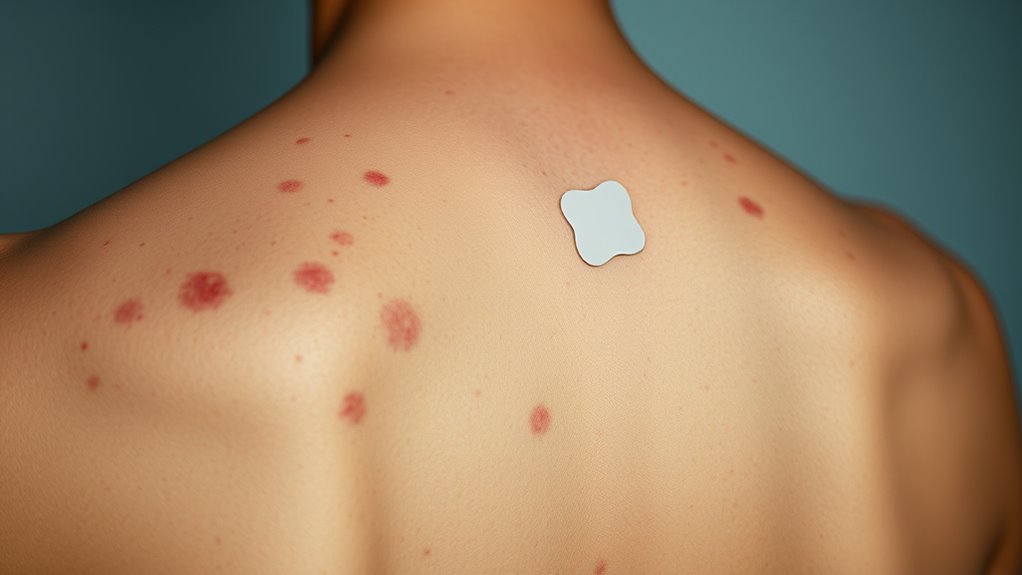
Back acne can be a stubborn and frustrating skin concern, especially since it’s often hidden and difficult to treat effectively. To tackle it, you need a consistent skincare routine that targets the root causes while being gentle enough not to worsen the condition. Your routines should incorporate ingredients known for their acne-fighting benefits, like salicylic acid and benzoyl peroxide. Salicylic acid helps unclog pores by exfoliating dead skin cells and reducing inflammation, while benzoyl peroxide kills acne-causing bacteria. Using products with these ingredients regularly can make a noticeable difference over time.
Consistent use of salicylic acid and benzoyl peroxide helps clear stubborn back acne effectively.
When establishing your skincare routines, start by cleansing your back twice daily with a gentle, non-comedogenic body wash containing salicylic acid or tea tree oil. These ingredients have anti-inflammatory and antimicrobial benefits, helping to prevent new breakouts and soothe existing ones. After cleansing, apply targeted treatments like spot creams or gels with benzoyl peroxide or sulfur. These ingredients work to reduce inflammation, kill bacteria, and decrease oil production, which are key factors in back acne development.
In addition to topical treatments, consider incorporating exfoliating products with glycolic acid or salicylic acid into your routine a few times a week. This helps prevent clogged pores by removing dead skin cells that can trap oil and bacteria. Be cautious not to over-exfoliate, as that can irritate your skin or strip away natural oils, making acne worse.
When it comes to pimple patches, they’re a convenient addition to your routine. These patches are infused with ingredients like hydrocolloid, which absorbs excess fluid and protects the blemish from picking, reducing the risk of scarring and infection. Some patches also include soothing ingredients like niacinamide or tea tree oil, which can help calm redness and inflammation. To use them effectively, clean your back thoroughly, apply the patch directly to the pimple, and leave it on for several hours or overnight. These patches work best on surfaced pimples and can accelerate healing without irritating surrounding skin.
Frequently Asked Questions
Can Pimple Patches Prevent Future Back Acne?
Pimple patches can help prevent future back acne by reducing the risk of inflammation and infection. Their effectiveness lies in sealing out bacteria and dirt, which can contribute to breakouts. While they won’t eliminate all causes of back acne, using pimple patches regularly can support back acne prevention efforts. Keep your skin clean, wear breathable clothing, and combine patch use with other skincare routines for best results.
Are There Natural Remedies for Back Acne?
Yes, you can try natural remedies for back acne. Herbal remedies like tea tree oil or aloe vera can soothe inflammation and reduce bacteria. Incorporate dietary changes by reducing sugar and dairy intake, which may trigger breakouts. Regularly exfoliating your skin and wearing breathable clothing can also help. These natural approaches may improve your skin over time, but consistency and patience are key to seeing results.
How Long Does It Take to See Results From Pimple Patches?
You can typically see results from pimple patches within 6 to 8 hours, thanks to their high pimple patch efficacy. However, skin healing duration varies based on your skin type and the severity of the blemish. For the best results, keep the patch on overnight or until it turns white. Consistent use speeds up healing, and you’ll notice a reduction in redness and swelling as your skin recovers.
Can I Wear Pimple Patches Overnight on My Back?
Yes, you can wear pimple patches overnight on your back. They’re designed to stay in place and work while you sleep, helping to reduce inflammation and absorb excess oil from back acne. Just make sure your skin is clean and dry before applying. Using patches overnight can speed up healing, but avoid leaving them on too long to prevent irritation. Always follow the product instructions for the best results.
Are Pimple Patches Suitable for Sensitive Skin?
Yes, pimple patches can be suitable for sensitive skin if you choose options designed for it. Look for patches labeled as hypoallergenic or specifically made for sensitive skin to guarantee compatibility. Always patch test a small area first to check for reactions. If you notice irritation or discomfort, discontinue use and consult a dermatologist. Proper pimple patch compatibility helps you treat breakouts effectively without aggravating sensitive skin.
Conclusion
Think of your back acne as a stubborn garden weed—you’ve got to stay consistent and patient. Pimple patches are like tiny shields, ready to fight off those pesky blemishes before they bloom. Keep your skincare routine steady, and let these patches be your secret weapon. With time, your skin will glow like a clear blue sky after a storm, revealing the smooth, confident you hiding beneath. Stay persistent, and watch your back become your best feature.