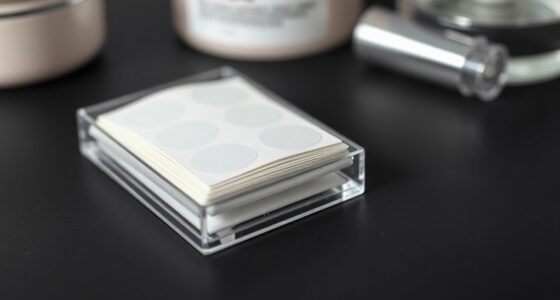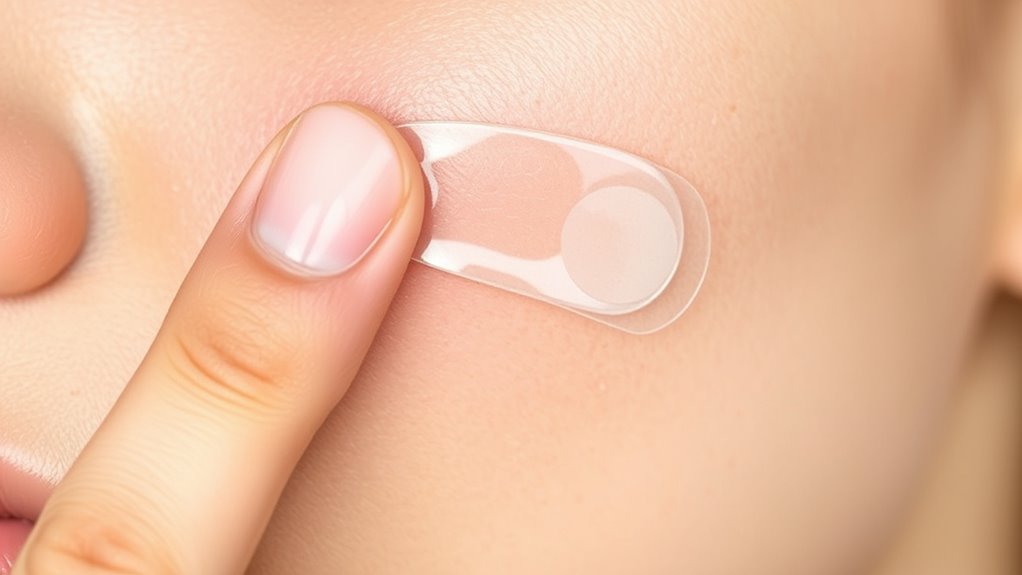

To get a pimple patch to stick well, start by cleansing your skin with a gentle, oil-free cleanser to remove dirt, oil, and makeup, then pat dry completely, especially around the blemish. Control excess oil with a light toner or blotting paper, avoiding heavy creams or serums near the area. Handle the patch carefully by the edges, align it over the pimple, and press firmly to fully adhere. Keep the patch undisturbed for best results—continue to explore tips to maximize its hold.
Key Takeaways
- Thoroughly cleanse and dry the skin, especially around the pimple, to remove oils and residue that can weaken adhesion.
- Use a gentle toner or astringent to control oil and prepare a clean, pH-balanced surface for the patch.
- Handle the patch by its edges and precisely align it over the blemish, smoothing out air bubbles and folds.
- Press firmly around the edges and avoid touching or repositioning the patch once applied to ensure strong adhesion.
- Apply in a cool, dry environment, minimizing humidity and sweat to maintain the patch’s stickiness and effectiveness.

Getting a pimple patch to stick properly is essential for effective treatment, and it’s easier than you might think. The key is in proper skin prep and ensuring the adhesive strength of the patch is maximized. Before applying your patch, start by gently cleansing your face. Use a mild, oil-free cleanser to remove dirt, excess oil, and makeup. This step is vital because any residue or oils on your skin can weaken the adhesive, causing the patch to lift or fall off prematurely. Pat your face dry with a clean towel, making sure the area around the pimple is completely dry. Moisture or dampness can interfere with the patch’s ability to adhere securely, so don’t skip this step.
Once your skin is clean and dry, consider applying a light toner or a gentle astringent if you typically use one. This can help remove leftover oils and balance your skin’s pH, further improving the adhesion. Avoid using heavy creams, oils, or serums near the area where you plan to place the patch, as these can create a barrier that prevents the adhesive from sticking properly. If your skin tends to be oily, lightly blot the area with a tissue or oil-absorbing pad to reduce excess shine, which can undermine the patch’s grip. Additionally, skincare ingredients can influence how well the patch adheres, so choose products that won’t interfere with the adhesive.
Apply a light toner or astringent to boost adhesion and remove residual oils.
When it’s time to apply the pimple patch, handle it carefully by the edges to avoid touching the adhesive surface. Align it precisely over the blemish, ensuring it covers the entire pimple and adheres smoothly without air bubbles or folds. Press down firmly for a few seconds, especially around the edges, to enhance the adhesive strength. Applying gentle pressure helps the patch bond securely to your skin and reduces the likelihood of it peeling off prematurely.
For the best results, avoid touching or repositioning the patch once it’s in place, as this can weaken the adhesive. Also, try to limit facial movements or touching the area during wear, which can cause the patch to loosen. If you’re in a humid environment or sweating, be extra cautious; moisture can compromise adhesion. In such cases, ensure your skin is thoroughly dry and consider applying the patch in a cooler, less humid setting for maximum effectiveness. By following these skin prep tips and paying attention to adhesive strength, you’ll improve the chances of your pimple patch staying put and doing its job efficiently.
Frequently Asked Questions
Can I Wear a Pimple Patch Overnight Without Irritation?
Yes, you can wear a pimple patch overnight without irritation if you have sensitive skin. Make sure your skin is clean and dry before application to improve patch longevity. Use a gentle, hypoallergenic patch designed for sensitive skin, and avoid leaving it on for more than 8-12 hours. If you notice redness or discomfort, remove the patch immediately to prevent irritation and give your skin time to breathe.
Do Pimple Patches Work on All Skin Types?
You might think pimple patches work like magic on everyone’s skin, but that’s not quite true. They generally suit most skin types, but if you have super sensitive skin, you could experience irritation or poor patch adhesion. Always choose patches designed for sensitive skin and do a patch test first. Remember, even the best patches can’t fix every skin type perfectly, so pay attention to how your skin reacts!
How Long Should I Wait Before Applying a New Patch?
You should wait about 6 to 8 hours before applying a new patch to guarantee proper patch adhesion and effective healing. If the patch starts to lift or peel, it’s best to replace it sooner. Keep an eye on your skin’s response, and avoid leaving patches on for too long to prevent irritation. Regular patch replacement timing helps maximize their benefits and keeps your skin clean and protected.
Can I Use Moisturizer Before Applying a Pimple Patch?
You can absolutely use moisturizer before applying a pimple patch, but make sure it’s fully absorbed to guarantee patch adhesion tips are effective. Check moisturizer compatibility—avoid thick or greasy formulas that might loosen the patch’s grip. Waiting a few minutes after applying moisturizer helps, so your skin’s ready for the patch. Proper prep maximizes adhesion, keeps the patch in place, and helps your skin heal faster.
Are There Specific Cleansers Recommended Before Patch Application?
You should use a gentle, fragrance-free cleanser suited for your skin sensitivities before applying a pimple patch. Stick to a simple cleansing routine that thoroughly removes dirt, oil, and makeup without stripping your skin’s natural moisture. Avoid harsh scrubs or strong cleansers, as they can irritate sensitive skin. Proper cleansing guarantees your skin is clean and ready, helping the patch stick better and work effectively.
Conclusion
Now that you know the secrets to securing your pimple patch, you’re all set to succeed! Remember, preparing properly and pressing firmly will perfect your patch placement. Practice patience, and soon you’ll be a pro at protecting your skin. With these simple steps, you’ll stop sneaking around and start safeguarding your skin with confidence. So, stay steadfast, stick skillfully, and watch your skin shine brighter each day. You’ve got this—glad you’re getting your glow on!