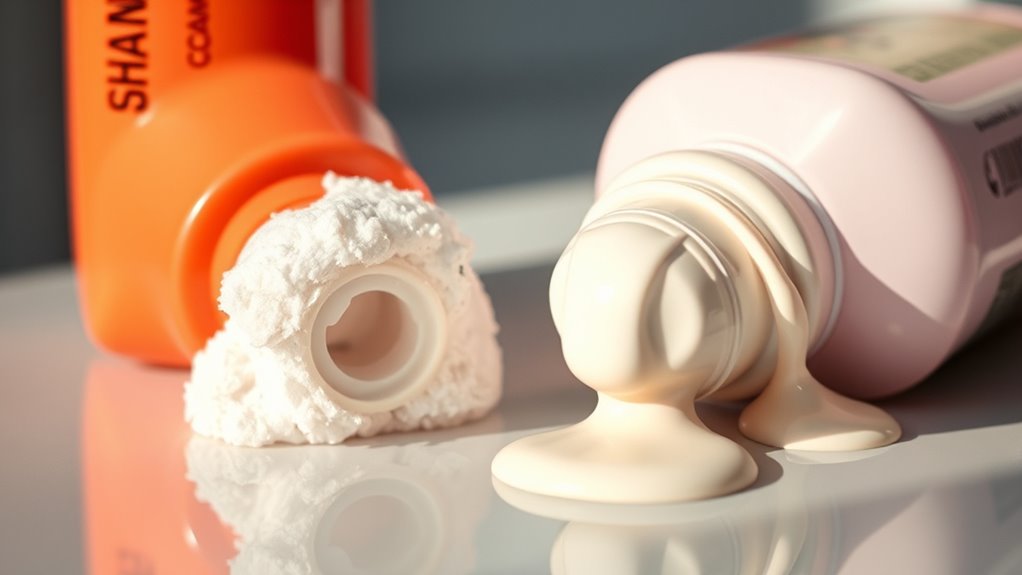

Choosing between shampoo and co-wash depends on your scalp and hair type. If you have an oily scalp or dandruff, a gentle shampoo with natural ingredients like tea tree oil may work better to remove buildup. For dry or sensitive scalps, co-washing with nourishing conditioners can help maintain moisture and scalp health. To find what’s best for your hair and scalp, consider your porosity and condition—exploring more details can guide your routine.

Get beauty and skincare favorites delivered free with Prime
- Fast, free delivery on millions of items
- Prime Video, Amazon Music and more included
- Member-only deals all year
Key Takeaways
- Choose shampoo for deep cleansing and removing buildup; opt for co-wash to gently nourish and retain natural oils.
- Natural ingredients like aloe vera and tea tree oil can soothe scalp issues, guiding product choice based on scalp health.
- Low porosity hair benefits from co-washing to maintain moisture; high porosity may need clarifying shampoo to prevent dryness.
- Oily or dandruff-prone scalps may require medicated shampoos, while dry scalps often do well with co-washing.
- Balance your routine with natural, gentle products to preserve scalp health and avoid over-stripping oils.

Have you ever wondered whether shampoo or co-wash is better for your hair? The choice largely depends on your hair type, scalp condition, and personal preferences. When considering what product works best, it’s important to understand how natural ingredients and hair porosity play roles in maintaining healthy hair. Natural ingredients, like aloe vera, coconut oil, and tea tree oil, can be gentle yet effective, especially if you’re sensitive to chemicals. Co-washing, which involves cleansing with conditioner, often incorporates these natural ingredients to nourish your scalp and strands, making it a popular choice for those seeking a milder routine. Shampoo, on the other hand, is designed to remove buildup and excess oil more thoroughly, but not all shampoos are created equal. Many contain sulfates and synthetic fragrances that can strip natural oils and disrupt your scalp’s balance, especially if your hair has high porosity. Understanding hair porosity is key to choosing the right cleansing method. Hair porosity refers to how well your hair absorbs and retains moisture. If you have low porosity hair, your strands tend to repel water, making it harder for moisture to penetrate. In this case, a gentle co-wash with natural ingredients can help maintain moisture without stripping your hair’s natural oils. Conversely, if your hair has high porosity, it absorbs moisture quickly but also loses it just as fast, often due to damage or over-processing. For high porosity hair, a clarifying shampoo might be necessary occasionally to remove buildup that prevents moisture from penetrating effectively. However, frequent shampooing with harsh formulas can exacerbate dryness, so a balanced approach with natural ingredient-based shampoos or co-washing could be more beneficial. Your scalp’s health also guides your decision. If you have an oily scalp or scalp conditions like dandruff, shampoo with natural ingredients like tea tree oil or salicylic acid can help manage these issues more effectively than co-washing. If your scalp is dry or sensitive, co-washing with conditioners that contain nourishing oils and botanical extracts might help soothe irritation and keep your scalp balanced. Ultimately, the goal is to find a routine that preserves your scalp’s natural oils while keeping your hair clean and healthy. Whether you opt for shampoo or co-wash, paying attention to how your hair responds will help you determine the best approach. Knowing your hair’s porosity and choosing products with natural ingredients will guide you toward healthier, more manageable hair in the long run.
natural tea tree oil shampoo for dandruff
As an affiliate, we earn on qualifying purchases.
As an affiliate, we earn on qualifying purchases.
Frequently Asked Questions
Can Co-Wash Replace Shampoo Entirely?
Co-washing can’t fully replace shampoo because it clarifies misconceptions about natural hair care. Co-wash gently cleanses without stripping natural oils, but over time, buildup may occur if you don’t use a clarifying shampoo periodically. Ingredient considerations are important; choose co-washes with mild, sulfate-free formulas to avoid residue. Use co-wash regularly, but don’t skip occasional shampooing, especially if your scalp gets oily or dirty.
How Often Should I Switch Between Shampoo and Co-Wash?
You should switch between shampoo and co-wash based on your hair type and scalp sensitivity. If your scalp feels greasy or itchy, use shampoo more often to clarify and refresh. For dry or sensitive scalps, opt for co-washing regularly to maintain moisture and reduce irritation. Listen to your scalp’s signals and adjust your routine accordingly, balancing cleansing and conditioning to keep your hair healthy and comfortable.
Are Co-Washes Suitable for Oily Scalp Types?
Yes, co-washes can work for oily scalp types, but you need to be careful. They help remove product residue and reduce dryness, but if you don’t rinse thoroughly, oil buildup can occur. Use a co-wash with clarifying ingredients occasionally and avoid overdoing it. This way, you keep your scalp balanced without clogging pores or leaving excess oil, ensuring your hair stays fresh and clean.
What Ingredients Should I Avoid in Co-Wash Products?
Think of your scalp as a garden; harsh chemicals and synthetic fragrances are like weeds that choke out healthy growth. You should avoid ingredients like sulfates, parabens, and artificial fragrances in co-wash products, as they can strip natural oils and cause irritation. Instead, choose gentle, natural ingredients that nourish and protect your scalp, helping your hair thrive instead of struggle under the weight of harmful substances.
Is Co-Wash Effective for Scalp Psoriasis or Dermatitis?
Co-wash can help with scalp psoriasis or dermatitis by gently cleansing your scalp, reducing irritation, and avoiding harsh shampoos. However, it might not be enough if you experience ongoing scalp irritation or product buildup. You should consider using medicated treatments prescribed by a dermatologist and alternating with co-washing to prevent buildup and keep your scalp healthy. Always monitor how your scalp responds and adjust your routine accordingly.
Conclusion
Think of your scalp as a garden: shampoo is like a deep cleaning rain, washing away dirt and buildup, while co-wash is like gentle dew, nourishing without stripping. Choosing the right depends on your scalp’s needs—sometimes you need a thorough rinse, other times a light touch. Listen to your scalp’s signals, and let your hair care routine be the gardener that helps your scalp flourish and stay healthy.
Halloween Picks
halloween
As an affiliate, we earn on qualifying purchases.