Every time you style your hair, unseen gunk like product residue, dirt, and bacteria build up on your tools—posing a risk to your scalp and hair health. Over time, this buildup can make brushes feel greasy, dull your flat irons, and lead to nasty infections if not cleaned properly. Regularly checking and cleaning your tools prevents this gross residue from causing damage. Keep going to discover the best ways to keep your tools spotless and your hair healthy.
Key Takeaways
- Hidden residues like oil, product buildup, and bacteria can accumulate on brushes, combs, and flat irons over time.
- Regular inspection helps identify unseen buildup that may transfer back to hair and scalp.
- Deep cleaning methods, such as soaking in vinegar or using alcohol wipes, effectively remove hidden grime.
- Proper drying and storage prevent mold, rust, and further bacterial growth on hair tools.
- Consistent maintenance prolongs tool lifespan, maintains hygiene, and promotes healthier hair and scalp.
Why Cleaning Hair Tools Regularly Keeps Your Hair Healthy
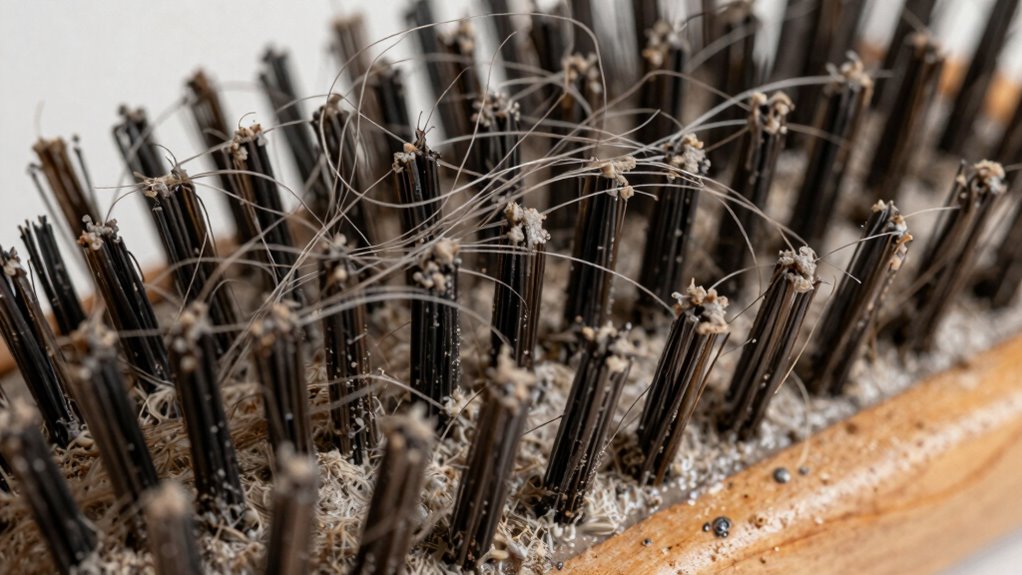
Regularly cleaning your hair tools is vital because it prevents the buildup of dirt, oil, and bacteria that can transfer to your hair and scalp. When tools are dirty, they can spread oils and debris that clog hair follicles and compromise scalp hygiene. Proper hygiene ensures your scalp stays clean and healthy, promoting better hair growth and shine. This buildup weakens hair strands, making them more prone to breakage and dullness. Clean tools help maintain hair health by reducing the risk of scalp irritation and bacterial infections. Using smart cleaning solutions can help automate and optimize the maintenance process, ensuring your tools stay hygienic with minimal effort. Proper cleaning not only improves hair appearance but also supports the overall vitality and resilience of your hair.
How to Spot Buildup on Your Hair Tools
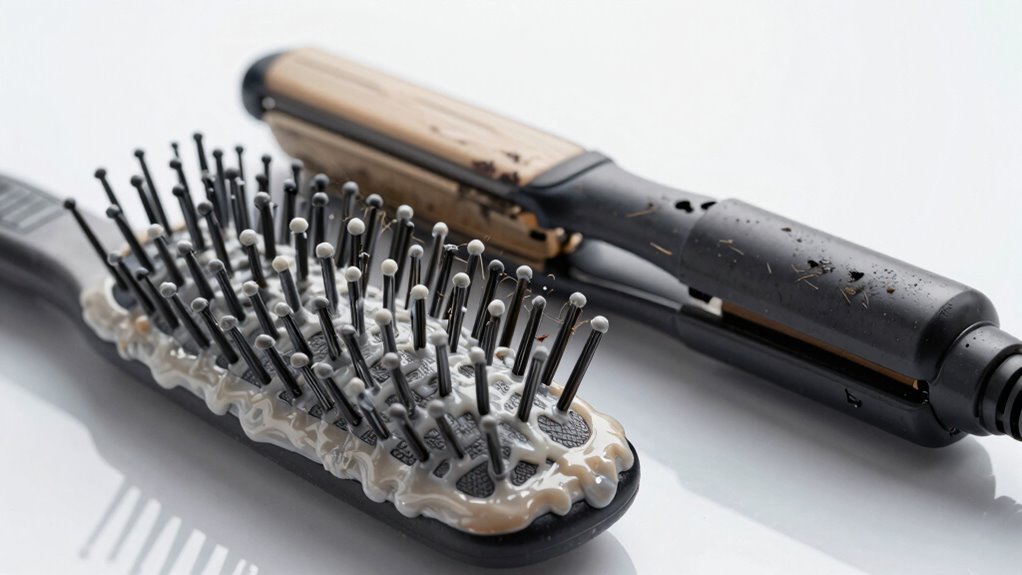
Buildup on your hair tools can be subtle but impactful, making it important to know what to look for. Check for visible signs of hair residue, such as strands tangled in brushes or stuck on comb teeth. Look for a greasy or sticky film, which indicates product buildup from styling products like gels, sprays, or serums. On flat irons, watch for a dull or gunky layer that doesn’t wipe away easily. If your tools feel heavier or look discolored, these are signs of accumulated product residue and dirt. Regular inspection helps you catch buildup early, preventing it from transferring back onto your hair. Being attentive to these signs keeps your tools clean and your hair healthier. Additionally, understanding the importance of proper maintenance can extend the lifespan of your hair tools and ensure optimal performance. Incorporating routine cleaning techniques can further prevent stubborn residue from forming over time, especially when using appropriate cleaning products designed specifically for hair tools. Recognizing the benefits of regular cleaning can also improve the overall effectiveness of your styling routine.
The Best Way to Clean Your Brushes, Combs, and Flat Irons
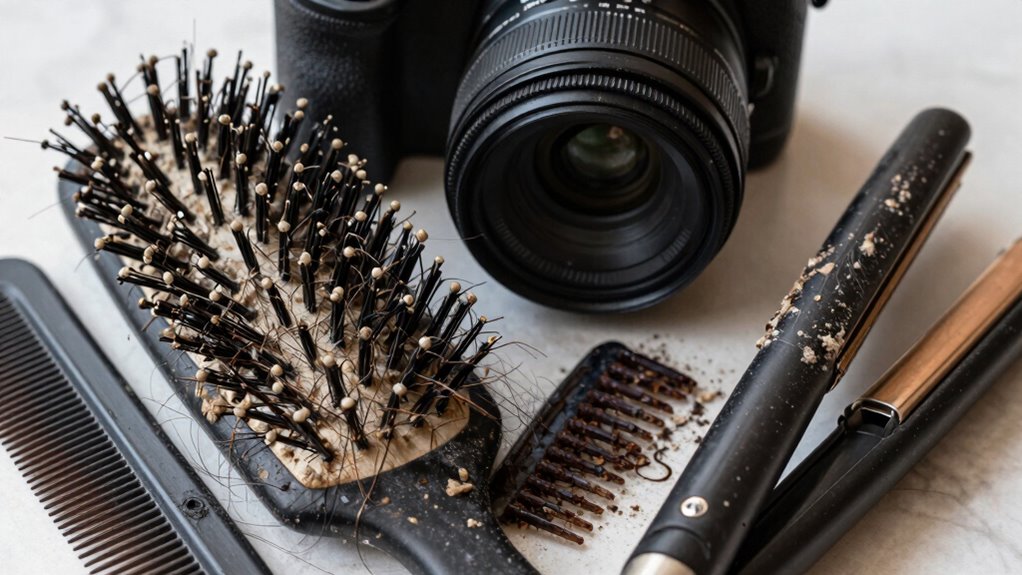
To keep your hair tools clean and effective, you need to remove buildup regularly. Deep cleaning techniques help eliminate residue and bacteria, ensuring your tools stay hygienic. Let’s explore the best methods for thoroughly cleaning your brushes, combs, and flat irons. Regularly cleaning your tools also helps maintain their performance, similar to how color accuracy is essential for optimal image quality in projectors. Incorporating proper maintenance practices can extend the lifespan of your hair tools and improve styling results. Additionally, understanding the effective cleaning methods can help you avoid common mistakes that may damage your tools or reduce their effectiveness. Being aware of easy-to-follow routines can help make cleaning a regular part of your hair care regimen, just as consistent maintenance is vital for safe and reliable e-mobility commuting. Using proper tools and supplies, such as gentle detergents and soft brushes, can further enhance your cleaning process and prevent damage.
Removing Hair Buildup
Ever wonder how to effectively remove hair buildup from your brushes, combs, and flat irons? The key is to target the hair residue and product buildup trapped in the bristles and plates. For brushes and combs, soak them in warm, soapy water with a touch of vinegar or baking soda to loosen debris. Use a toothbrush to scrub away stubborn residue, then rinse thoroughly. For flat irons, unplug and let them cool completely. Wipe the plates with a damp cloth soaked in rubbing alcohol or a specialized cleaning solution to dissolve product buildup. For tough grime, gently scrape with a wooden or plastic tool. Regular cleaning prevents buildup from affecting your hair’s health and keeps your tools working efficiently.
Deep Cleaning Techniques
Deep cleaning your hair tools guarantees they perform at their best and stay hygienic. To properly detail your brush maintenance, start by removing loose hair and rinsing it with warm water. For brushes and combs, soak them in a mixture of gentle shampoo and warm water, then scrub away residue with an old toothbrush. For flat irons and other hair appliances, sterilizing hair appliances involves wiping down plates and vents with alcohol or a disinfectant wipe. Regular deep cleaning prevents buildup of oils, product residue, and bacteria, which can cause scalp issues. Incorporating proper sanitation practices into your routine helps maintain a healthier scalp and prolongs the lifespan of your tools. Using natural cleaning solutions can also be effective and environmentally friendly. By consistently maintaining your tools with these deep cleaning techniques, you ensure they remain effective, safe, and long-lasting.
Common Mistakes to Avoid When Cleaning Hair Tools
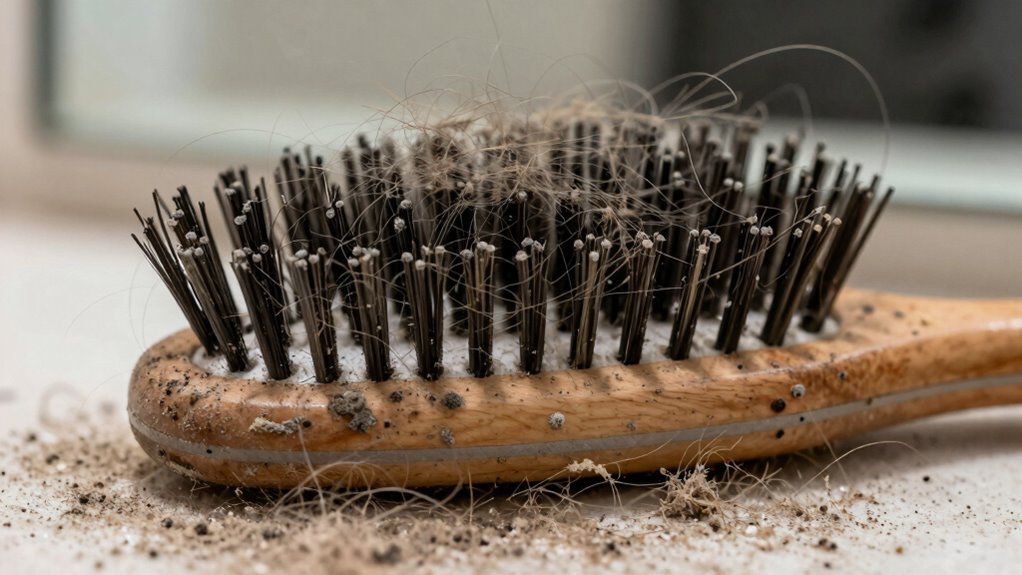
When cleaning hair tools, it’s easy to make mistakes that can damage the tools or reduce their effectiveness. One common mistake is using harsh chemicals, which can weaken plastics or corrode metal parts. Always opt for gentle cleaning solutions designed for hair tools. Neglecting regular cleaning is another mistake, allowing buildup to become stubborn and harder to remove over time. Skipping routine cleanings can also lead to bacteria growth and scalp issues. Avoid abrasive scrubbing, as it can scratch surfaces and shorten your tools’ lifespan. Additionally, proper cleaning techniques are essential to prevent damage and ensure thorough sanitation. Incorporating Nordic-inspired spa principles, such as gentle heat and steam, can enhance the cleaning process and promote better hygiene. Using appropriate drying methods helps prevent moisture buildup that can cause rust or mold, extending the life of your tools. Furthermore, ensuring good airflow and drying conditions around your tools aids in thorough drying and prevents mold growth. Finally, don’t forget to dry your tools thoroughly afterward—moisture can cause rust or mold. Incorporating proper cleaning techniques helps maintain the longevity and hygiene of your hair tools. By steering clear of these mistakes, you’ll keep your hair tools in top condition and extend their usability.
How Often Should You Clean Your Hair Tools?

Regularly cleaning your hair tools prevents buildup and bacterial growth that can cause scalp issues or damage your tools. For ideal hairbrush hygiene, clean your brushes weekly to remove hair, product residue, and dirt. Flat iron maintenance requires cleaning every 1-2 weeks to prevent residue buildup that can damage plates or cause uneven heat distribution. Use the following guide to help you determine cleaning frequency:
| Tool Type | Cleaning Frequency |
|---|---|
| Hairbrushes | Weekly |
| Flat irons | Every 1-2 weeks |
| Combs | Weekly |
| Curling irons | Every 2 weeks |
Sticking to these routines ensures your tools stay effective, hygienic, and safe for your scalp. Proper tool maintenance is essential to extend their lifespan and maintain performance. Regular cleaning also helps prevent bacterial growth, which can lead to scalp irritation or infections.
Top Products and DIY Hacks for Removing Buildup
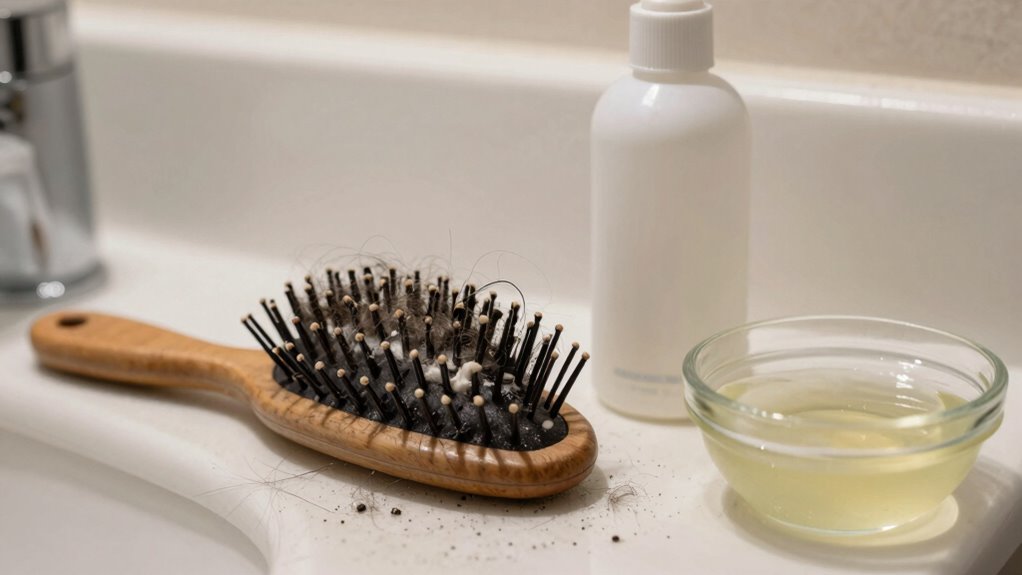
To effectively remove buildup from your hair tools, choosing the right products and DIY hacks is essential. Start with gentle cleaning solutions like diluted dish soap or white vinegar, which break down oils and residue safely. Avoid hair styling myths that suggest harsh chemicals are necessary—product ingredient safety is key to protecting your tools and hair. For stubborn buildup, soak your brushes or combs in a mixture of baking soda and water, then scrub gently with an old toothbrush. You can also use specialized cleaning sprays designed for hair tools, ensuring they’re effective without damaging surfaces. Always rinse thoroughly and dry completely to prevent mold. Regularly inspecting and maintaining your hair tools is important to prevent the buildup from becoming more difficult to clean over time. Incorporating proper storage practices can also help keep your tools cleaner for longer. Additionally, understanding cleaning appliances and systems can help you choose the safest and most effective products for your tools. Using appropriate cleaning techniques can make the process more efficient and prevent damage to delicate parts. Being aware of common cleaning mistakes can help you avoid damaging your tools or reducing their lifespan. These simple hacks and safe products help keep your tools clean, hygienic, and ready for your next styling session.
Tips to Keep Your Hair Tools Clean and Last Longer
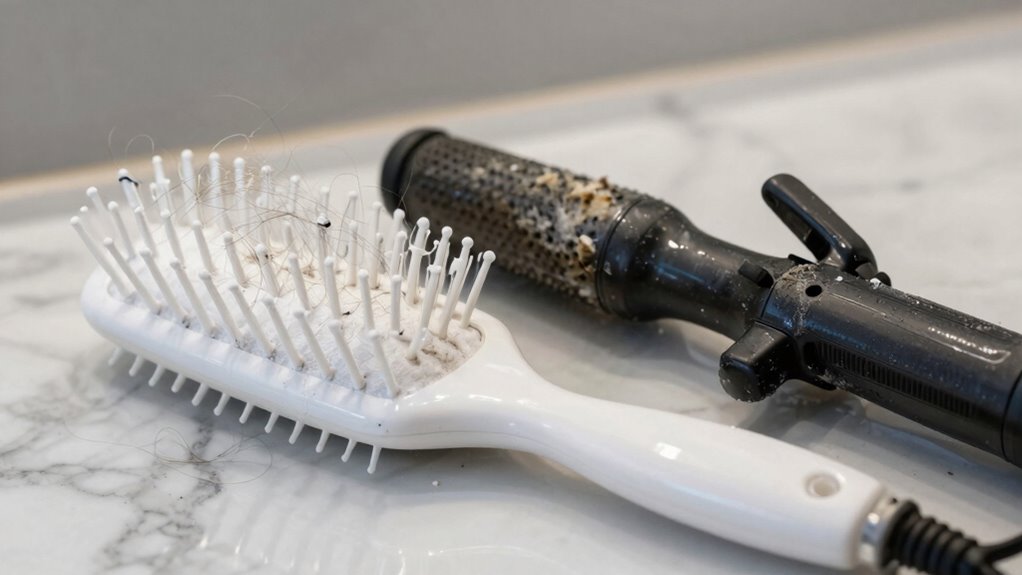
Keeping your hair tools clean is essential for maintaining their performance and extending their lifespan. Good hair tool hygiene prevents dirt, oil, and product buildup from damaging the tools and affecting your hair health. To keep them in top shape, use natural cleaning methods like wiping with a soft cloth dipped in a mixture of equal parts water and vinegar. Regularly remove hair strands from brushes and combs, and soak tools like straighteners or curling irons in a natural cleaning solution such as rubbing alcohol or a vinegar-water mix. Avoid harsh chemicals that can damage the tools. Storing your hair tools in a dry, clean place also helps prevent corrosion and buildup. Proper storage and routine maintenance can also help prevent damage caused by water exposure and humidity. Incorporating proper storage techniques and regular cleaning routines ensures your tools stay effective longer, saving you money and promoting healthier hair.
Frequently Asked Questions
Can Dirty Hair Tools Cause Scalp Infections or Skin Irritations?
Yes, dirty hair tools can cause scalp infections and skin irritations. When you don’t clean your tools regularly, bacteria, fungi, and product buildup can transfer to your scalp, affecting your scalp health. If you have sensitive skin, this buildup can lead to redness, itching, or even more serious infections. To protect your skin and scalp health, make sure you clean your hair tools often with proper disinfectants.
Are There Specific Cleaning Methods for Different Types of Hair Tools?
Did you know that using the wrong cleaning method can damage your tools? For example, plastic brushes should be cleaned with gentle soap and warm water, while metal tools may need alcohol wipes. Always follow material-specific cleaning instructions and store your tools properly to prevent buildup. For best results, keep your tools dry and in a clean, dry place, reducing bacteria growth and extending their lifespan.
How Do I Remove Stubborn Buildup From Ceramic or Metal Flat Irons?
To remove stubborn residue from ceramic or metal flat irons, start by unplugging and letting it cool. Use a cloth dampened with rubbing alcohol or a mixture of water and vinegar for effective cleaning. Apply the solution to the plates, gently scrubbing to loosen buildup. For tough spots, a soft toothbrush works well. Always wipe with a clean, damp cloth afterward to make sure your iron is residue-free and ready to use.
Is It Necessary to Disinfect Hair Tools After Cleaning?
Think of disinfecting your hair tools like locking the door—it’s essential for hygiene. After cleaning, you should sterilize to kill germs and bacteria, preventing scalp issues and infections. The disinfection importance can’t be overstated; it helps maintain good hygiene practices and ensures your tools are safe to use. Regular disinfection is a simple step that protects your hair and scalp from potential health risks.
What Are the Signs That My Hair Tools Need Replacing Instead of Cleaning?
You’ll want to replace your hair tools when you notice signs of wear, like frayed bristles or broken teeth. If your tools have a limited tool lifespan, they might become less effective over time. Also, if they’re difficult to clean thoroughly or show rust and damage, it’s time for a replacement. Regularly inspecting your tools helps prevent hair damage and guarantees you’re using safe, effective equipment.
Conclusion
Keeping your hair tools clean is essential to maintain healthy hair and avoid unnecessary damage. Don’t overlook that hidden buildup—it’s more than just gross; it can affect your style and scalp health. Regular cleaning is your best bet to keep tools in top shape and your hair looking its best. Remember, a stitch in time saves nine, so make cleaning a routine and enjoy shiny, healthy hair every day.