📊 Full opportunity report: Monitoring A Skincare Routine With Selfie-Based Evidence on IdeaNavigator AI — validation score, market gap, and execution plan.

Get beauty and skincare favorites delivered free with Prime
- Fast, free delivery on millions of items
- Prime Video, Amazon Music and more included
- Member-only deals all year
TL;DR
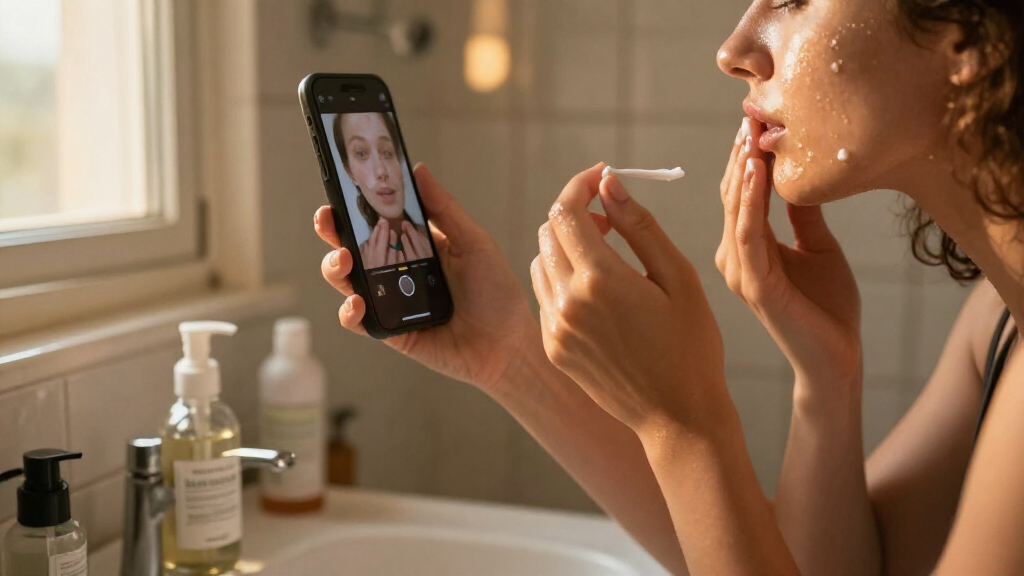
IdeaNavigator AI has proposed testing a skincare app that uses guided weekly selfies to track changes in skin texture, tone evenness and blemishes. Its suggested 12-week pilot would enroll 500 users and compare the app’s measurements with dermatologist assessments for a subsample; no test results or validated accuracy figures are provided.
IdeaNavigator AI has proposed a skincare-tracking app that would use guided weekly selfies to measure changes in skin texture, tone evenness and blemishes, with a suggested 12-week test involving 500 users. The proposal is aimed at people paying for skincare products without knowing whether their routines are helping, but it describes a product concept and validation plan—not a launched service or proven measurement system.
The proposed app would guide users through taking photos under more consistent conditions, using alignment guidance and lighting normalization to make comparisons across weeks. It would track three categories—texture, tone evenness and blemish counts—and let users annotate changes to their routines. The intended output is a timeline showing which routine changes came before measurable changes in the app’s metrics.
IdeaNavigator AI frames the potential customer as someone spending $50 to $200 a month on skincare while judging progress from memory and varying bathroom lighting. That spending range is part of the proposal’s description of the problem; no survey, sample size or independent market research is supplied to establish how representative it is.
For validation, the proposal recommends a 12-week cohort of 500 users, comparing app measurements with dermatologist photo assessments for a subsample and measuring user retention. It does not report that the cohort has been recruited or that clinicians have assessed the model. The proposal also describes a possible business model combining subscriptions with affiliate revenue from products associated with improvement.
Testing Skincare Progress in Photos
If developed and validated, guided photo tracking could give consumers a more structured way to document slow skin changes than relying on memory or casual snapshots. That could help users discuss a routine’s timeline with a dermatologist or make more deliberate decisions about whether to continue products. The practical value would depend on whether the measurements are reliable enough to distinguish real changes from shifts caused by lighting, camera settings, facial expression or temporary skin conditions.
The commercial model also warrants attention. A subscription may give users access to tracking, while affiliate sales could create an incentive to recommend products. The proposal does not explain how such recommendations would be made, how commercial relationships would be disclosed, or whether product links would affect the app’s assessments. These details matter if users are expected to rely on the service when deciding what to buy.
selfie-based skincare tracking app
As an affiliate, we earn on qualifying purchases.
As an affiliate, we earn on qualifying purchases.
From Routine Spending to Photo Tracking
The concept responds to a familiar measurement problem: skincare effects may be gradual, while a person sees their face every day and may not notice small differences. Meanwhile, comparing photographs can be misleading when images have different lighting, angles or distances. The proposed guided capture flow is meant to make those comparisons more consistent, but the outline provides no technical description of how the normalization would work or evidence that it solves the problem.
The proposal places the idea in the beauty-technology and skincare-app market and argues that controlled photo capture and skin-metric models make the timing favorable. It does not identify a specific app, developer, clinical study or commercial launch. Its suggested dermatologist comparison is a plan for testing the concept, not a reported finding that an app’s scores match professional assessments.
Accuracy and Safeguards Remain Open
No accuracy results are available. The proposal does not say which model would score photos, how it would be trained, how large the dermatologist-assessed subsample should be, or what level of agreement would count as useful. It also provides no findings on whether performance would differ across skin tones, skin conditions, devices or capture environments.
The proposed metrics should not be treated as a diagnosis or proof that a product caused an improvement. A change recorded after a routine adjustment does not by itself establish that the adjustment produced it; other products, seasonal conditions and natural variation may contribute. The outline does not describe privacy protections, photo storage and deletion policies, consent procedures, or how the app would handle sensitive facial images. It also gives no launch date, price, named developer or confirmed plan to run the pilot.
Pilot Design Would Set the Test
The next evidence-bearing step would be a pilot matching the proposed design: recruit a defined group, collect guided weekly images for 12 weeks, compare app outputs with dermatologist assessments for a stated subsample, and report retention. A useful account of results would also explain the scoring methods, image-handling practices, participant characteristics and limits of the comparison.
For now, the 500-person cohort is a recommendation, not a confirmed study. Until a test is announced and results are reported, consumers should treat selfie-based scores as a proposed tracking aid rather than validated evidence that a skincare routine works. People with persistent or concerning skin issues should seek professional advice rather than rely on app measurements.
Source: IdeaNavigator AI
Key Questions
Has a selfie-based skincare tracker launched?
The proposal does not report a launch or identify a specific available app. It describes a product concept and a suggested validation study.
What would the app measure?
The proposed system would track skin texture, tone evenness and blemish counts from guided weekly photos, while allowing users to note routine changes.
Would the app prove that a product caused improvement?
No. The proposed timeline could show that a routine change came before a change in measured scores, but that sequence alone cannot establish cause and effect.
How would the idea be tested?
IdeaNavigator AI suggests a 12-week study of 500 users, with app measurements checked against dermatologist photo assessments for a subsample and retention also measured. No results are reported.
What should users know about photo privacy?
The proposal does not specify how facial photos would be stored, protected or deleted. Those policies would need to be clear before users share images with a service.
Source: IdeaNavigator AI
Halloween Picks
halloween
As an affiliate, we earn on qualifying purchases.