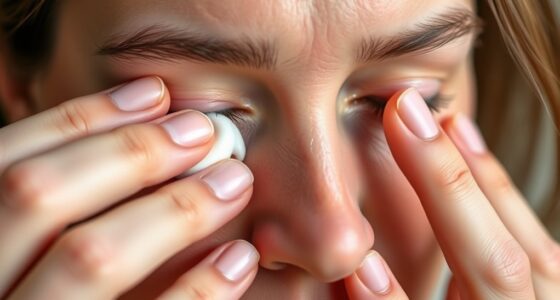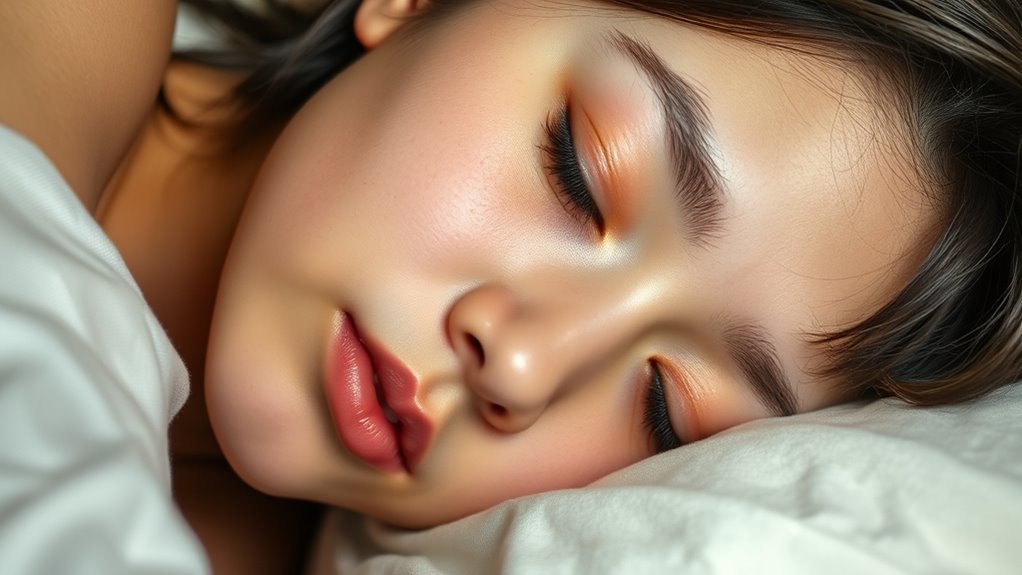

Your sleep position definitely impacts under-eye bags. Sleeping on your stomach or side can cause fluid to pool around your eyes, leading to puffiness. Elevating your head with a supportive pillow helps fluid drain and reduces swelling. Sleeping on your back with your head elevated is ideal for minimizing puffiness. Making these adjustments can improve your appearance overnight. Keep exploring to discover simple tips that can help you achieve a more rested, refreshed look.
Key Takeaways
- Sleeping on the back with head elevated reduces fluid pooling and minimizes under-eye puffiness.
- Stomach or side sleeping can increase pressure and fluid retention around the eyes.
- Proper pillow support and elevation promote better drainage of excess fluids overnight.
- Hydration and diet influence under-eye bags; dehydration and high salt intake worsen puffiness.
- Consistent sleep position and quality sleep help decrease the appearance of under-eye bags over time.
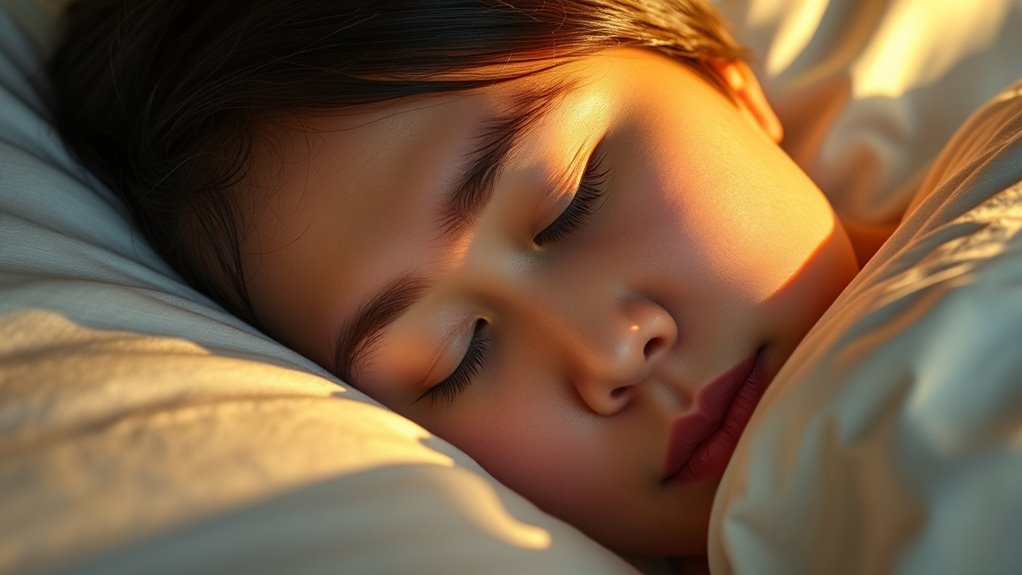
Your sleep position can considerably influence the appearance of under-eye bags. If you often wake up with puffy eyes, it might be time to reconsider how you sleep. Elevating your head with the right pillow can help prevent fluid from pooling around your eyes overnight, which is a common cause of puffiness. When your pillow is too flat or you sleep on your stomach, gravity encourages fluids to accumulate in the lower eye area, making bags more prominent in the morning. By raising your head slightly—using a thicker or adjustable pillow—you help facilitate better drainage of fluids, reducing swelling and giving your eyes a more rested appearance.
Elevate your head with a supportive pillow to reduce under-eye puffiness and promote better fluid drainage.
In addition to pillow elevation, your hydration habits play a vital role. Dehydration can cause your body to retain water, leading to puffiness, especially around the delicate skin under your eyes. Drinking enough water throughout the day helps maintain your skin’s elasticity and reduces fluid retention. Conversely, consuming excessive amounts of alcohol or salty foods can make under-eye bags worse because they promote water retention. So, keeping well-hydrated and limiting salty snacks can make a noticeable difference in the morning.
Your sleeping position also matters beyond just elevation. Sleeping on your back with your head slightly elevated minimizes pressure on your face and prevents fluid buildup. Avoid sleeping on your stomach or side, as these positions can increase pressure and cause fluid to pool under your eyes. If you’re used to sleeping on your stomach, try gradually adjusting to sleeping on your back, using supportive pillows to keep your head elevated comfortably throughout the night. This position allows gravity to drain excess fluids away from your eyes, helping you wake up with less puffiness.
Furthermore, your pillow choice can influence your sleep quality and eye appearance. Choose a pillow that supports your neck and keeps your head elevated, but also provides comfort to promote uninterrupted sleep. Poor sleep quality can exacerbate under-eye bags, so ensure your sleep environment is conducive to rest. Consistent, quality sleep supports skin health and reduces the likelihood of puffiness caused by fatigue.
Frequently Asked Questions
Can Certain Sleep Positions Cause Permanent Under-Eye Bags?
Certain sleep postures can contribute to eye puffiness, but they won’t cause permanent under-eye bags. If you sleep on your stomach or side with your face pressed into the pillow, fluid may pool around your eyes, leading to temporary swelling. Over time, this can worsen the appearance of bags, but it’s not permanent. Adjust your sleep posture by sleeping on your back with your head elevated to help reduce eye puffiness.
How Does Hydration Influence Under-Eye Puffiness Related to Sleep?
Dehydration effects can worsen under-eye puffiness, making you look more tired and swollen. When you’re dehydrated, your body retains water, which can cause fluid buildup under your eyes. To combat this, follow hydration tips like drinking plenty of water throughout the day and reducing caffeine and alcohol intake. Staying well-hydrated helps reduce puffiness, improves skin elasticity, and makes your under-eye area look fresher and less swollen.
Are There Specific Pillow Types That Reduce Under-Eye Swelling?
Imagine your pillow as a gentle guardian cradling your face. Opt for a medium-firm pillow to support your sleep surface without pressing too hard on delicate under-eye areas. A pillow that maintains proper elevation helps reduce swelling, like a soft hill keeping fluid from pooling overnight. Look for breathable, supportive materials to keep your head elevated comfortably, so your under-eyes wake up refreshed, not puffy.
Does Sleep Quality Affect the Development of Under-Eye Bags?
Yes, your sleep quality directly impacts under-eye bags. Poor sleep hygiene increases eye pressure and causes fluid buildup, making bags more prominent. When you get enough restful sleep, your circulation improves, reducing puffiness and dark circles. To prevent this, focus on maintaining a consistent sleep schedule, reducing screen time before bed, and elevating your head slightly during sleep. These habits support better eye health and diminish under-eye swelling.
Can Lifestyle Changes Offset the Effects of Poor Sleep Position on Eyes?
Yes, lifestyle changes can help offset poor sleep position effects on your eyes. Improving sleep hygiene by maintaining consistent sleep schedules and avoiding screens before bed promotes better skin health. Additionally, adopting skincare routines with hydrating and anti-inflammatory products reduces puffiness and dark circles. While you can’t completely undo the effects of poor sleep position, these habits support healthier skin and may lessen under-eye bags over time.
Conclusion
Just as the moon’s gentle glow influences the tides, your sleep position can subtly shape the appearance of your under-eye area. While no single stance guarantees perfection, being mindful of how you sleep might help ease those stubborn bags. Remember, even Cleopatra knew the power of rest and positioning. So, find your balance, and let your nightly habits reflect the wisdom of those who’ve long understood the secrets of beauty and repose.