Using red light therapy near your eyes can offer benefits like improved skin and reduced inflammation, but risks exist if you overexpose or use unapproved devices. To stay safe, always wear protective goggles, follow manufacturer guidelines, and avoid direct eye contact or prolonged sessions. High-quality devices with safety features help minimize harm. Keeping exposure brief and consulting professionals ensures benefits outweigh risks. If you want to learn how to protect your vision while using red light, keep exploring these guidelines.
Key Takeaways
- Use devices designed for eye-area treatment with built-in safety features and follow manufacturer instructions.
- Always wear protective goggles or shields during red light therapy near the eyes.
- Limit exposure duration, maintain proper distance, and avoid direct eye contact to reduce risk.
- Regular eye check-ups can help detect early signs of potential damage from red light exposure.
- Avoid high-intensity or prolonged sessions, especially with unregulated or homemade devices, to prevent eye injury.
How Does Red Light Therapy Work Near the Eyes?
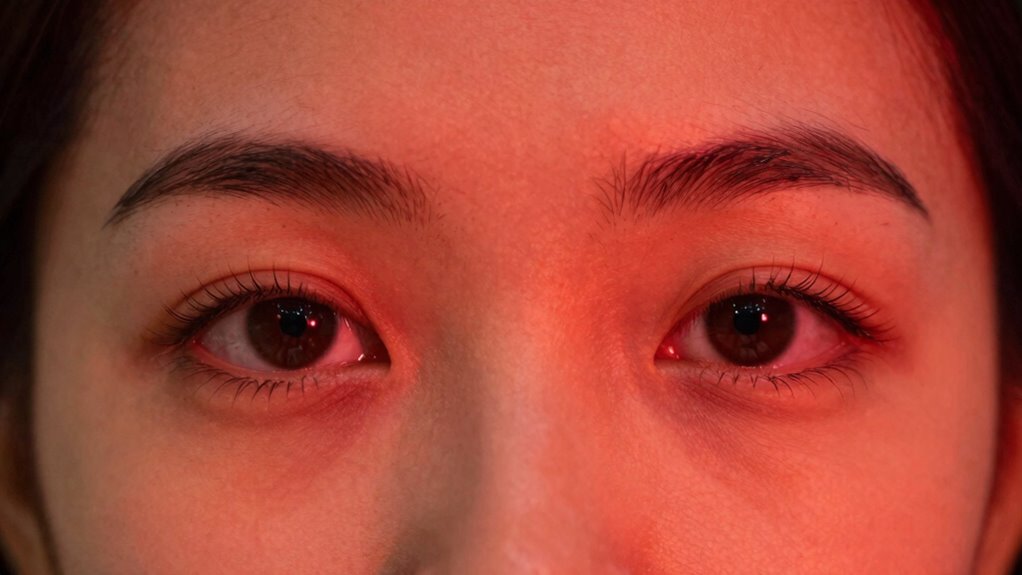
Red light therapy works near the eyes by penetrating the skin and underlying tissues to stimulate cellular activity. Infrared penetration allows the light to reach deeper layers, promoting healing and reducing inflammation without harming surface tissues. Since the eyes are sensitive, this therapy targets the surrounding skin areas carefully, ensuring the light’s wavelength minimizes risk to eye structures. You might notice that red light can activate mitochondria within cells, boosting energy production and supporting tissue repair. Because of eye sensitivity, the therapy is designed to focus on skin and muscles around the eyes rather than directly exposing your eyes to intense light. Proper application techniques help you benefit from infrared penetration without risking damage to your delicate eye tissues. Additionally, understanding light safety standards can help optimize treatment while protecting your vision. Following recommended guidelines ensures that exposure remains safe and effective for eye health, especially considering ocular safety protocols that are essential for minimizing risks during therapy. Considering projector safety principles can further inform safe practices when using intense light sources near the eyes. Awareness of natural light exposure can also contribute to maintaining overall eye health during therapy use.
Is Red Light Therapy Safe Near Your Eyes?

Although red light therapy can offer benefits near your eyes, its safety depends on proper application and device specifications. When used correctly, red light therapy can enhance cosmetic benefits like improved skin tone and texture around the eye area. It may also provide pain relief for discomfort or inflammation. However, improper use or low-quality devices can pose risks to your eyes. Always guarantee the device is designed for facial or eye-area use, and follow manufacturer instructions carefully. Protecting your eyes with appropriate goggles or shields is essential. Proper device safety features and adherence to guidelines help minimize potential risks. Additionally, understanding light exposure limits can prevent overuse and reduce the risk of eye damage. Monitoring light intensity levels ensures that exposure remains within safe parameters. Recognizing eye safety protocols when using red light therapy further supports safe practices. Maintaining awareness of exposure duration can prevent overexposure and potential harm. While red light therapy can be safe when used responsibly, it’s important to understand the limits and avoid overexposure. Proper precautions help you enjoy the potential benefits without unnecessary risks near your eyes.
What Are the Risks of Using Red Light Near Your Eyes?
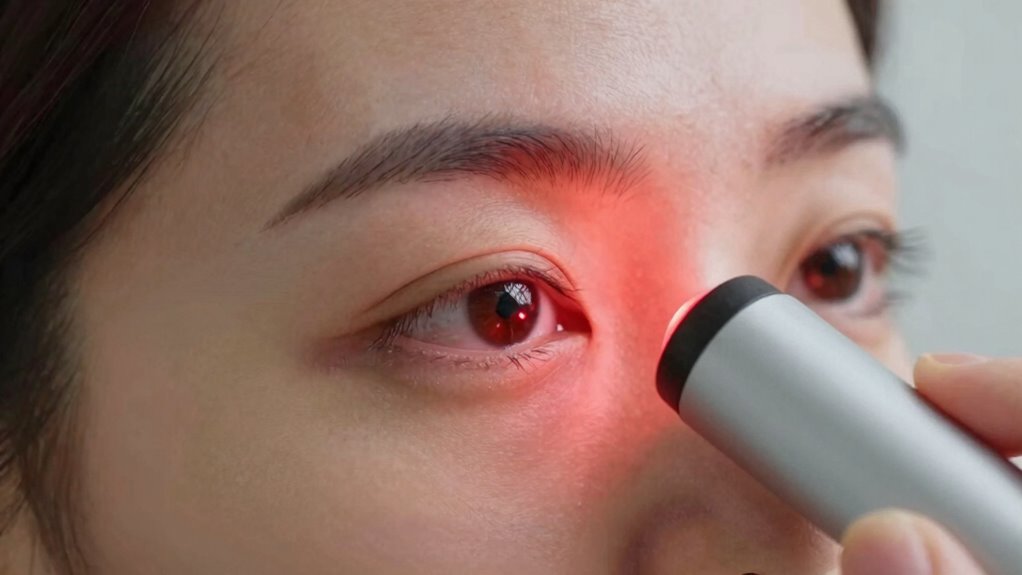
Using red light near your eyes can pose risks like potential eye damage if misused. Overexposure might lead to discomfort or harm, especially with prolonged use. Long-term safety concerns remain uncertain, so it’s important to understand these risks before incorporating red light therapy into your routine. Additionally, proper eye protection during treatment can help mitigate some of these risks. Being aware of lighting safety standards can further help prevent accidental injury during use. Ensuring that devices meet safety regulations can also reduce the likelihood of adverse effects. Familiarizing yourself with regulatory guidelines and best practices can provide additional safety measures during therapy.
Eye Damage Potential
While red light therapy is generally considered safe, direct exposure to the eyes can pose risks. Your eyes are sensitive, and prolonged or intense exposure might cause damage that affects your vision or causes discomfort. Be aware of potential hazards, especially if you’re seeking cosmetic benefits with close proximity. Visualize these risks:
- Temporary eye strain or discomfort
- Increased eye sensitivity to light
- Potential damage to the retina over time
- Interference with natural eye functions
Additionally, understanding light safety measures can help minimize these risks during treatment. Proper eye protection and avoiding direct eye contact with intense red light sources are crucial steps to ensure safety. These issues highlight why protecting your eyes during treatments is vital. While the therapy can improve skin and reduce inflammation, neglecting eye safety could diminish the cosmetic benefits you’re after. Always use appropriate eye protection and avoid direct eye contact with intense red light sources. Incorporating precautions for eye safety can further reduce the likelihood of adverse effects.
Risk of Overexposure
Overexposing your eyes to red light can substantially increase the risk of adverse effects, even if the therapy is generally safe when used properly. Too much exposure may lead to eye strain or discomfort, which can interfere with eye exercises or vision correction efforts. Prolonged or excessive use might cause headaches or temporary visual disturbances, especially if you neglect proper timing and distance. While red light therapy can support eye health, overdoing it could reduce its benefits or cause unintended stress on your eyes. To minimize risks, follow recommended guidelines, limit exposure time, and avoid aiming red light directly into your eyes for extended periods. Keeping your sessions balanced ensures you reap potential benefits without risking overexposure. Understanding safe exposure limits can help you better protect your eyes during therapy.
Long-Term Safety Concerns
Long-term safety concerns with red light therapy near your eyes primarily revolve around potential cumulative damage that might not be immediately noticeable. Repeated exposure could gradually affect your ocular health, risking issues like retinal stress or damage. To visualize this, consider:
- Straining your eyes from prolonged exposure without proper eye protection
- Developing subtle changes in vision over years
- Accumulating damage to the retina or optic nerve
- Increasing the risk of age-related eye conditions
- Sulfate-free formulas and the importance of choosing safe products for eye-sensitive areas. Regular eye examinations can help detect early signs of damage before symptoms appear, emphasizing the importance of preventive eye care.
While red light can offer benefits, neglecting eye protection may lead to unseen harm. Protecting your eyes and monitoring any changes in vision are essential steps to ensure safe use. Stay cautious, and prioritize your ocular health when using red light therapy near your eyes.
How Much Red Light Is Safe for Eye Exposure?
Determining how much red light is safe for eye exposure depends on factors like intensity, duration, and wavelength. To protect your eye health, limit exposure to light that surpasses safe intensity levels. Short sessions with moderate light intensity are generally safe, especially if you keep the exposure brief—around a few minutes at a time. Avoid prolonged or intense red light exposure, which can cause discomfort or potential damage over time. It’s crucial to adhere to manufacturer guidelines and recommendations from eye health experts. Remember, even though red light is often considered safer than other wavelengths, unregulated or excessive exposure can still pose risks. Always prioritize safe practices to ensure your eyes stay healthy while enjoying the benefits of red light therapy. Understanding light safety is essential to prevent potential eye damage. Additionally, being aware of light exposure limits can help you make informed decisions about your red light use, emphasizing the importance of safe exposure practices to minimize risks. Moreover, understanding the impact of wavelength on eye safety can further guide responsible red light usage.
How Can You Use Red Light Safely Near Your Eyes?

To use red light safely near your eyes, keep the light source at a proper distance to prevent overexposure. Make sure you’re using devices that are approved and designed for safe eye exposure. Following these steps helps you enjoy the benefits without risking eye health. Additionally, understanding home theater fundamentals can help you optimize your setup to minimize unnecessary light exposure and create a comfortable viewing environment. Being aware of field‑of‑view considerations from deep-sky imaging can also assist in positioning your red light to reduce glare and improve safety.
Maintain Proper Distance
Since red light therapy involves shining light near your eyes, maintaining a safe distance is essential to protect your vision. Proper device placement helps prevent unnecessary eye exposure and reduces risk. To do this effectively:
- Keep the device at least 6-12 inches away from your eyes.
- Position the light directly in front of your face, avoiding angles that direct light into your eyes.
- Use eye protection, like goggles, especially if the device emits bright or intense light.
- Adjust the distance based on the device’s brightness and intensity, always erring on the side of caution.
Use Approved Devices
Using approved red light therapy devices is essential for safe and effective treatment near your eyes. These devices are designed to deliver the right wavelength and intensity, maximizing cosmetic benefits without risking eye damage. Avoid unregulated or homemade options, as they may lack safety features and could cause harm. When choosing a device, look for ones recommended by professionals or approved by relevant safety authorities. Proper use guarantees you get the most out of professional treatments or at-home routines, helping reduce fine lines, wrinkles, and puffiness safely. Remember, always follow manufacturer instructions and consult with a healthcare provider if you’re unsure. Using approved devices minimizes risks and enhances your overall experience, making red light therapy both safe and beneficial for your skin and eye health.
What Are Signs Your Eyes May Be Harmed by Red Light?
Have you noticed any unusual changes in your eyes after exposure to red light? If so, your ocular health might be at risk. Signs that red light may be harming your eyes include:
- Blurred vision or a sudden drop in visual acuity.
- Persistent eye redness or irritation.
- Unusual light sensitivity or glare.
- Feelings of dryness or soreness in your eyes.
These symptoms can indicate damage to the retina or other structures affecting your visual clarity. If you experience any of these signs, it’s essential to evaluate your exposure and consult an eye care professional. Protecting your ocular health ensures your vision stays sharp and clear. Don’t ignore warning signs—early detection helps prevent long-term damage.
When Should You Avoid Red Light Therapy Near Your Eyes?

You should avoid red light therapy near your eyes if you have existing eye conditions such as retinal disorders, glaucoma, or cataracts, as these issues can increase your vulnerability to light-induced damage. If your eye health is compromised, the risk of adverse effects surpasses potential benefits for vision improvement. People with these conditions should consult an eye specialist before considering red light therapy near their eyes. Additionally, if you’re experiencing symptoms like blurred vision, eye pain, or sensitivity, it’s best to avoid direct exposure. Even healthy individuals should be cautious and avoid prolonged or intense red light exposure around the eyes. Prioritizing eye safety ensures you protect your vision and prevent unnecessary harm.
What Are Expert Guidelines for Eye Safety During Red Light Therapy?
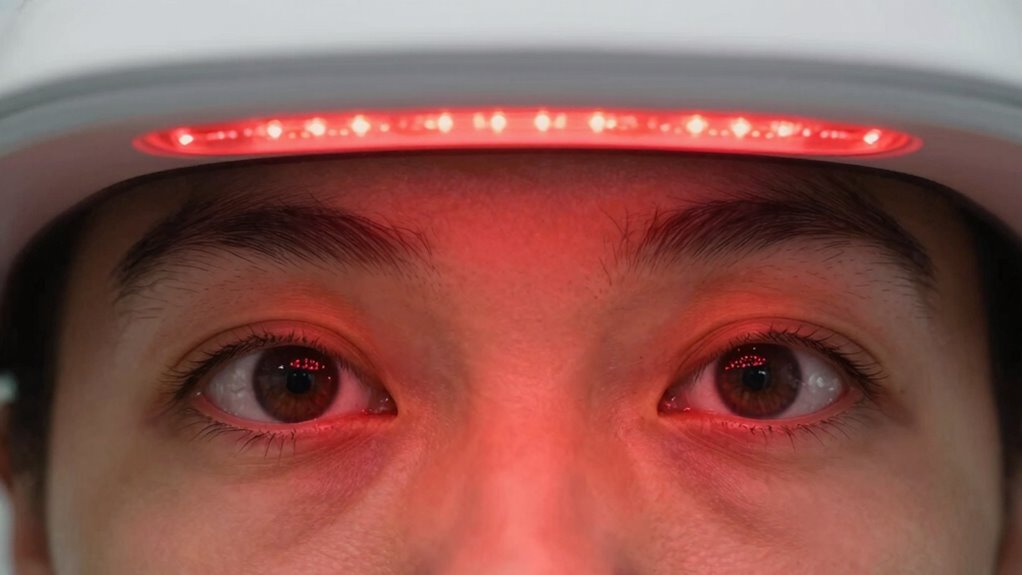
To guarantee safety during red light therapy, experts recommend following specific guidelines to protect your eyes from potential harm. Prioritize ocular safety and always use proper eye protection. Here are key guidelines to keep in mind:
- Wear approved eye shields or goggles designed for red light therapy sessions.
- Avoid looking directly into the light source during treatment.
- Keep a safe distance between your eyes and the light device as recommended by the manufacturer.
- Limit exposure time to prevent unnecessary strain or risk.
How Do You Choose Safe Red Light Devices for Eye Use?

When choosing red light devices for your eyes, you need to check the wavelength to confirm it’s safe and effective. Look for devices that meet established certification standards to guarantee quality and safety. Additionally, always follow proper usage instructions and wear eye protection when necessary to prevent potential harm.
Wavelength Compatibility and Safety
Choosing a safe red light device for eye use begins with understanding the importance of wavelength compatibility. Your eye anatomy is sensitive to specific wavelengths, and not all red lights are safe. To guarantee wavelength safety, consider these factors:
- Optimal Range: Aim for wavelengths between 630-670 nm, which are less likely to harm delicate eye tissues.
- Avoid Shorter Wavelengths: Wavelengths below 600 nm may penetrate deeper and pose risks.
- Power Output: Check the device’s power; lower intensities reduce potential eye strain or damage.
- Device Design: Look for models with built-in safeguards, like filters or shields, to prevent accidental eye exposure.
Device Certification Standards
Ensuring a red light device meets recognized certification standards is essential for safe eye use. Device certification verifies that the product complies with safety standards set by reputable organizations like the FDA or IEC. When selecting a device, check for clear labels indicating certification, such as FDA approval or IEC compliance. These certifications guarantee the device has undergone rigorous testing for safety, including proper wavelength output and electrical safety. Avoid devices lacking certification, as they may not adhere to safety standards and could pose risks to your eyes. Certified devices typically provide detailed information on their safety measures, giving you confidence in their use. Prioritizing certified products helps minimize potential hazards and ensures you’re using a device that has been evaluated for safe operation near sensitive eye tissues.
Proper Usage and Eye Protection
To safely use red light devices near your eyes, you need to understand how to select and operate them correctly. First, always choose devices with built-in eye protection features, such as shields or goggles. Second, avoid direct eye contact with the light, especially if you wear eye makeup that might obscure protective barriers. Third, consider your vision correction needs—if you wear glasses or contacts, ensure the device’s wavelength won’t interfere. Fourth, follow manufacturer instructions carefully, including recommended treatment times and distances. Visualize a scenario where you’re applying red light therapy while wearing protective goggles, keeping the device at the right distance, and avoiding direct exposure to your eyes. This approach helps maximize benefits while minimizing risks to your vision.
Is Red Light Therapy Near Your Eyes Worth the Risk?
Red light therapy near your eyes can offer potential benefits, but it also carries certain risks that you shouldn’t overlook. While many seek cosmetic benefits like reduced wrinkles or puffiness, you need to consider the impact on eye health. Red light exposure close to the eyes might improve skin appearance, but prolonged or improper use could cause eye strain or damage. The risks may outweigh the benefits if you don’t use proper eye protection or follow recommended guidelines. Assess whether the expected cosmetic improvements justify the possible hazards. If you’re unsure or have existing eye conditions, consult with a healthcare professional first. Ultimately, being cautious helps you enjoy the possible benefits without risking your eye health.
Frequently Asked Questions
Can Red Light Therapy Improve Vision or Eye Health?
Red light therapy may support your eye health and potentially aid in vision improvement, but evidence remains limited. You shouldn’t rely solely on it for vision correction or treating serious eye conditions. Always consult an eye care professional before trying red light therapy near your eyes. While it could offer some benefits, it’s not a substitute for professional treatments, and safety should always be your top priority.
Are There Age Restrictions for Red Light Therapy Near the Eyes?
Age restrictions for red light therapy near the eyes vary, but generally, safety guidelines recommend caution for children and teenagers. You should consult a healthcare professional before use, especially for younger individuals, to verify safety. For adults, following established safety guidelines minimizes risks. Always use appropriate eye protection, adhere to recommended exposure times, and avoid direct exposure to intense red light near the eyes to prevent potential harm.
How Long Should Red Light Therapy Sessions Near the Eyes Last?
You should keep your red light therapy sessions near the eyes to about 10-15 minutes, following eye safety guidelines. Longer sessions aren’t typically necessary and might increase risks, especially if you’re sensitive or using a stronger device. Pay close attention to your comfort and any signs of discomfort, and always adhere to manufacturer instructions and professional advice to guarantee safe, effective treatment without risking eye safety.
Do Different Red Light Wavelengths Affect Eye Safety Differently?
Different red light wavelengths do affect eye safety because wavelength safety varies with light penetration levels. Shorter wavelengths, around 620-660 nm, penetrate less and are generally safer for your eyes, while longer wavelengths, up to 850 nm, penetrate deeper and may pose more risk if not used properly. Always choose the appropriate wavelength and use protective eyewear to minimize potential damage. Your safety depends on understanding these differences and following guidelines.
Can Red Light Therapy Cause Long-Term Damage to Eye Tissues?
Red light therapy generally doesn’t cause long-term damage to eye tissues when used properly, but overexposure can pose risks. Studies show that with safe exposure limits, the chance of lasting harm is less than 1%. To guarantee long-term safety, avoid staring directly into the light, especially at high intensities. You should always follow recommended guidelines to protect your eye tissues and minimize any potential risks.
Conclusion
While a gentle glow near your eyes can offer benefits, it’s wise to tread carefully and respect your natural limits. By following expert advice and choosing the right devices, you can enjoy the potential perks without risking any unintended shadows on your vision. Remember, a cautious approach is like a soft whisper—guiding you safely through the light’s promise, ensuring your eyes stay healthy and bright for years to come.