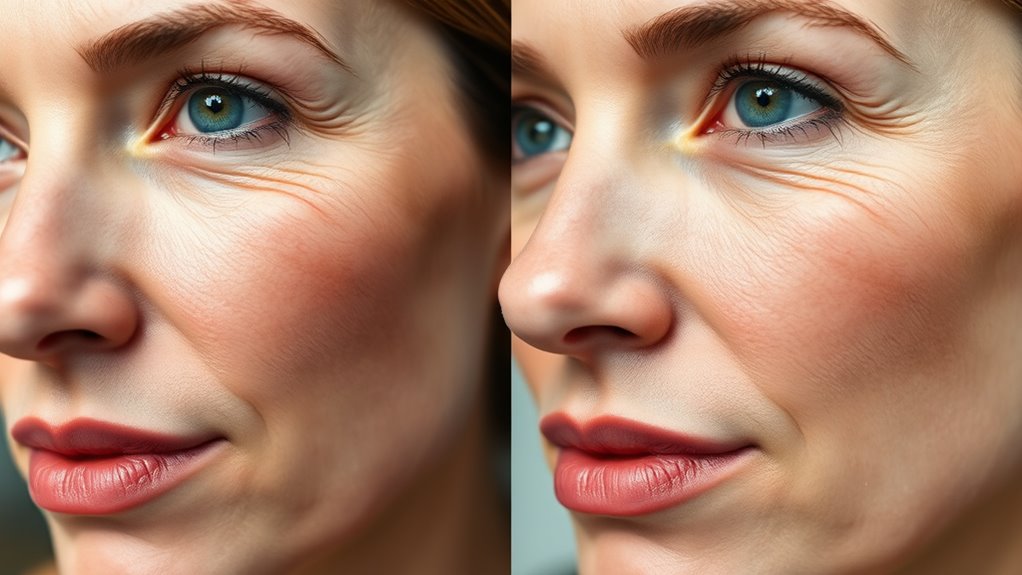

Fine lines are deeper, aging-related wrinkles caused by collagen loss, and they tend to stay even when your skin is moisturized. Dehydration lines are superficial, temporary creases that appear when your skin lacks moisture and fade with proper hydration. To tell them apart, notice if the lines disappear after hydrating or if they remain despite good moisture levels. Keep exploring to find out effective ways to address each type and keep your skin looking youthful.
Key Takeaways
- Fine lines are deep, gradual wrinkles caused by collagen loss and facial movements; dehydration lines are superficial, temporary creases from lack of moisture.
- Fine lines are persistent and visible even when skin is moisturized; dehydration lines fade quickly with proper hydration.
- Fine lines develop around eyes, mouth, and forehead over time; dehydration lines typically appear on cheeks, eyes, and lips due to dehydration.
- Treat fine lines with collagen-boosting ingredients like retinoids and vitamin C; hydrate skin with hyaluronic acid to reduce dehydration lines.
- Combining anti-aging treatments and hydration strategies helps maintain youthful, healthy skin and distinguish between the two types of lines.

As you age, you might notice fine lines and dehydration lines appearing on your skin, but understanding the difference between them is vital for choosing the right skincare approach. Both can make your complexion look tired or dull, but they stem from different causes and require different treatments. Recognizing these signs will help you refine your skincare tips and target your efforts effectively.
Fine lines are a natural part of aging signs. They develop gradually due to the decrease in collagen and elastin production, which give your skin its firmness and elasticity. Over time, repeated facial expressions like smiling or squinting can deepen these lines, especially around your eyes, mouth, and forehead. Unlike dehydration lines, fine lines are more persistent because they’re embedded in the skin’s structure. When you notice these, it’s a good idea to incorporate skincare tips that focus on boosting collagen, such as using retinoids, peptides, and vitamin C serums. Consistent moisturizing also helps plump the skin, temporarily softening the appearance of fine lines. Remember, protecting your skin from UV damage is vital, as sun exposure accelerates collagen breakdown, making aging signs more prominent. Using skincare ingredients that stimulate collagen production can further enhance skin firmness.
Dehydration lines, on the other hand, are not technically wrinkles but rather temporary creases caused by a lack of moisture. Your skin can become dehydrated from factors like environmental stress, harsh cleansers, or simply not drinking enough water. Dehydration lines often appear as fine, superficial lines on the surface of your skin, especially around the cheeks, eyes, and lips. They tend to fade when your skin is properly hydrated. To combat these lines, focus on skincare tips that emphasize hydration—using hyaluronic acid serums, hydrating masks, and gentle, moisturizing cleansers. Drinking plenty of water and avoiding excessive alcohol or caffeine also supports overall skin hydration. Unlike aging signs, dehydration lines aren’t a permanent fixture; they respond quickly to targeted hydration.
Understanding the difference between fine lines and dehydration lines allows you to tailor your skincare routine more precisely. If the lines are deep and persistent, you’ll want to focus on anti-aging ingredients that stimulate collagen. If they’re superficial and disappear with hydration, your priority should be enhancing moisture levels. Combining these approaches ensures your skin remains supple, youthful, and healthy. Remember, aging signs are inevitable, but with the right skincare tips and consistent care, you can manage their appearance and maintain a radiant complexion for longer.
Frequently Asked Questions
Can Dehydration Lines Turn Into Permanent Wrinkles Over Time?
Dehydration lines won’t automatically turn into permanent wrinkles, but if you neglect skin hydration, they can contribute to aging effects over time. When your skin stays dry, it loses elasticity, making fine lines more noticeable and potentially deepening into permanent wrinkles. To prevent this, keep your skin well-hydrated with moisturizers and stay consistent with skincare. Proper hydration supports skin elasticity, reducing the risk of dehydration lines becoming a lasting issue.
Are Dehydration Lines More Common in Certain Skin Types?
Yes, dehydration lines are more common in dry or sensitive skin types because those skin types struggle to retain enough hydration. When your hydration levels drop, you’ll notice fine lines forming more easily. If you keep your skin well-hydrated with moisturizers and drink plenty of water, you can reduce the appearance of dehydration lines. Regularly evaluating your skin type and adjusting your skincare routine helps maintain ideal hydration levels.
Do Lifestyle Factors Influence the Appearance of Fine Vs Dehydration Lines?
Yes, your lifestyle factors can influence how fine and dehydration lines appear. Poor skincare routines and inconsistent hydration habits often make dehydration lines more noticeable, especially around the eyes and cheeks. To minimize their appearance, stay consistent with your skincare routine, use hydrating products, and drink plenty of water daily. These habits help maintain your skin’s moisture and elasticity, reducing the prominence of both fine lines and dehydration lines over time.
How Long Do Dehydration Lines Typically Last Without Treatment?
Dehydration lines can last anywhere from a few hours to several days without treatment, depending on your hydration levels and skin elasticity. To speed up their disappearance, you should focus on hydration remedies like drinking plenty of water and using moisturizing products. Improving your skin’s elasticity with nourishing skincare can also help reduce their appearance faster. Stay consistent with your skincare routine for better, longer-lasting results.
Can Dehydration Lines Be Completely Eliminated Without Medical Intervention?
You can’t usually eliminate dehydration lines completely without medical intervention, but strengthening your skincare routines and hydration habits can substantially reduce their appearance. While some might think they’ll vanish on their own, consistent moisturizing and drinking plenty of water help plump your skin and improve elasticity. Keep up a good skincare routine, and over time, you’ll notice a reduction in dehydration lines, making your skin look smoother and more refreshed.
Conclusion
Now that you know the difference, you can spot these subtle signs like a skilled artist. Picture your skin as a smooth canvas—fine lines are tiny cracks, delicate as spiderwebs, while dehydration lines are like dry riverbeds, temporary and fading with moisture. With this awareness, you’ll nurture your skin with the right care, turning those fleeting lines into a radiant, supple glow. Your skin’s story is yours to shape—keep it vibrant and hydrated.