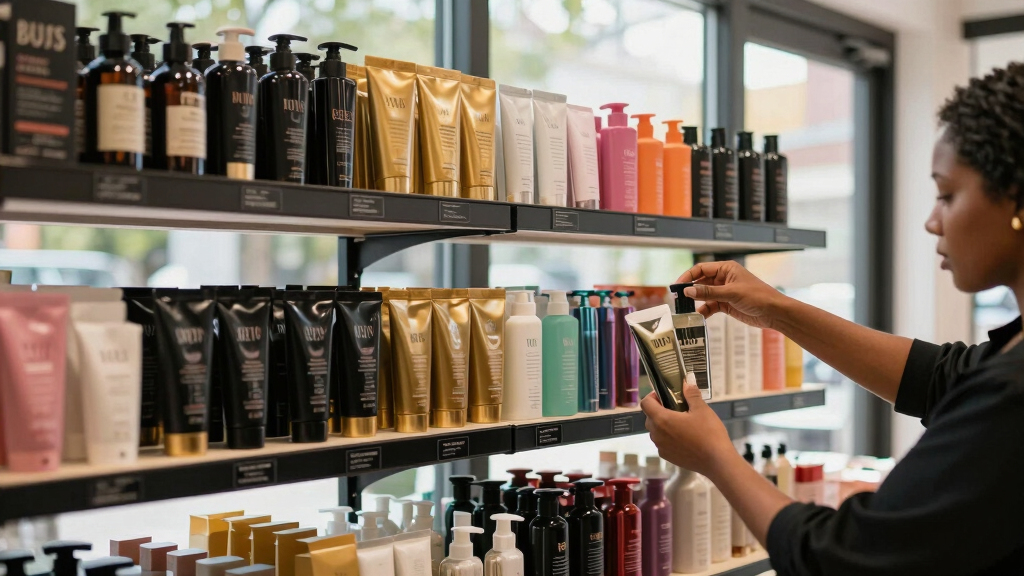

TL;DR
An independent retailer has been launched with a core focus on prioritising Black buying power. This development aims to foster community support and challenge traditional retail models. The initiative is still in early stages, with details on its operations and impact emerging.
An independent retailer has been launched with the explicit goal of prioritising Black buying power, marking a deliberate shift in retail strategy aimed at empowering Black communities and challenging conventional market dynamics.

Get beauty and skincare favorites delivered free with Prime
- Fast, free delivery on millions of items
- Prime Video, Amazon Music and more included
- Member-only deals all year
Potential Impact on Retail and Community Empowerment
This development matters because it represents a deliberate attempt to reshape retail priorities by centring Black consumers, who are often underserved or overlooked in mainstream markets. By prioritising Black buying power, the retailer aims to foster economic empowerment, support Black-owned businesses, and challenge existing disparities in retail access and representation. If successful, this model could influence broader industry practices, encouraging other retailers to adopt more inclusive and community-focused strategies that promote economic equity.
Products Worth Considering

Philips Sonicare ProtectiveClean 5300 Rechargeable Electric Toothbrush, Black, with 3 Brush Heads

Garmin Forerunner 55 GPS Running Smartwatch, Black

Therabody Theragun Prime Plus Heated Deep Tissue Massage Gun, Black
As an affiliate, we earn on qualifying purchases.
Background on Black Consumer Engagement and Retail Shifts
Historically, Black consumers have been underrepresented in mainstream retail markets, despite their significant purchasing power. Studies show that Black Americans control substantial disposable income, yet this demographic often lacks dedicated retail platforms that cater specifically to their cultural and community needs. Recent years have seen increased calls for racial equity in business, with some brands and entrepreneurs exploring models that centre Black consumers and suppliers. This new retailer builds on these trends by establishing a business model explicitly designed around Black economic empowerment, aiming to create a more inclusive retail environment and set a precedent for community-led commerce.
“This approach could inspire other businesses to recognize the importance of serving and supporting Black communities more intentionally.”
— Community leader involved in the initiative
Early Stage and Uncertain Long-Term Impact
Details about the retailer’s operational model, scalability, and measurable impact are still emerging. It is unclear how the business will sustain itself financially or how it will expand beyond initial community engagement. Additionally, the long-term influence on retail industry practices and broader economic disparities remains to be seen, as the initiative is still in its formative phase.
Upcoming Community Engagements and Performance Metrics
The retailer plans to hold community events and gather feedback over the coming months to refine its offerings. Stakeholders are watching to see how effectively the business can build sustainable supplier relationships, increase Black consumer participation, and demonstrate economic impact. Further developments will likely include partnerships with local organizations, potential funding sources, and plans for expansion based on initial outcomes.
Key Questions
What is the main goal of this independent retailer?
The primary aim is to prioritise Black buying power, support Black-owned businesses, and promote economic empowerment within Black communities.
How is this retailer different from traditional retail stores?
It explicitly centres Black consumers in its business model, offers culturally relevant products, and engages community-led decision-making, unlike conventional stores that often overlook this demographic.
Will this model be scalable beyond its initial community?
It is still too early to determine scalability. The founders plan to assess early community feedback and operational sustainability before considering expansion.
What challenges might this retailer face?
Potential challenges include securing funding, establishing supplier relationships, measuring impact, and competing with larger, established retail chains.
Could this approach influence broader retail practices?
If successful, it could serve as a model for other businesses to adopt more inclusive, community-focused strategies that support economic equity.
Source: rss